"Cycling should be part of day-to-day life"
Updated 23 June 2026 with East Sussex County Council comment
University of Sussex students Ryana Cai, Jiayuan Chen, Michaela Lamb, Shuxin Miao, Yuxuan Qing, August Sun and Raania Waheed visited Eastbourne to see how cyclists experience the town. Their guide was John Hudson, a volunteer with Bespoke Eastbourne, a community group that envisions a town where cyclists, pedestrians and motorists can safely share the streets
John met us at the station, his warm smile giving us the courage to brave the wind and the rain as we walked through the town centre and along the seafront to appreciate what cycling in Eastbourne is like.
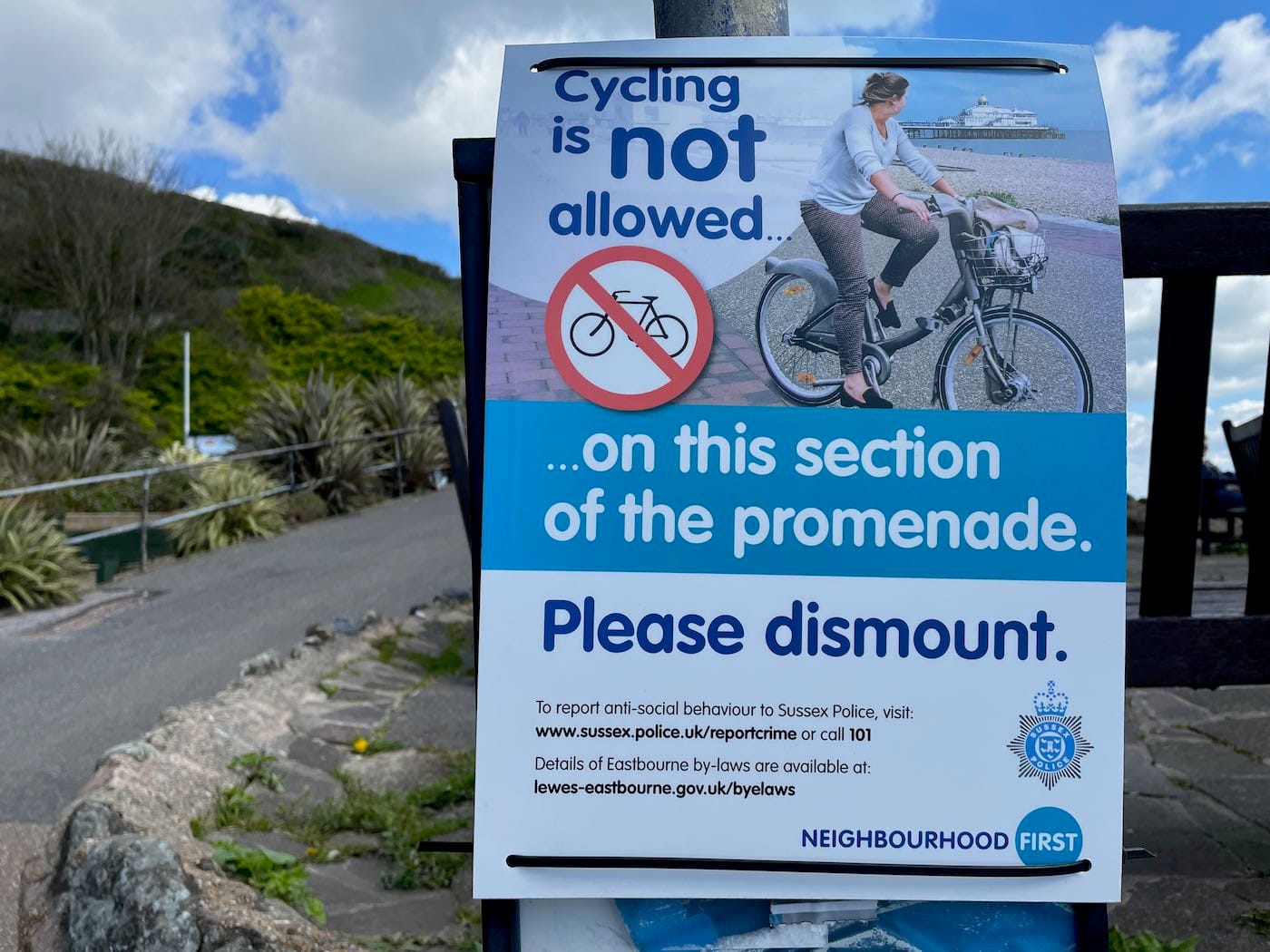
This part of Eastbourne is relatively flat and seems well suited to cycling, but cyclists must often take detours or dismount.
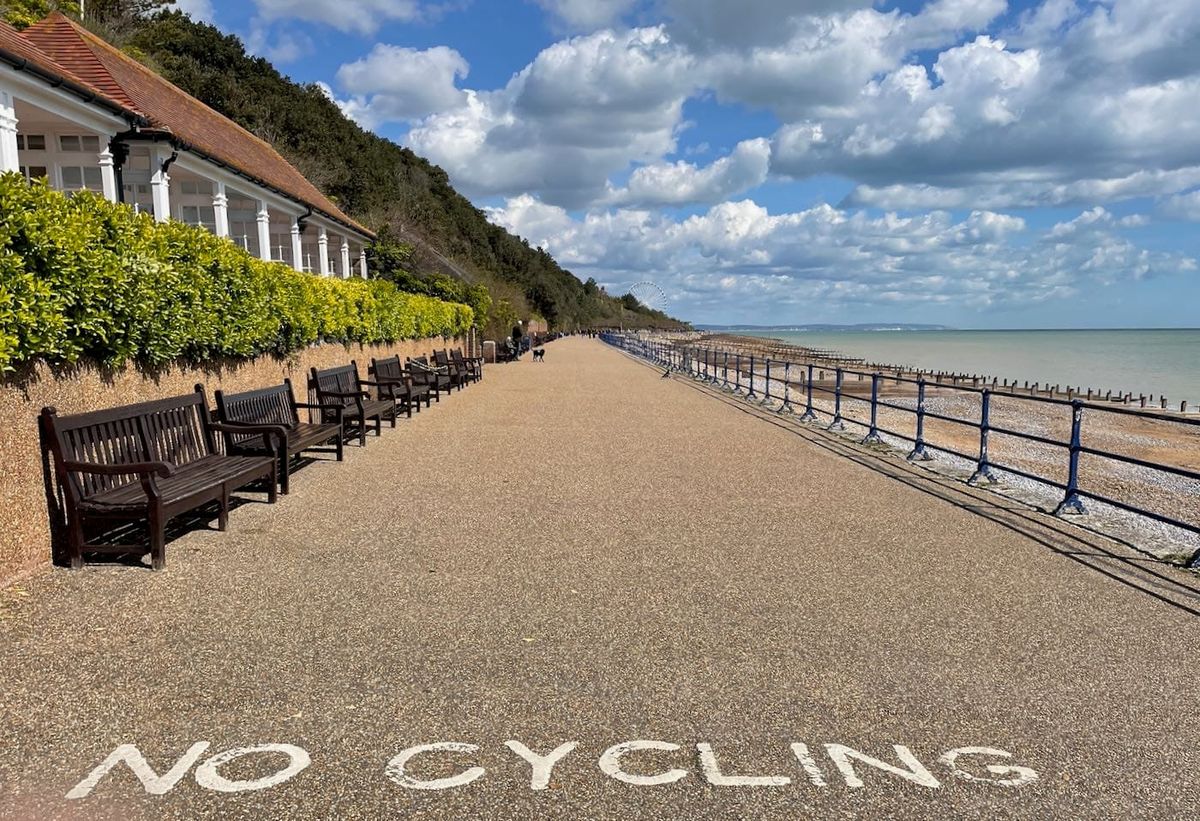
Along the seafront, cyclists and pedestrians share small sections of the promenade but cycling is restricted most of the way, despite what seems like plenty of space and an absence of cars.
Overall, opportunities for cycling in Eastbourne appear fragmented and disjointed, as this map of the town’s cycle routes suggests.
East Sussex County Council has told the Eastbourne Reporter it has undertaken a feasibility study for the "missing section of the seafront cycle route between Fishermen’s Green and the Wish Tower".
There is no external capital funding for this section but it "remains a priority route". There is no information about cycle route plans from the Wish Tower to Holywell. See below for the full statement.
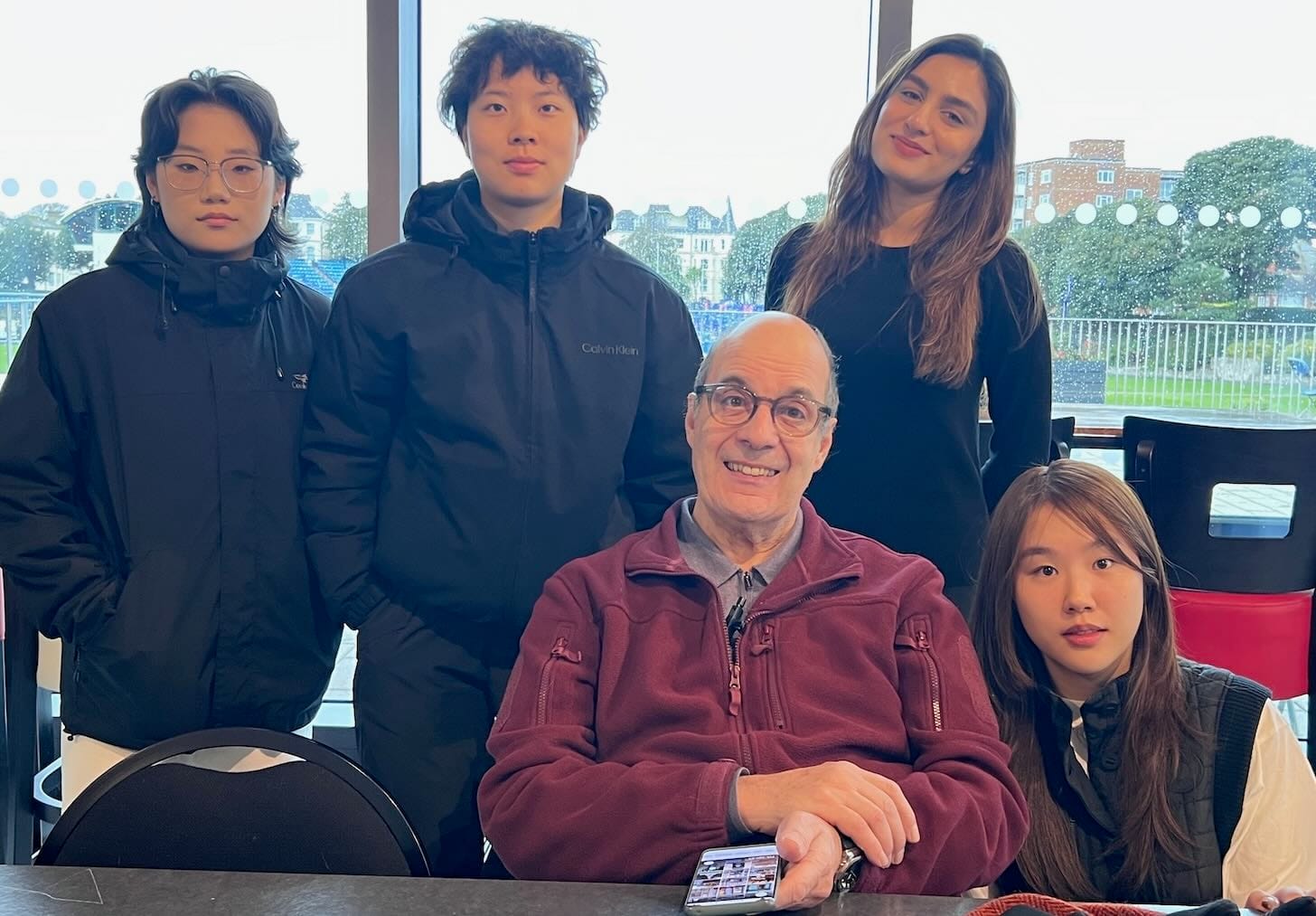
John describes navigating busy roads on his bike, constantly negotiating with cars and pedestrians. “Cycling should not have to be a protest,” he says. “It should be part of day-to-day life, and it should be accessed by all ages without having to be in danger.”
About Bespoke
Bespoke was formed in 2009 by a group of parents who were fed up with the perils of school runs on their bikes. They demanded safer streets and, 17 years on, the organisation they started is a masterclass in community-centric activism.
Last autumn, for example, Bespoke organised a night ride, encouraging participants to light up their bikes “like Christmas trees”.
The event was both symbolic and practical, showing that cycling at night can be safe and even joyful when done collectively and visibly. It also highlighted how creative, community-led actions can challenge fear and reclaim public space.
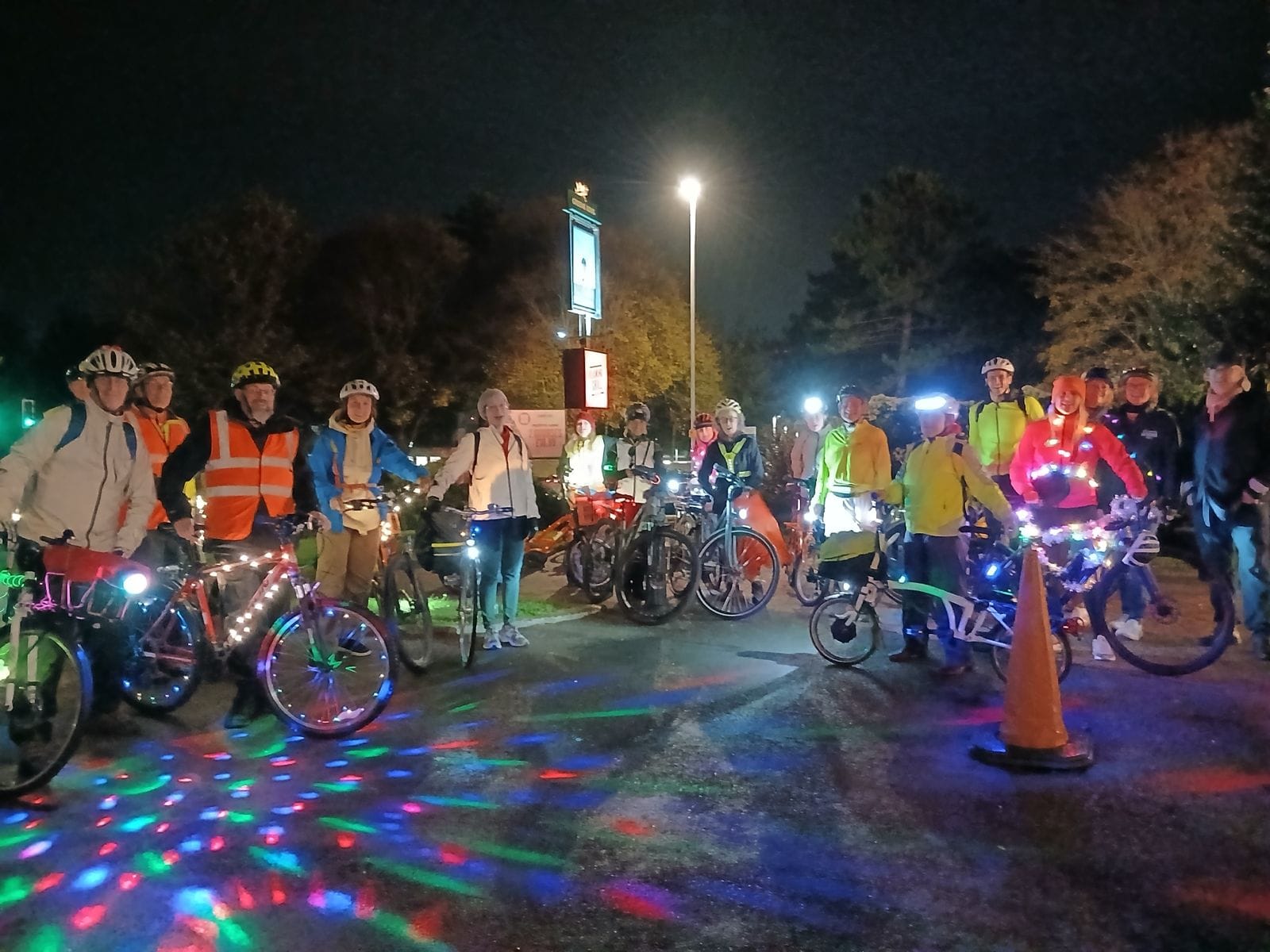
Bespoke campaigns for safe and clearly marked routes where bikes are treated with the same seriousness as cars. John stresses that the group is not against motorists. Rather, it focuses on choice and safety.
Safer streets, less congestion
Safety remains the biggest obstacle to cycling in Eastbourne, says John. Families, tourists and inexperienced cyclists may find even short rides intimidating. Without safe, designated cycle lanes, cycling can seem like something that only experienced or self-assured riders can do.
It is no wonder that people still use cars, even for short journeys. “If there are fewer cars on the road, motorists will actually be happier in the long run,” says John. “And it’s good for the environment and people’s health.”
Which is why Bespoke asks that more consideration be given to cycling in planning decisions. “You need to invest money in proper infrastructure, and you also need to think carefully about practical things - like where you park your bike,” John explains.
Bike theft and vandalism are often linked to poor planning. Parking a bike in a dark, isolated place makes it an easy target, whereas placing it in a busy, well-lit area where people regularly walk reduces this risk, says John.
Then there is what John calls ‘the soft barrier’ created by how people perceive cycling. Many women do not cycle due to safety concerns, while partially-disabled people, who may find cycling more convenient than walking, can feel excluded from cycle paths that only accommodate two-wheeled bikes.
Active travel policies are often portrayed in the media as “a war on motorists”, but John would rather focus on the “win-win message” that more cycling means less congestion, healthier communities and more vibrant businesses.
Appealing to younger cyclists
We are media students and John had asked us to help him design a social media strategy for reaching young people.
Much of Bespoke’s work has focused on schools and parents which, the group feels, has been relatively successful. However, reaching younger cyclists, who ride for leisure and to get around, has proved more challenging.
Like so many community organisations, the passion and experience that drives Bespoke is not always matched by digital skills.
“We have an Instagram account,” says John, “but we don’t use it strategically. We post occasionally, but we don’t really think about how young people actually use the platform.”
Bespoke can use its forums to provide solutions for cyclists. One of its projects, the family-friendly 'Kidical Mass' group bike ride, attracted hundreds of people last year; a colourful parade through Eastbourne that showed how the town might be if it was more cycle-friendly.
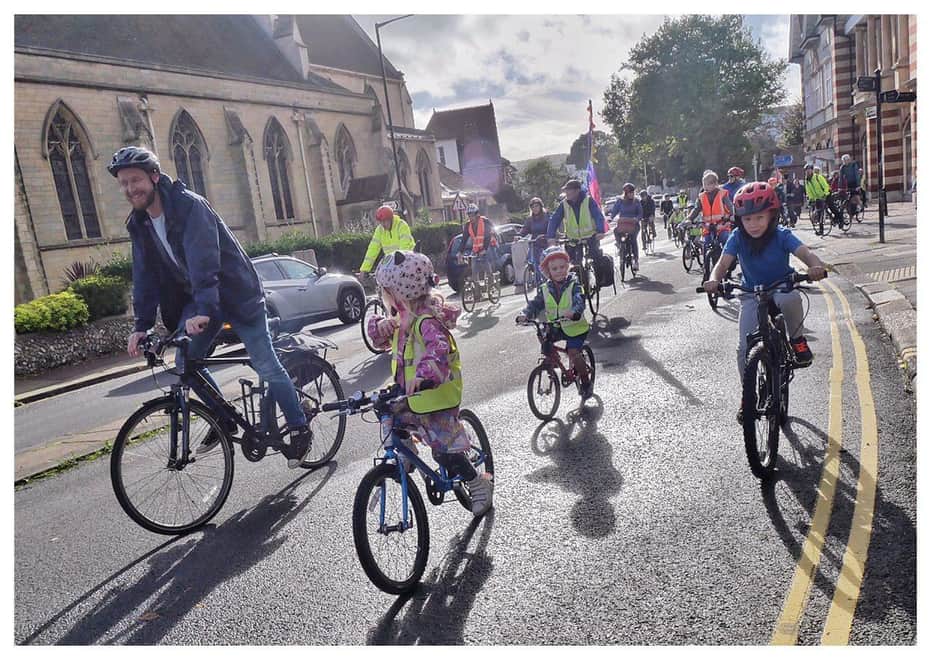
“Having a safe place to discuss cycling issues is the first step in creating change,” says John.
He believes that new cycling infrastructure can be accomplished through a combination of communication and education, and Bespoke is now exploring digital storytelling that connects with younger cyclists.
“Through media platforms and open days, we can showcase examples of cities with well-developed cycling networks, illustrating how local communities can become safe and bike-friendly destinations,” says John.
A vision for the future
Reimagining streets as communal areas rather than traffic lanes is at the core of Bespoke’s vision for a more inclusive town, and many streets in Eastbourne are cycle friendly.
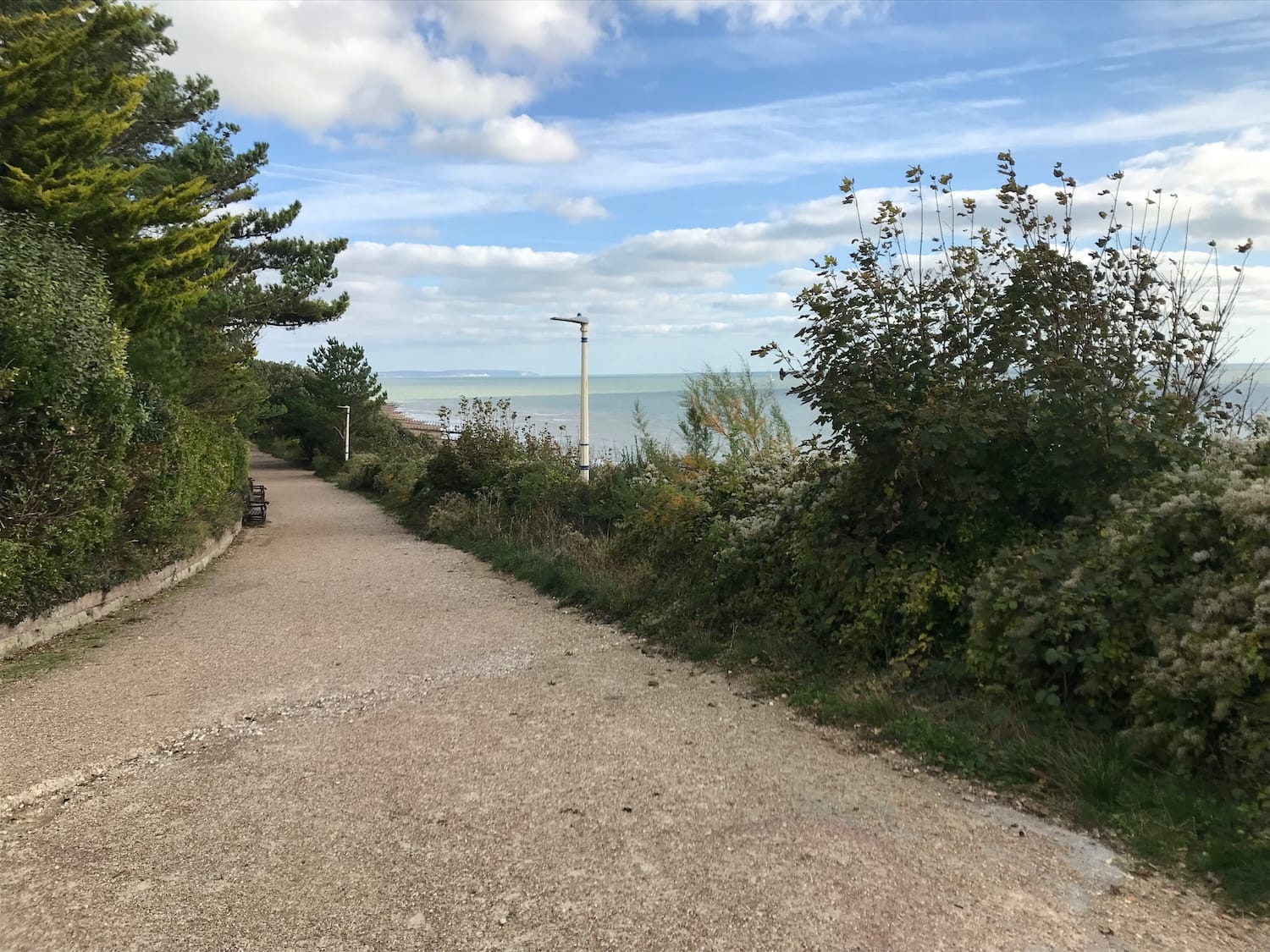
On our way back to the station, we get a glimpse of this as a few more cyclists ride past. Their bikes whir silently against the backdrop of the English Channel, and we see the possibility for a town where people can ride for fun, share the streets, and have a safe ride home, regardless of their age or ability.
The Eastbourne Reporter asked East Sussex County Council (ESCC), the highways authority, the following: what are the plans for safer and more widespread cycle routes in Eastbourne, particularly along the length of the seafront, to encourage sustainable travel?
The response from the highways authority
A spokesperson for East Sussex County Council said: “In Eastbourne, we are currently scheduled to deliver two new on-road cycle routes during 2026/27 financial year. These are the station to seafront cycle route (via the Devonshire Quarter) and the final phase of the Horsey Way cycle route (which will run from Eastbourne station to Ringwood Road, where it will tie into the existing route).
“Furthermore, we have also undertaken a feasibility study of options for the missing section of the seafront cycle route between Fishermen’s Green and the Wish Tower. This section presents a considerable challenge due to constrained road widths in parts and a section of promenade of limited width due to the flood wall, but which has very high pedestrian footfall during the summer months.
"Whilst we currently have no external capital funding secured for improvements on this section, it remains a priority route for future development in our Local Cycling and Walking Infrastructure Plan (LCWIP) and so we will be continuing to explore all options.
“The East Sussex Local Transport Plan sets out the long-term transport strategy for the county with a focus on delivering infrastructure that improves safety, promotes healthier lifestyles, and supports the wellbeing of individuals and communities across both urban and rural areas.
“This is supported by the county’s LCWIP [Local Cycling and Walking Infrastructure Plan] which identifies and prioritises a network of walking, wheeling, and cycling routes. It focuses on connecting people to key destinations for everyday journeys, including within the Eastbourne area.
"The LCWIP is currently being updated and will play an important role in guiding how future funding for active travel schemes is both secured and allocated. The updated plan is expected to be subject to public consultation later in 2026.”
The council is run by a minority Reform administration following the local elections on May 7.