REVIEW: Families in Fiction – five writers in search of war and peace
By Alison Norwood, volunteer arts reviewer
Families are complicated, and life around the kitchen table is relatable to all readers. This was the central theme of a session held as part of the first Eastbourne Literature Festival.
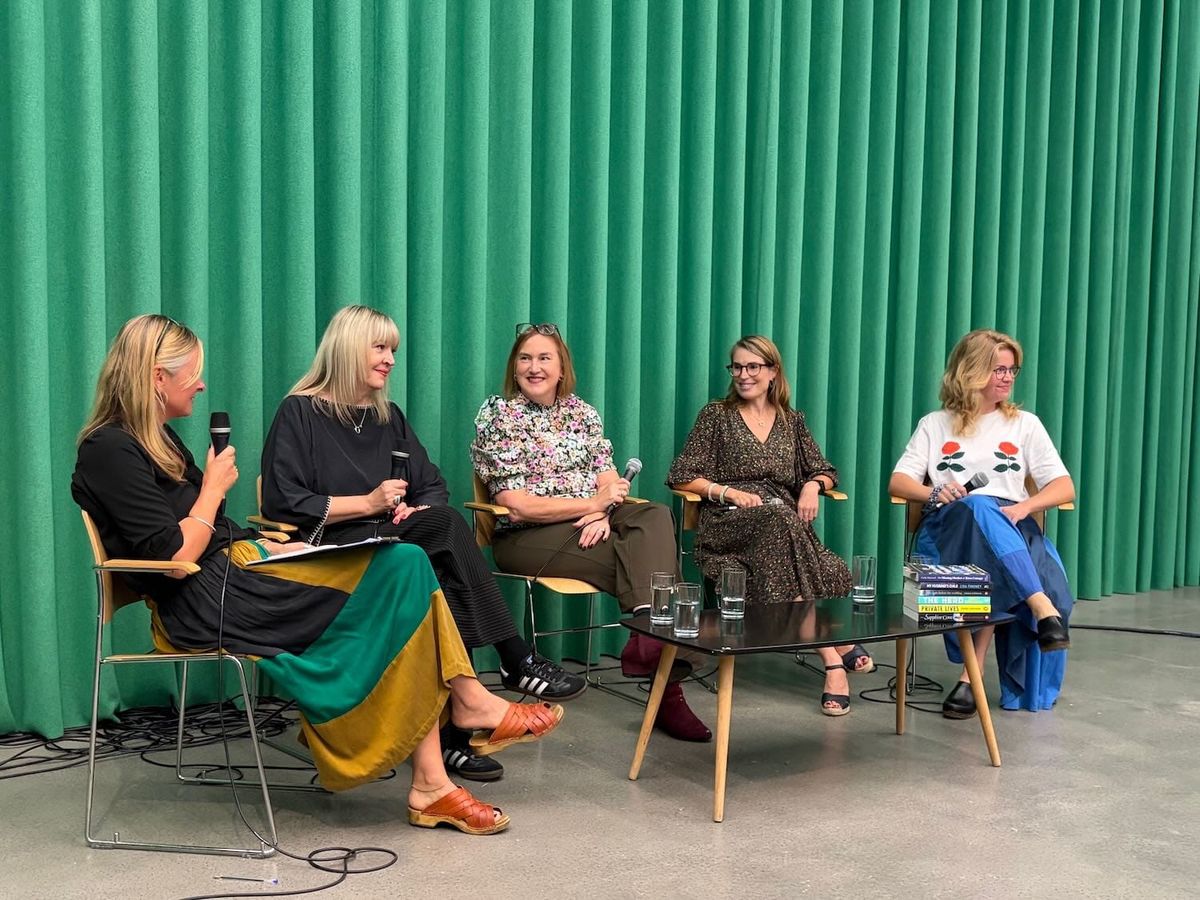
A panel of four authors – Lisa Timoney, Emma Robinson, Cathy Hayward and Emily Edwards – took part in a conversation hosted by Sophie Anderson, an author and teacher on the creative writing programme at the Towner in Eastbourne.
They considered what it is that makes family life so endlessly writeable and revealed their individual processes to produce their books.
Much of the conversation at the Towner on Sunday afternoon focused on the role of women in families – as mothers, step-mothers, daughters, and adopted members. Society holds women to different standards to men when it comes to running households and dealing with conflicts.
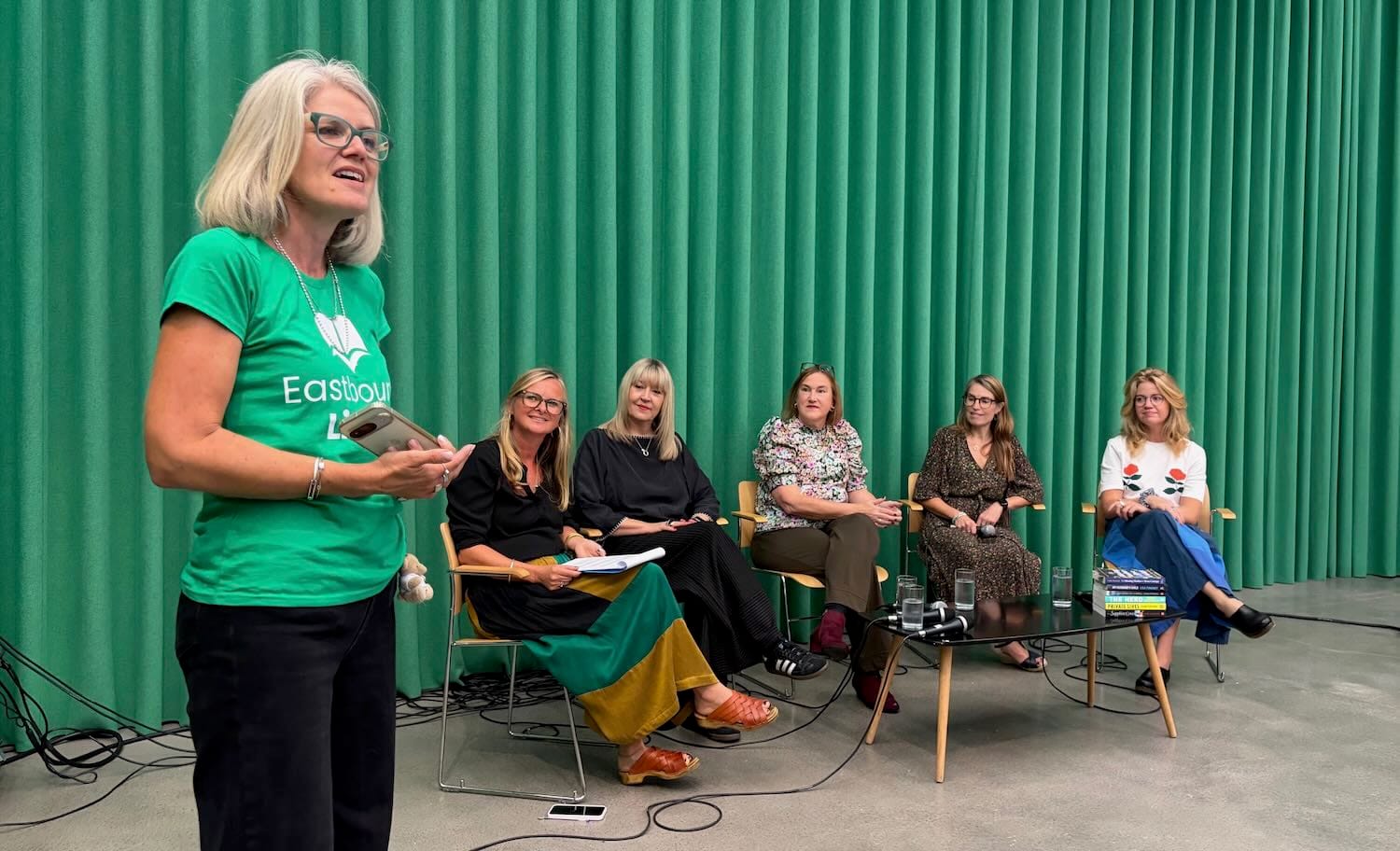
The panel agreed that writing helped them to process and negotiate these challenges, enabling them to explore aspects of their own life in the guise of their created characters.
Interesting facts were revealed along the way. Apparently, every person has 14 secrets, women read more fiction than men, and there’s no such category as ‘men’s fiction’ in publishing. Marketing can be too simplistic in either targeting women or men as readers, and the idea of trend forecasting three or four years ahead caused some discomfort to all.
Discussions looped around there being more trigger warnings now, which can be detrimental in revealing key themes far too early, and about the pressure from some editors to add more twists to stories to lock in short attention spans.
The overall feeling from the panel was that writing about families is detailing the microcosm of the intimate and the mundane, and that ideally the gradual development of plot and characters should not be forced into too much of a set pattern or be too influenced by outside pressure.
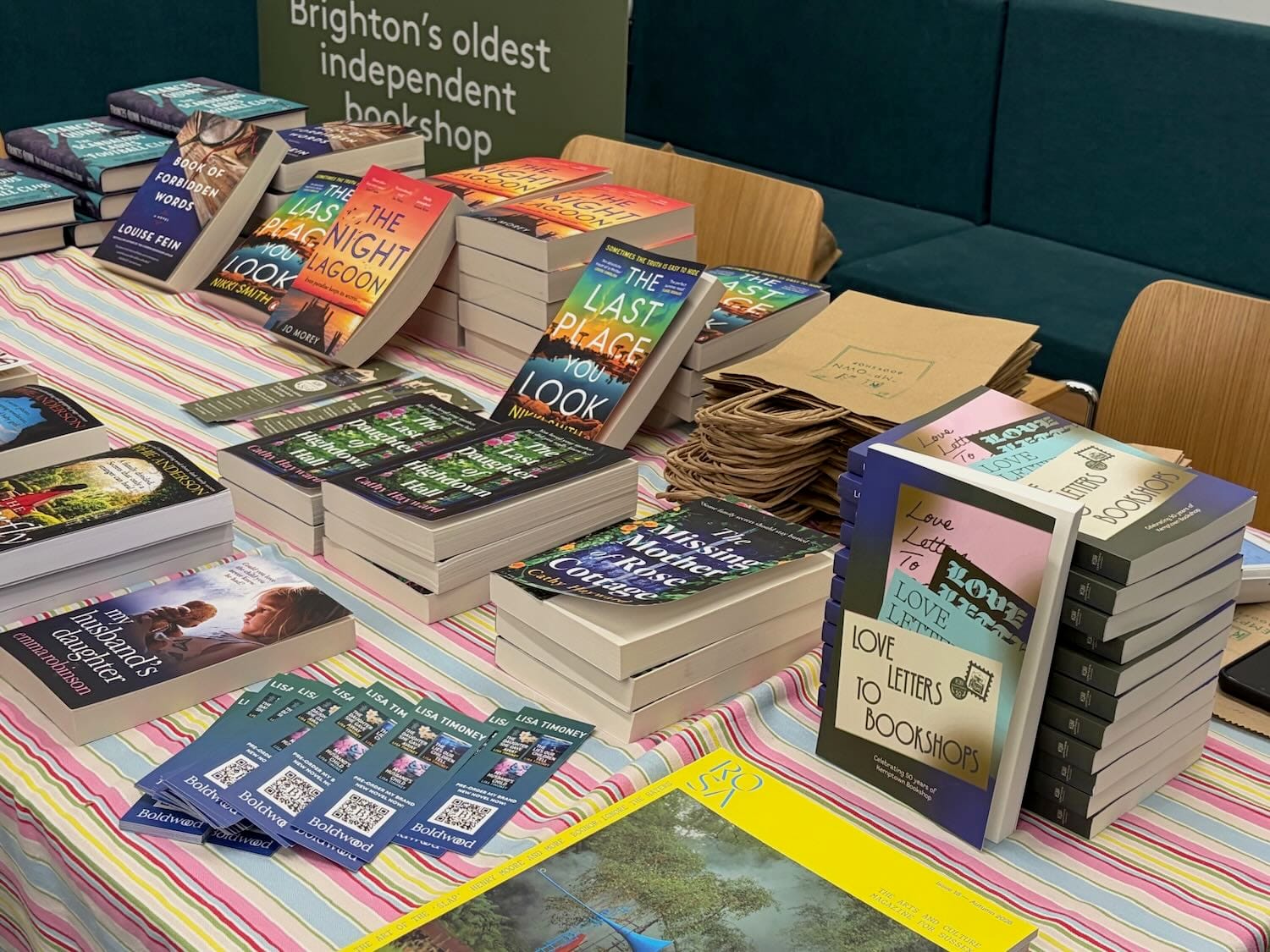
Each writer had their own processes for producing their books, from detailed chapter plans across the whole to understanding that characters develop lives of their own and deviate from those plans! Characters can be trapped together for a certain time, such as gathering abroad for a family wedding, or their histories can be entirely changed if that suits the greater flow.
"The joy of learning about your characters as you go" - author Lisa Timoney
Some of the authors start with fully-formed characters or resonant imagery and develop a plot around them. Some write chronologically, some write in non-ordered chunks according to mood. One author published two books per year while another published one book every three years.
Everyone agreed that the amount of information circulating in the world now is not detrimental to finding new stories to write about. There are always topical subjects to hook onto, and definitely always the delightful avenue of ‘what if…?’
In a discussion with the audience, the writers agreed that ideas often come when they’re not doing anything in particular – at a train station for instance, or an airport. The liminal dream state is also a rich source of important detail before the logical editorial mind kicks in later, but it’s essential to always write those thoughts down because they won’t be remembered in the morning!
The discussion ended with an observation that writers read. A lot. Including proof copies of works by other writers. Without that circular influence, it’s hard to write alone.
"Reading is breathing in, writing is breathing out" - author Emma Robinson
Eastbourne Reporter asked two of the panel for their experience of the inaugural Literature Festival.
Lisa Timoney was on three panels, and she said they were all an absolute delight. The audiences were engaged and the organisation faultless.
Emma Robinson said the invitation was a lovely excuse to come to Eastbourne. She noted that there had been a good selection of panels with a range of authors, and she was particularly pleased to be included as a digital-first author, as that’s not always the case. And, she added, the volunteers were amazing.
Eastbourne LitFest will be held again next year over the last weekend in September (24th - 26th).
:: Alison Norwood is managing director of Norwood Editorial Services and was previously an academic publisher. She has also worked in print and design and writes novels in her spare time. Alison has always studied art history and is a volunteer arts reviewer for Eastbourne Reporter
📝 The Eastbourne Reporter is non-profit journalism, with no ads and not a hint of AI. Volunteers write independent reviews, edited by experienced, qualified journalist Rebecca Maer, who is largely unpaid due to lack of funding. You can really help us with a regular coffee or a one-off donation. Thank you!