Heavy rainfall prompts seven hours of sewage discharge into sea
[Updated Friday 21.8.26 with details of 18-hour discharge at Pevensey Bay]
By Rebecca Maer
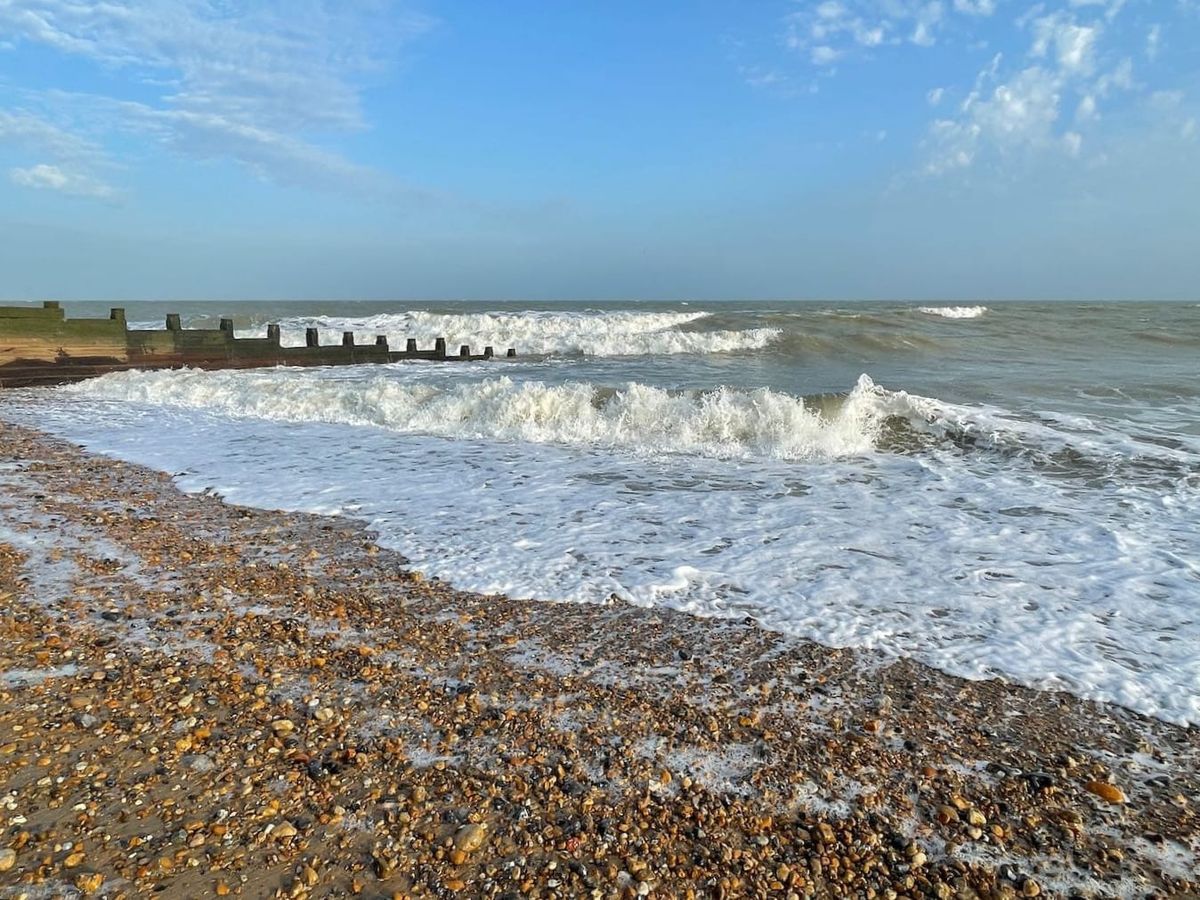
Sewage was discharged into the sea off Eastbourne for more than seven hours on Thursday.
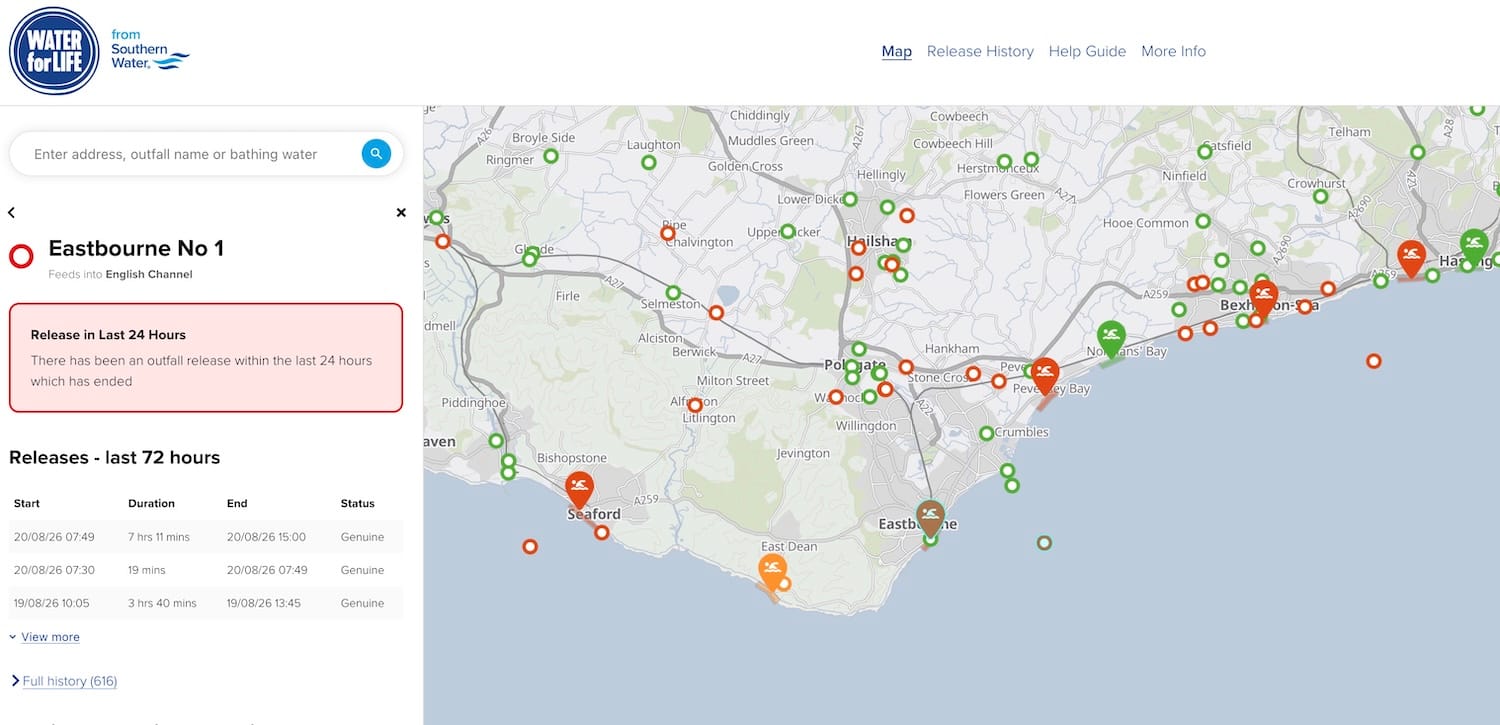
Rainfall overnight on Wednesday after many weeks of drought meant Southern Water started what it described as a “storm overflow release” at 0749 today. The company’s own map said it ended at 1500 after 7 hours and 11 minutes.
Storm releases are permitted and take place when there is too much demand on treatment works during heavy rainfall.
But critics say each discharge contains many pollutants which are dangerous to swimmers and wildlife.
In addition to the release off Eastbourne, the Willingdon No 2 outfall discharged for 18 hours and 32 minutes at Pevensey Bay, ending at 0100 today (Friday 21 August), according to the Southern Water map. This had started at 0628 the previous morning (Thursday).
It is thought that 40mm of rain fell in the area in 24 hours or 68% of the long-term August average. Rainfall runs off hard, baked ground rather than being absorbed after a drought, particularly when heavy rain falls in a short period of time.
This can lead to large volumes of surface water entering the UK's combined sewer systems and increasing pressure on the network.
Eastbourne’s Liberal Democrat MP Josh Babarinde stated today on social media that he has written to the company’s chief executive Lawrence Gosden to express his concern and call for "urgent investment in our drainage systems”.
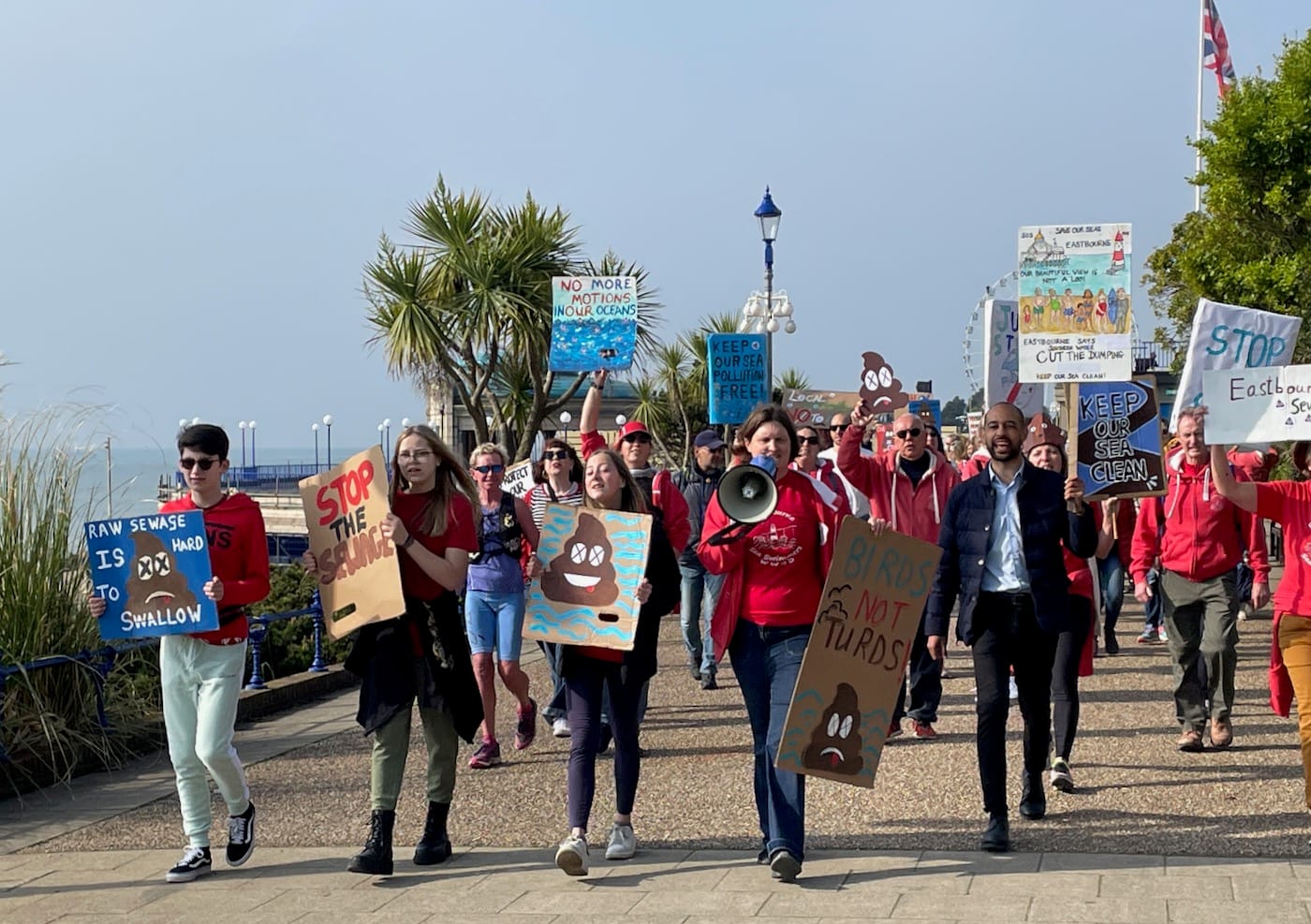
Eastbourne Reporter has asked Southern Water the following:
1. What does Lawrence Gosden say?
2. What investment is Southern Water making to finally prevent this type of discharge into the sea happening, as it has done over many years?
3. When will that infrastructure be in place so there is no more sewage flowing into the sea?
A Southern Water spokesperson gave us the following statement tonight:
“We understand the public concern around storm overflows and are committed to reducing our reliance on them. Our £1.5 billion Clean Rivers and Seas Plan has already prevented hundreds of storm overflow releases in its first year.
“Storm overflows are designed to operate during periods of heavy rainfall to help prevent the sewer network from backing up and flooding homes, businesses and roads.
“In Eastbourne, we're investing more than £20 million to upgrade the wastewater treatment works, helping reduce pressure on the network and improve environmental performance. This forms part of a wider £476 million investment programme across East Sussex.”
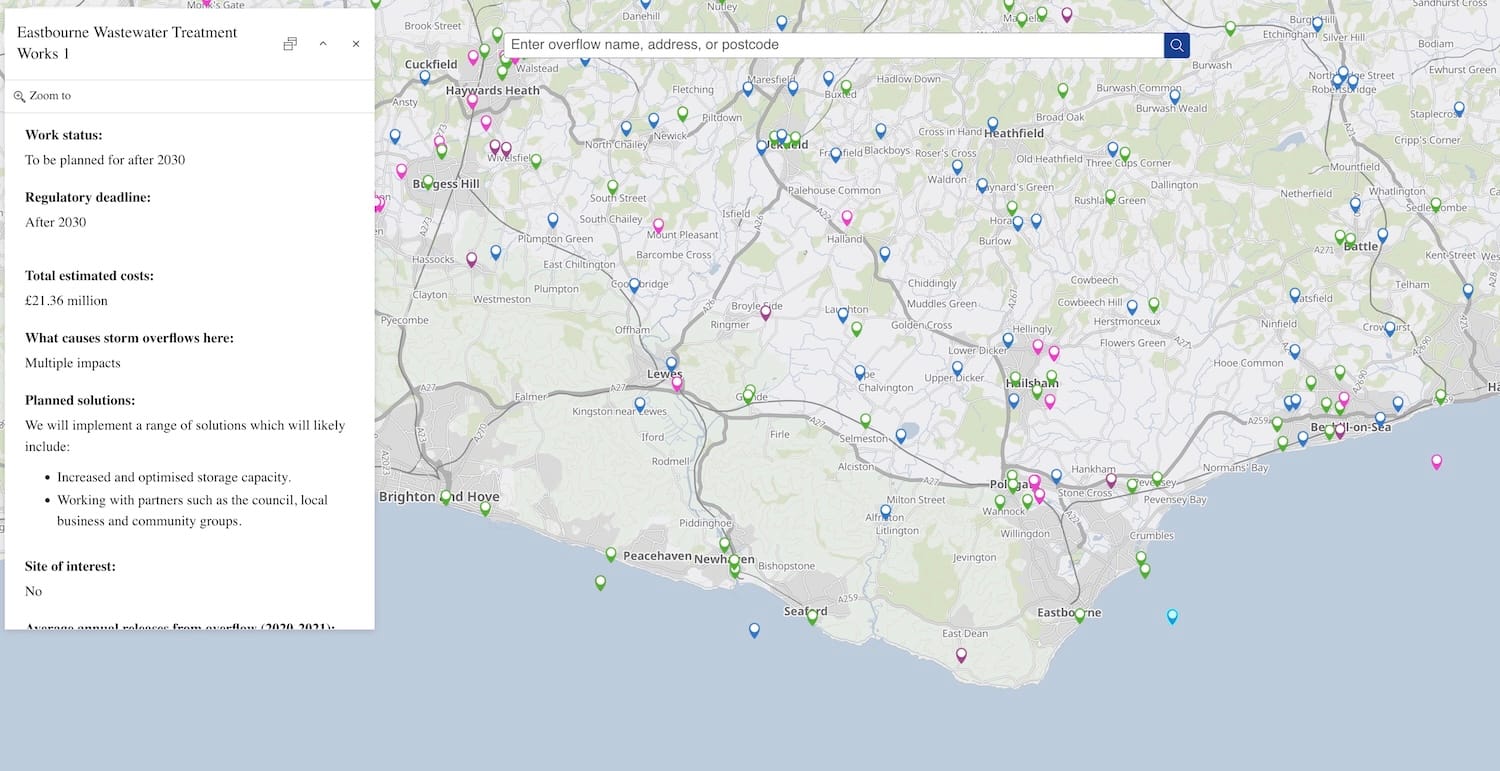
Southern Water’s ‘Clean Rivers and Seas Plan’ (above) gives the “work status” at Eastbourne water treatment plant at Langney Point. The discharge area is about three miles off the coast from this point.
The company states that work is “to be planned for after 2030” at a total estimate cost of £21.36 million.
Planned solutions are to implement a range of solutions “which will likely include” increased and optimised storage capacity, and “working with partners such as the council, local business and community groups”. No further details are given.
Southern Water was fined £7.1m earlier this summer after repeated illegal sewage pollution incidents forced the closure of beaches in Kent and harmed coastal communities.
The case, which was brought by the Environment Agency, exposed serious failures were exposed in the company’s management of wastewater.
Southern Water was fined £90 million in July 2021 after admitting thousands of illegal discharges of sewage which polluted rivers and coastal waters in Sussex, Kent and Hampshire.
In February this year, Southern Water executives were questioned at a meeting of residents who live near the Langney Point treatment works.
Around 100 people who could not sit in their gardens for much of the previous summer due to a stench from the sewage works attended. One resident described it as a "shitshow".
The company repeatedly put forward assurances that £25 million was being spent to replace key equipment and that odour levels had already improved
Water companies say they are investing heavily in the infrastructure but critics point out that the companies, which were privatised in 1989 under Margaret Thatcher’s government, have had decades in which to invest.
:: This is a non-profit website, run by an experienced, qualified journalist still working on a largely voluntary basis for the community with no paywalls or recycled PR content. If you think this is A Good Thing, a regular £4-plus a month donation here or one-off support here will help pay the running costs. Thank you!