Analysis: how Eastbourne's political map was redrawn
We reflect on election tactics as the Lib Dems fought off the Reform challenge in Eastbourne but the Conservatives hung on to just one county council seat here
By Paul Bromley, Eastbourne Reporter volunteer writer and former political correspondent
The county council elections on 7 May 2026 will go down as the day the political map of Eastbourne – and East Sussex – changed dramatically.
The town has been dominated by the Liberal Democrat vs Conservative tussle for decades. It now has its first elected representative from Reform UK.
Eastbourne is no longer an exclusive orange/blue zone but an orange/blue/turquoise battleground.
What were the Eastbourne results?
Here’s a reminder of what happened at the elections for members of East Sussex County Council (ESCC).
The Liberal Democrats won seven of the nine voting areas, the Conservatives held one and Reform gained one.
Back in May 2021, at the previous set of ESCC elections, the Lib Dems won six seats in Eastbourne and the Conservatives three.
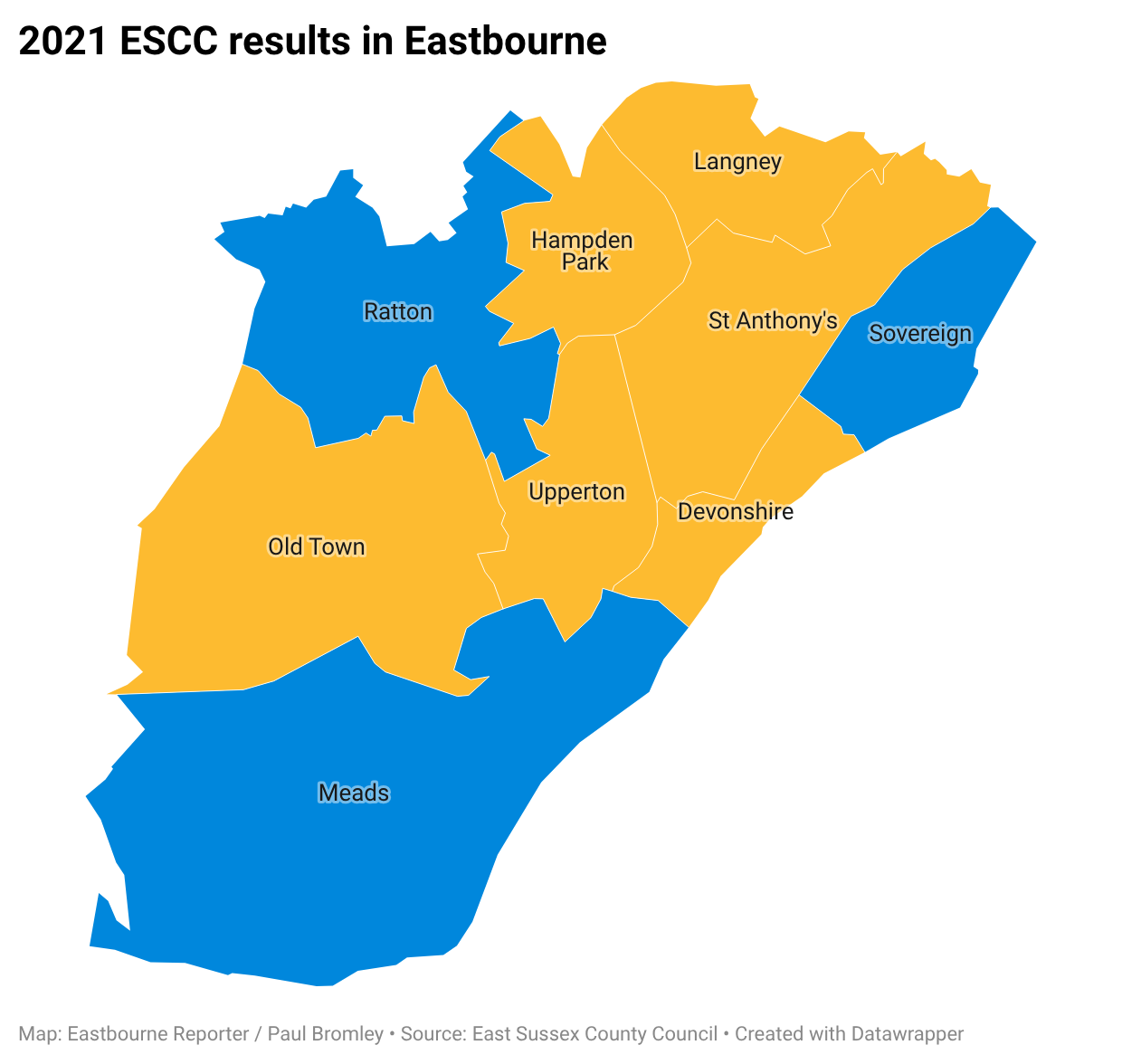
Reform stood in just two areas last time and received a total of 153 votes. This year the party fielded a full slate of nine candidates and were supported by 9,463 people across the town.
Here are five key aspects to the results:
1. High turnout
Elections matter.
This set of elections was originally due to be held in May last year but were postponed as part of the wider move towards a Sussex-wide mayor and new unitary authorities to replace the existing county, district and borough councils.
The elections were on course to be postponed again this year but a legal challenge led to the polls taking place.
Voter frustration at not being able to have their voice heard at the ballot box may in part explain the high turnout across the town.
Overall, 43.9% of Eastbourne’s 75,417 electors cast a valid vote last Thursday. The figure was up by 7.4 percentage points from the May 2021 poll. Turnout was up in every one of the nine voting areas.
There may also have been more at stake this time with a wider choice of parties and a record number of candidates plus concerns over a range of issues from adult social care and potholes to children’s services and transport.
And if anyone is still wondering whether their vote counts or thinks there's no point in voting, just look at the result in Maresfield & Buxted. Green candidate Christina Coleman won with just two votes more than the Conservative Roy Galley who had been ESCC chairman.
2. Voters switched from Conservative to Reform
The Tories suffered a major reversal in their fortunes.
The party slipped from second to third place in terms of vote share.
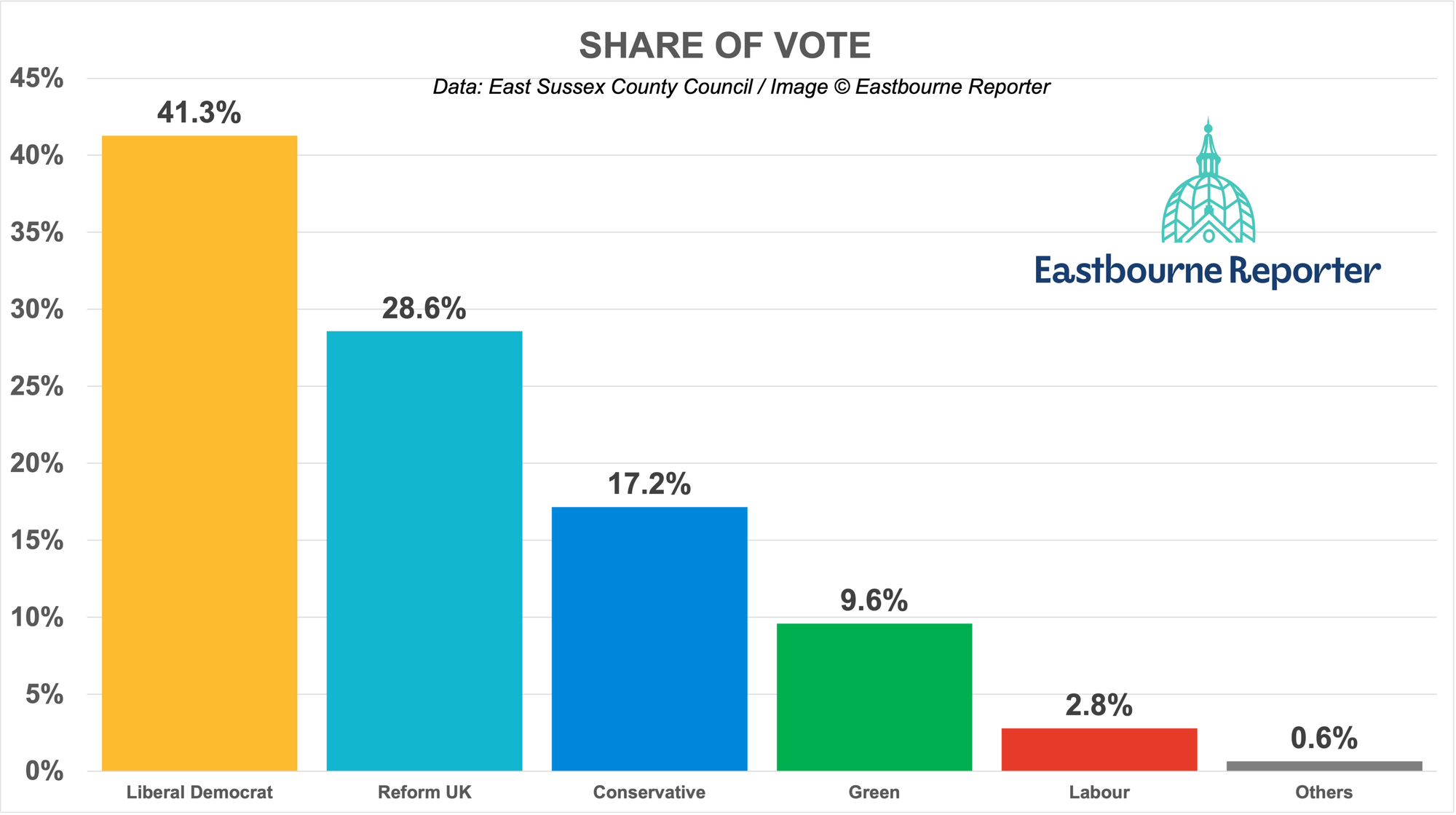
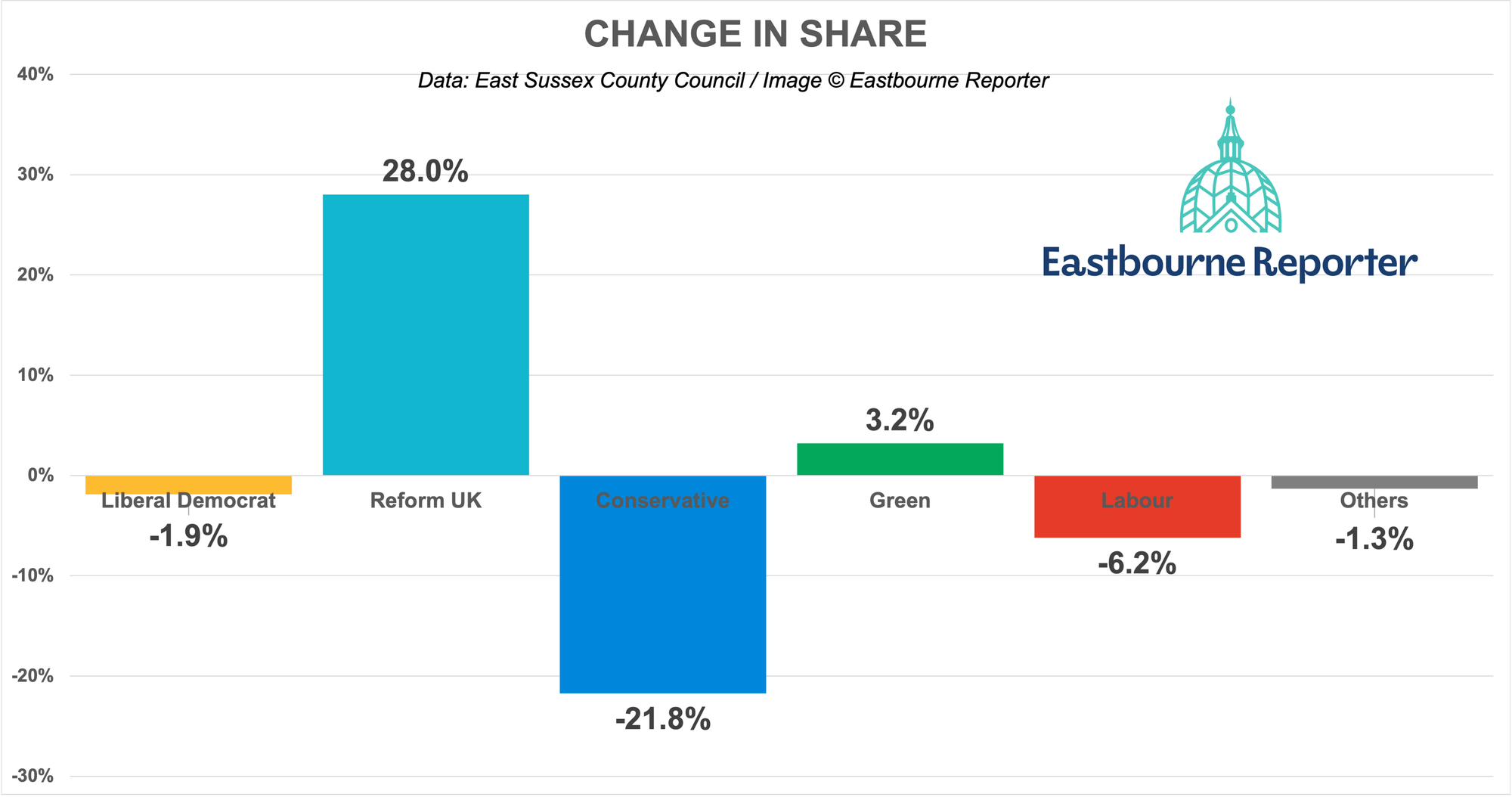
The switch of votes was almost entirely from Conservative to Reform - and some Labour voters also changed their allegiance from 2021, moving in part to the Greens.
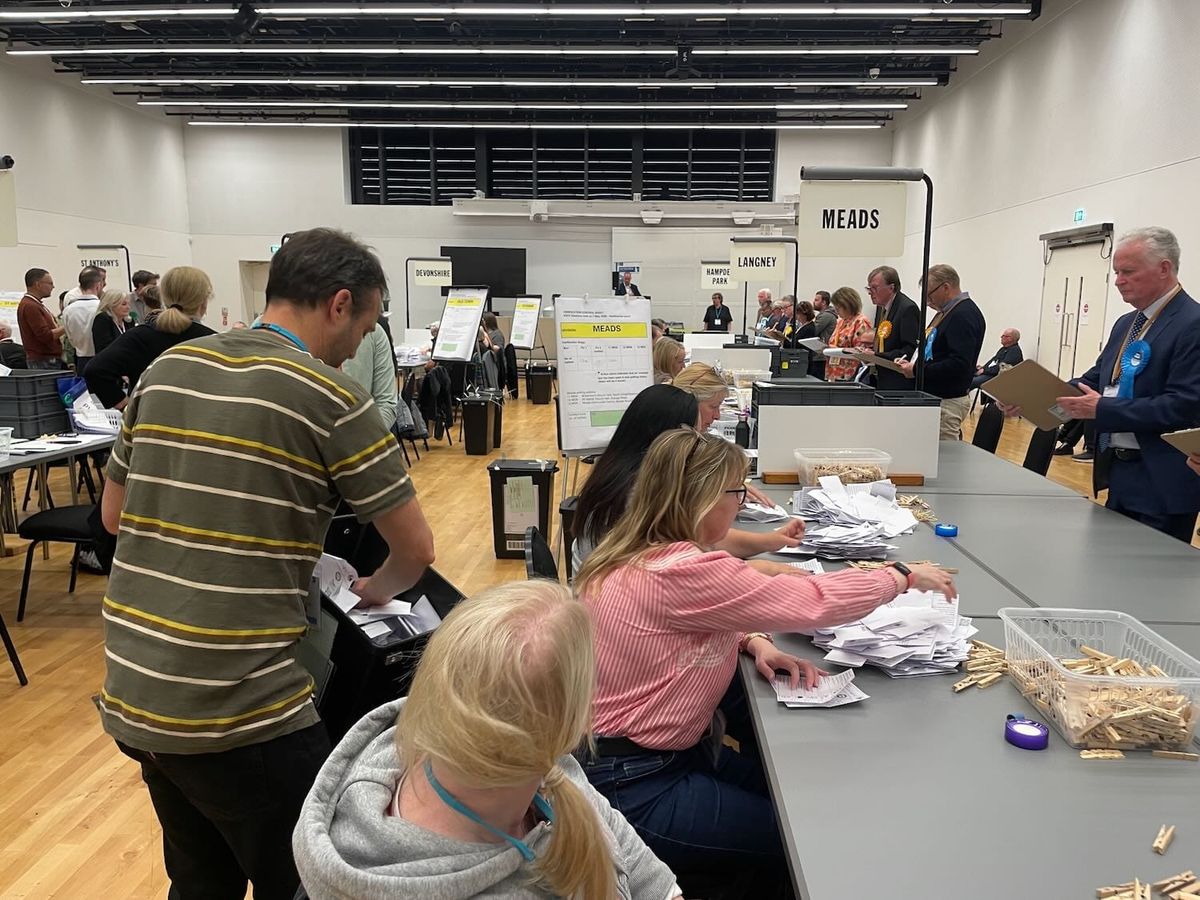
The Conservatives were close to a total wipeout and it looked like a realistic prospect during the count that they would end up with no county council representation in Eastbourne. As the ballot papers piled up in baskets, the Lib Dems thought they had won Ratton and despondent Tories were close to consoling Cllr Colin Belsey.
But the final result showed Cllr Belsey ahead by just 40 votes – the narrowest margin of victory across the town. He is now one of just three Conservative county councillors in East Sussex.
The Lib Dems already have Ratton in their sights for the next set of elections in May 2027.
Sovereign was the safest Tory county council seat in Eastbourne five years ago. So the scale of Reform’s victory – coming from not standing last time to romping home more than 400 votes ahead of the Conservatives – was all the more spectacular.
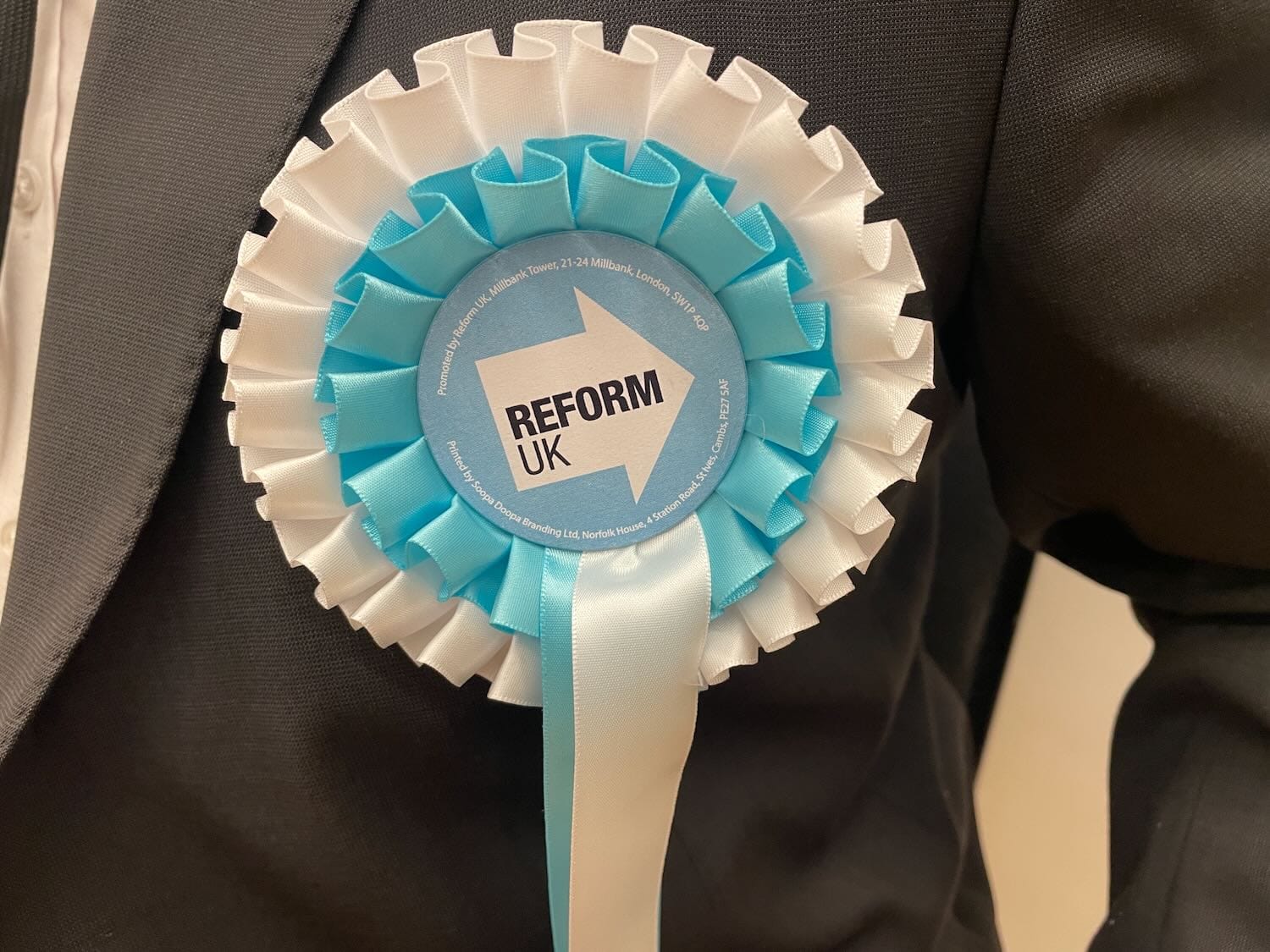
It gives them a foothold in Eastbourne politics for the first time and a springboard to build on for future elections.
It was a bad day for the Tories across Eastbourne. The party finished first in only one area (Ratton), came second in Meads and Sovereign, third in Hampden Park, Langney, Old Town, St Anthony’s and Upperton, and was pushed into fourth in Devonshire, nearly 200 votes behind the Greens.
The Greens’ share of the vote was up in every part of the town suggesting they are on the rise and taking votes from the major parties to become more of a force in Eastbourne. The Greens were the only party other than Reform to register an increase in their share of the vote.
3. Lib Dem tactics worked
The Liberal Democrats ran a strong campaign to try to stop Reform.

On polling day, Eastbourne’s Liberal Democrat MP Josh Babarinde posted on Instagram a survey suggesting “it’s neck-and-neck between the Lib Dems and Reform locally!” with a key message “Vote Lib Dem to Stop Reform in Eastbourne!”
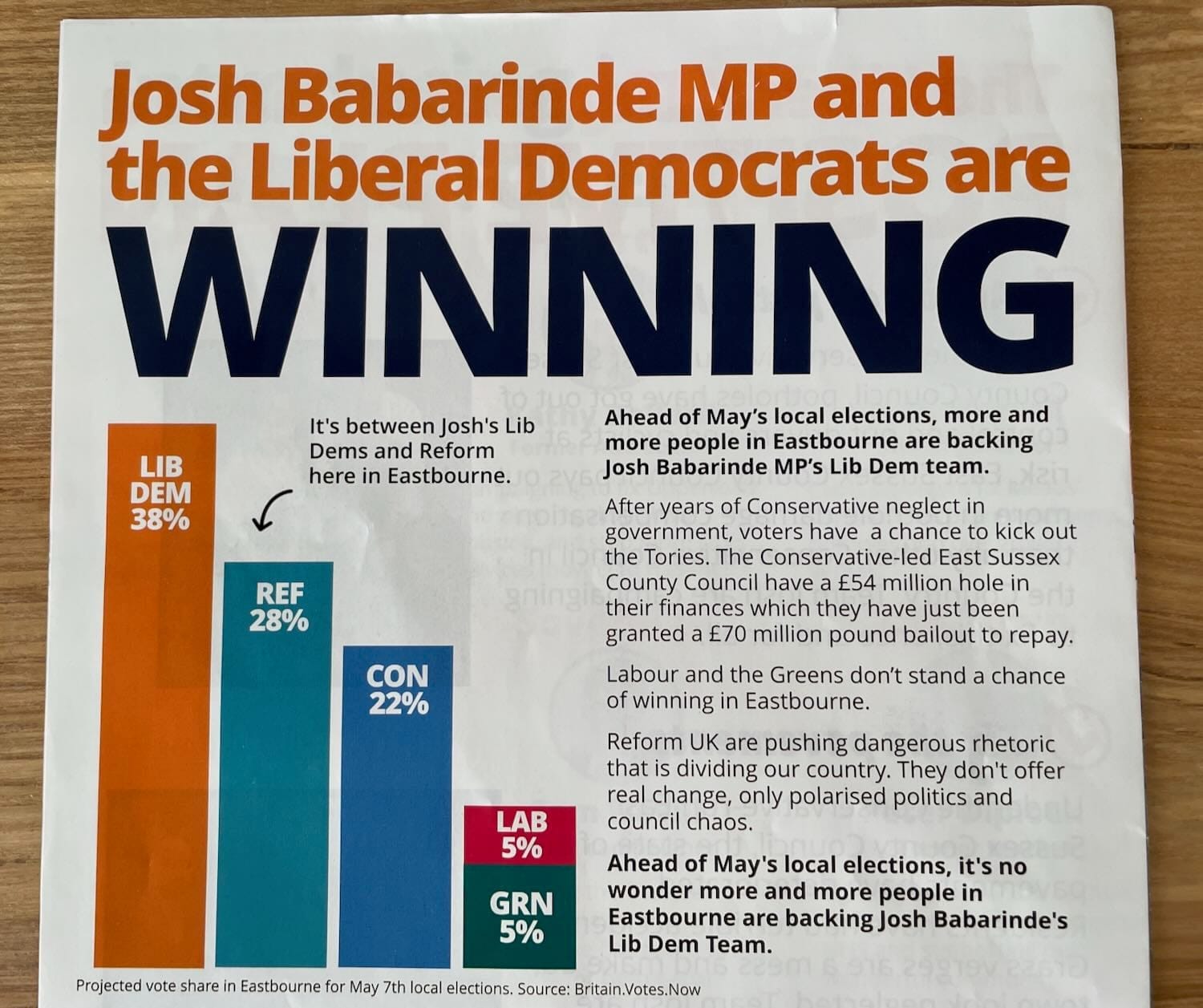
Their campaign leaflets used various polls and projections to suggest “It’s between Josh’s Lib Dems and Reform here in Eastbourne”.
As our results analysis above shows, there was actually a wide gap between Lib Dems and Reform in the share of the vote. Far from being “neck-and-neck”, the Lib Dems were actually head and shoulders above Reform.
Polling seems to have underestimated the Lib Dem vote. Any Lib Dem waverers may have been persuaded back into the fold by the prospect of Reform winning – the “better the devil you know” theory at work. The party also appealed in its letters to voters to “lend us your support” as a short-term means to an end.
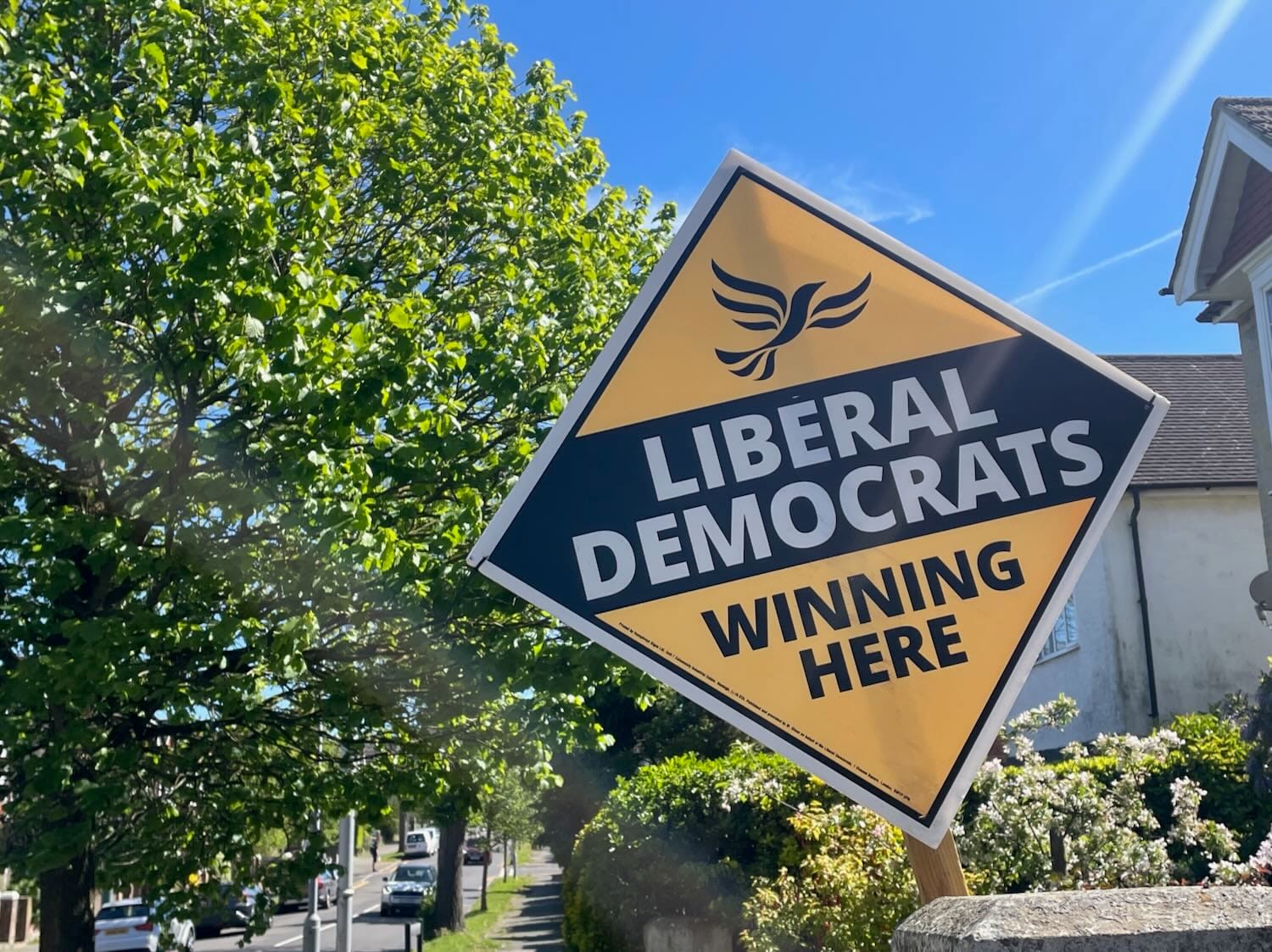
The party enjoyed success partly on the basis of trying to prevent Reform getting in. There is a saying in politics that “something always trumps nothing”, meaning it is a better long-term strategy to put forward your own positive message rather than trying to garner support on the basis of stopping your opponents.
Although the Lib Dems did set out their own plans, the key messaging from the MP downwards was about stopping Reform. The party will need to consider whether the same tactics will work in future elections – but it certainly helped them this time as the Tory/Reform vote was split in many areas, leaving the Lib Dems space to win. It was most prominent in Meads where, unusually, the top three candidates all won more than 1,000 votes.
4. A town vs country divide
Although Eastbourne remains a predominantly non-Reform area, the same cannot be said across the rest of East Sussex.
To the north, Reform took Polegate & Watermill from the Independent Democrat and to the east there is a clear run of Reform representation through Pevensey and Bexhill until you reach largely-Green Hastings. To the west, there is an Independent Democrat in Willingdon & South Downs.
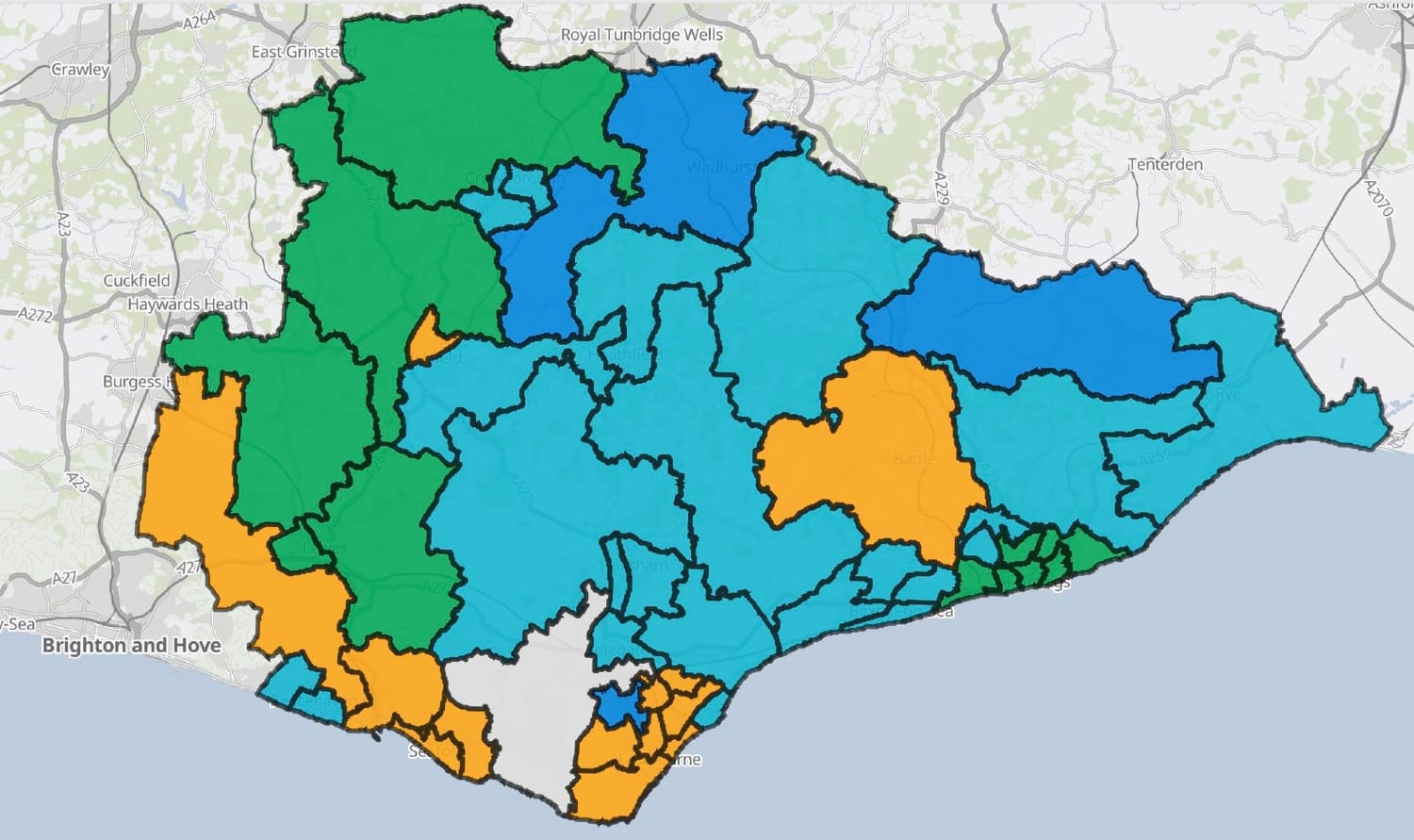
The major towns in East Sussex have by and large rejected Reform: Eastbourne is mostly Lib Dem, Hastings is mostly Green, Lewes is Green, and Seaford and Newhaven are Lib Dem.
But Reform have a lot of representation in the more rural and isolated parts of the county such as Arlington, East Hoathly & Hellingly; Heathfield & Mayfield; and the two seats in Crowborough.
Reform is now the largest party on East Sussex County Council but short of being able to form a majority administration.
In total, there are 22 Reform county councillors, 13 Liberal Democrats, 11 Greens, three Conservatives and one Independent Democrat. A total of 26 seats are needed to form a majority administration. Labour lost all its representation in East Sussex.
Party groupings met over the weekend to choose their leaders and discuss possible alliances to run the county council. The annual meeting of East Sussex County Council is scheduled to take place in Lewes on Thursday, 21 May when the future control of the authority should become known.
5. Campaigning already under way for 2027
If you thought that now that the elections are over, politics and campaigning will take a back seat, think again.
The current schedule is for a poll in May 2027 for members of the new unitary council, which will replace the current ESCC and Eastbourne Borough Council.
The Government has published a new consultation on moving parts of East Sussex into an expanded Brighton & Hove City Council (BHCC) which is already a unitary council.
Ministers are asking for views on their suggestion that Peacehaven, Telscombe, East Saltdean and Falmer should form part of an expanded Brighton & Hove City Council from 2028. The rest of the county, including Eastbourne, would remain in East Sussex as a separate unitary authority.
The consultation runs for five weeks until 15 June.
The new councils will take on all the services in an area from the current system of divided responsibilities between district/borough councils and county councils.
Ministers had held off from the next stage in the process until after the council elections had taken place.
Elections to the new authorities are planned for next May.
There will then be a “shadow” year before all the existing county, borough and district councils including ESCC and EBC are dissolved in April 2028.
It means those people elected last Thursday will be in post for a maximum of two years and then hand over to the new unitary authority representatives.
The political parties are already thinking about the next set of elections.
Even as the final result from this set of elections was being announced in Eastbourne, Josh Babarinde had fired the starting gun for the next round of polling.
He shared Eastbourne Reporter's interactive results graphic on Instagram and appealed to people: “Will you help me campaign to get Reform out?”
Strap in for a bumpy ride.
:: Paul Bromley is a qualified journalist and broadcaster who worked for 40 years for regional newspapers, the Press Association and Sky News, specialising in reporting politics and elections. He now works in community rail
:: If you think this journalism and analysis is better than PR handouts presented as ‘news’, support us – it’s a free-to-read and ad-free gem. One-off donations are here or become a member here for £4 or £8 once a month. We need your help to become viable