Chapter and verse on Neil Kinnock's favourite books – and his least favourite politicians
By Paul Bromley, volunteer writer and former national political journalist
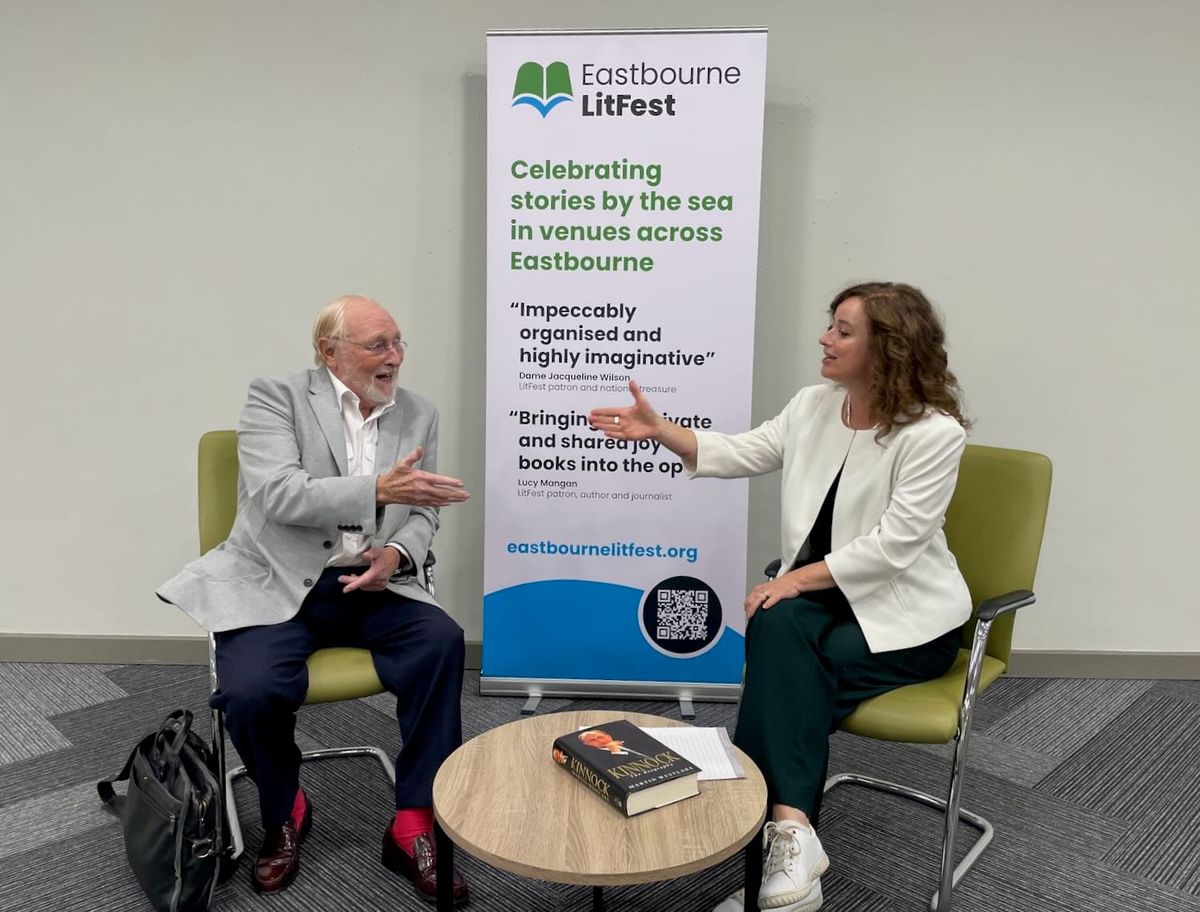
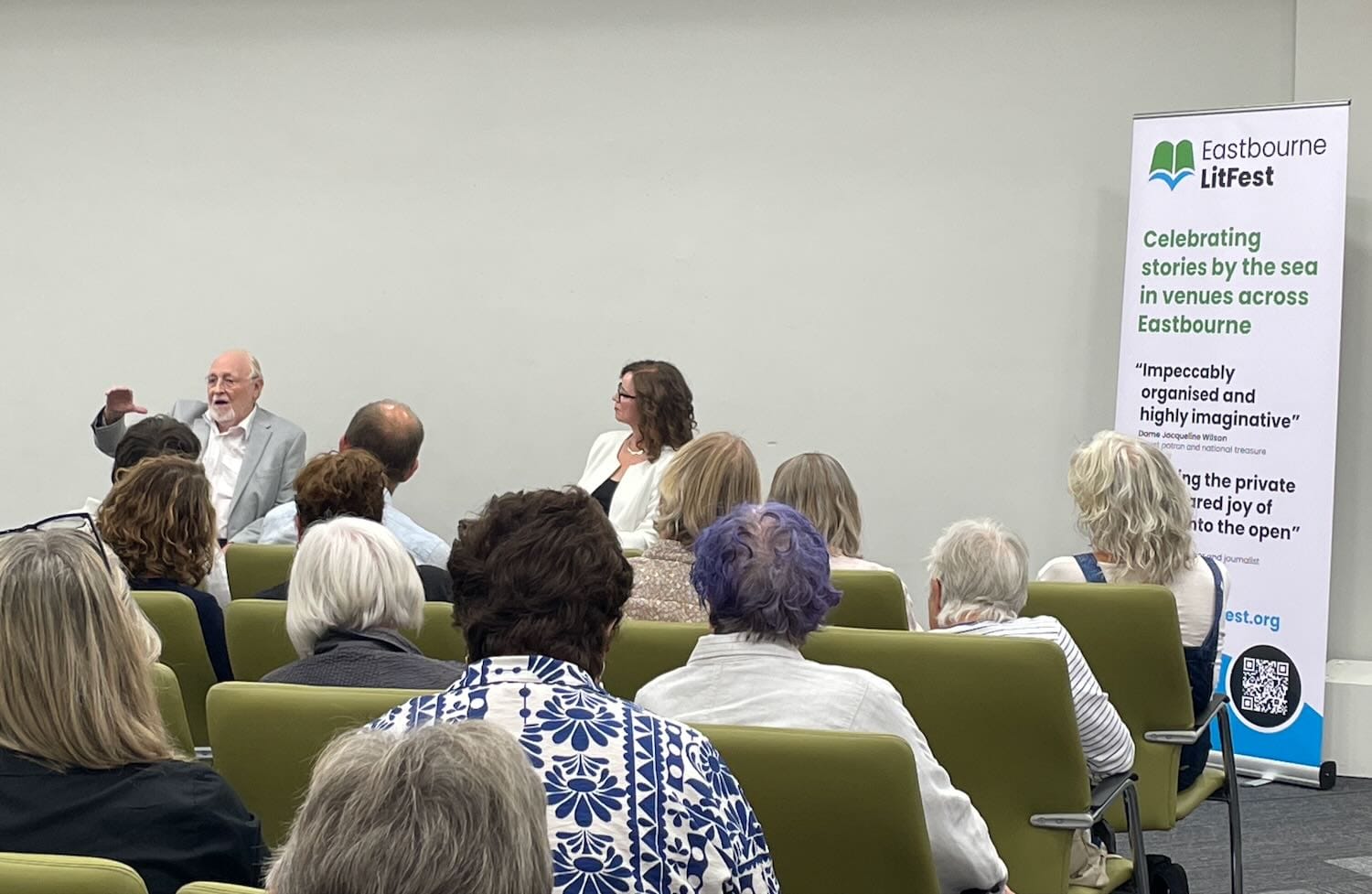
Lord Kinnock delighted book lovers and political aficionados with an entertaining and enlightening talk as part of Eastbourne’s inaugural Literature Festival.
The 84-year-old former Labour leader spent 75 minutes in conversation with author and journalist Deborah O’Donoghue yesterday afternoon.
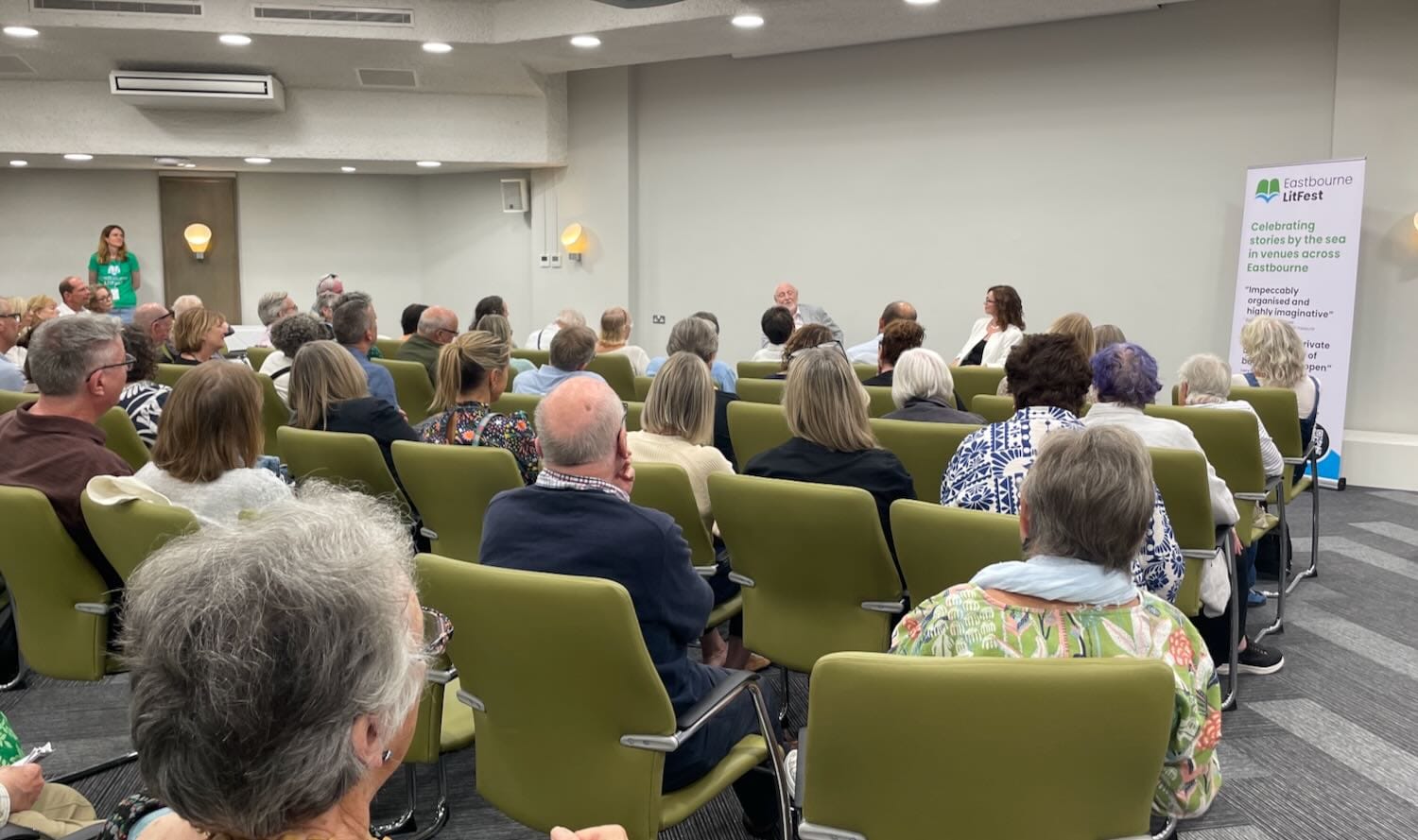
A 100-strong audience packed into a function room at The View Hotel where information boards were unveiled last week to highlight its history and links to trade unionism.
What were Neil Kinnock’s favourite books as a child?
He explained his parents used to read to him all the time. Books were the only presents he received on birthdays and at Christmas from aunts, uncles and his grandfather.
He enjoyed R D Blackmore, read many of the classic authors and consumed all the Charles Dickens stories.
Dickens, Lord Kinnock said, was “insurmountable and irreplaceable as a generator of ideas” because there was something funny in each book.
By the time he was 11 or 12, he said he realised all the good things in his community in south Wales had been “collectively financed and collectively provided for my individual enjoyment and pleasure”, such as libraries, tennis court, swimming pool and theatre.
“It is a short step from there to being a socialist,” he declared.
Then reading John Steinbeck’s The Grapes of Wrath at the age of 13 made him “so angry” and made him realise: “All the authors seemed to endorse what I thought was instinct.”
It led to him joining the Labour party in January 1956, three months before his 14th birthday.
Did Lord Kinnock have any ambitions to be a writer?
Kinnock dismissed the idea instantly. “I think I was too lazy to be a writer,” he declared.
“I couldn’t stand the solitary life,” he added later.
The only speech he had written up until the time he became shadow education secretary in the late 1970s was his constituency party nomination speech which had to be a maximum of ten minutes.
“You can understand why that was a constraint on me – the ‘Welsh Windbag’!” he joked.
Lord Kinnock went on to reveal that when he was party leader (1983-1992), his leader’s speeches to the annual party conference were always last-minute.
“I would get to the Monday night before the Tuesday leader’s speech of the party conference and I hadn’t written the speech so I had to stay up all night writing the speech … tramping up and down dictating,” he said.
His speeches were finalised so late that, in 1986, he had already started speaking when one of his assistants came on the stage with the last two pages she had been typing out from his notes.
Who were Neil Kinnock’s political foes and friends?
He named former president of the National Union of Mineworkers Arthur Scargill and ex-Conservative prime minister Margaret Thatcher as the two people he “despised” and “detested”.
“Scargill and Thatcher deserved each other. Nobody else in the world deserved either of them,” Kinnock said, as much to his own amusement as the audience’s.
He elaborated, saying to much laughter: “Scargill, I despise and he hates me ... so that’s all right!”
About Thatcher, Kinnock said: “I detested her politics and didn’t like her personally. We didn’t get on and I didn’t realise how superficial and lacking in confidence she was.”
Kinnock found John Major (who replaced Thatcher as Conservative leader and prime minister in 1990) to be more of an adult and able to have “grown-up” discussions, particularly over Northern Ireland.
He also listed former deputy prime minister John Prescott as someone he “didn’t get on with for a variety of reasons” and made clear that his shadow chancellor and successor as Labour leader John Smith was someone with whom he had substantial disagreements but they got on with the job.
Among those he named as political friends were Labour politicians Bryan Gould, Jack Straw and Charles Clarke.
What books would Lord Kinnock recommend others to read?
He highlighted the second half of George Orwell’s The Road to Wigan Pier as a powerful political polemic, R H Tawney and Jack London – even providing memorised sections from the books to illustrate his favourite passages linked to his democratic socialist beliefs.
Kinnock acknowledged his late wife Glenys was more “high brow” in her reading than him, with her describing his holiday books – mostly popular thrillers – as “crap”.
How can young people be involved more in democracy?
In response to a question from an audience member, Lord Kinnock suggested elevating the significance of civic education in schools to rank it alongside maths, English and science.
What was the reaction to the event?
Politics and history student Adam Callaghan, 19, was in the audience and told the Eastbourne Reporter that he found the talk “insightful”, having studied the politics of the 1980s at Bexhill College.
“It was really good to see him in person and see him talk about what it was like to be in politics at the time,” he said.
Reaction from politics student Adam Callaghan
The event was one of more than 40 talks, discussions and events with various authors which took place at venues around the town over the LitFest weekend. The festival will run again next year over the last weekend in September (24th - 26th).
:: Paul Bromley is a qualified journalist and broadcaster who worked for 40 years for regional newspapers, the Press Association and Sky News. He now works in community rail. He is a volunteer writer with Eastbourne Reporter
:: To support genuine reader-backed ad-free journalism like this, which involves turning up and listening, notebook in hand, slide onto this page and help us carry on. Or a one-off donation here is very welcome. We do not use AI or recycle PR handouts