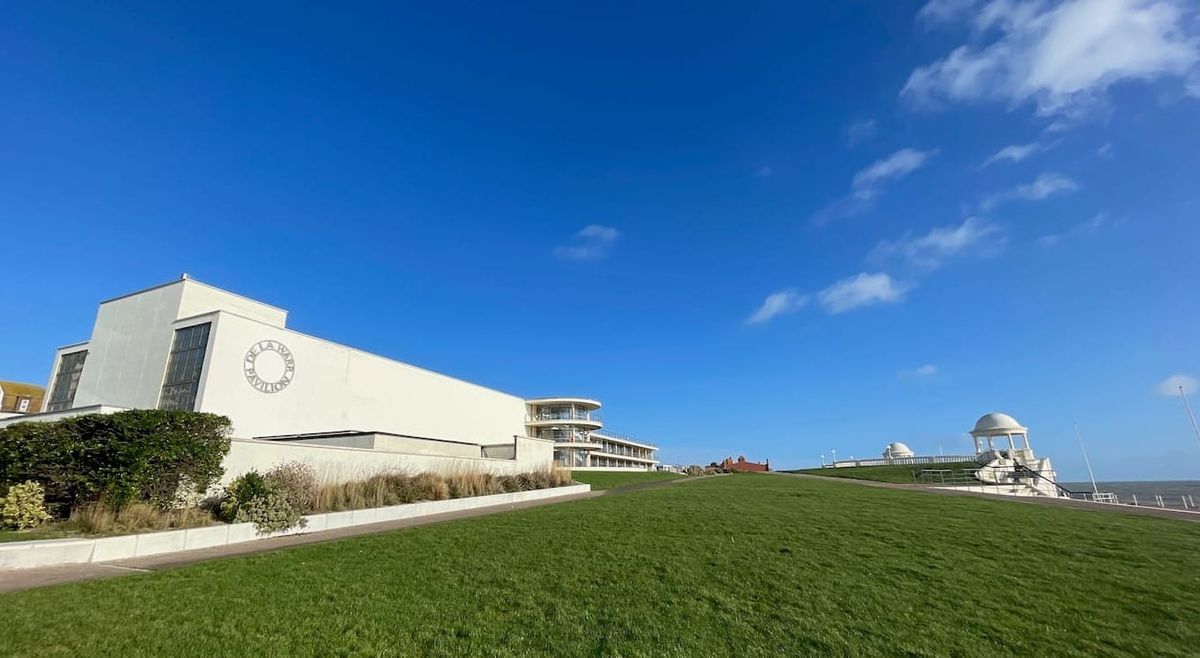
REVIEW: De La Warr Pavilion spring exhibitions
By Alison Norwood, volunteer arts reviewer
An anticipatory hubbub greeted the artists and gallery staff at the opening of two new exhibitions – new wishes. by Jenine Marsh and How Many Fires, How Many Suns, How Many Dawns? by Sayan Chanda.
The two spaces in this gallery by the sea in Bexhill are very different.
Marsh, on the ground floor, is filled with light and expanse, connecting to the views of the English Channel beyond. Upstairs, in contrast, Chanda creates a magical darkened atmosphere, bringing the outside in.
Both artists made initial site visits to the De La Warr Pavilion (DLWP) and saw the possibilities of the spaces on offer. Speaking with Eastbourne Reporter, Marsh commented on how the history and architecture of the building formed her response to it, by way of cut-in-half sculpture, rather than a full one.
Chanda spoke about the larger than usual scale on offer, and the creative freedom given by the gallery. “The best thing for an artist,” he said.
Walking through the two exhibitions prompted differing emotions too.
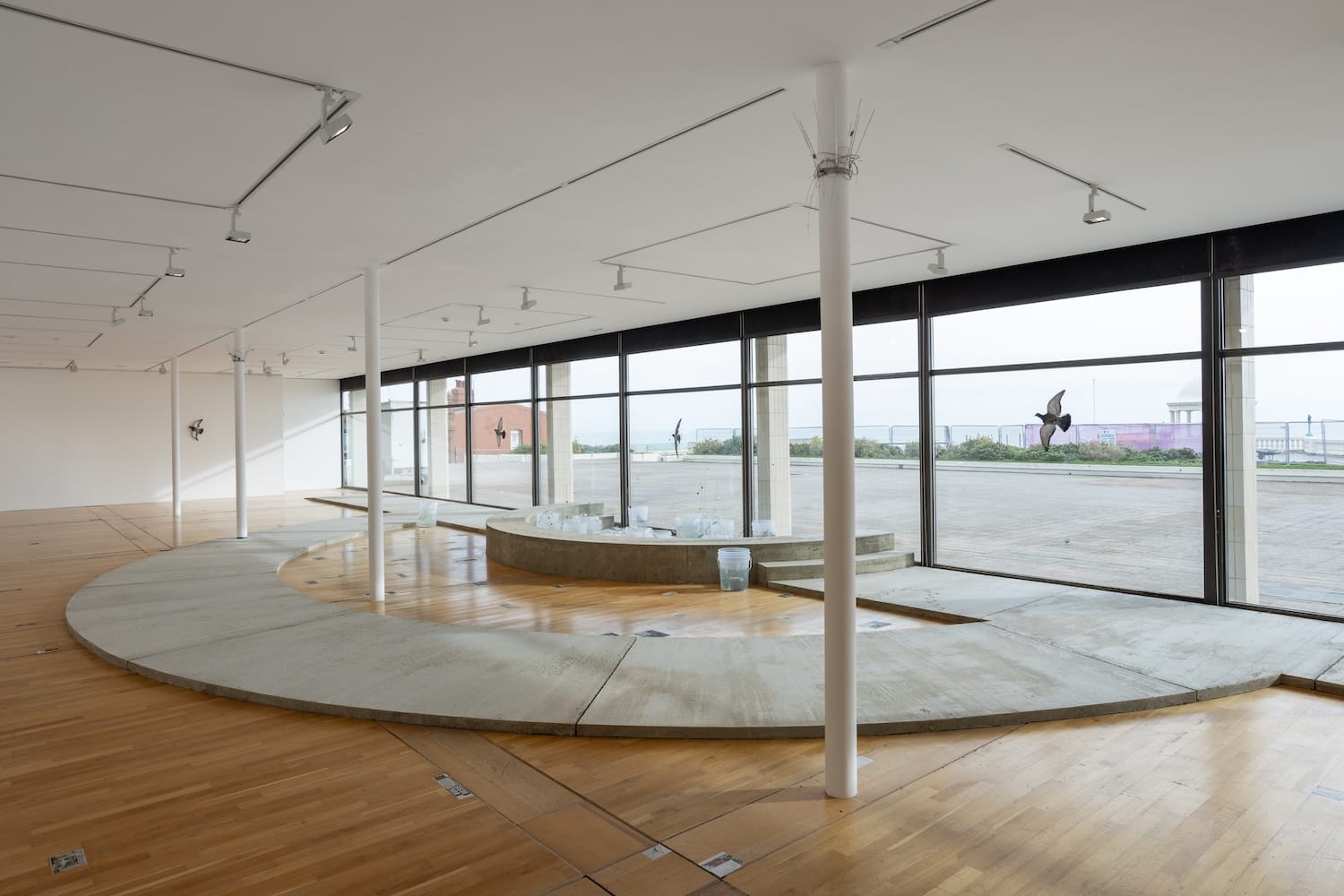
With Marsh (b.1984, Calgary, Alberta, Canada), the fountain forms the key feature of the exhibition. It is not filled with water in a conventional way, but rather water in stacks of clear buckets, containing dangling and dancing coins. These are not typical coins in a wishing well though. They have been altered by Marsh herself, thus losing their economic value, though the inherent dreams persist within them.
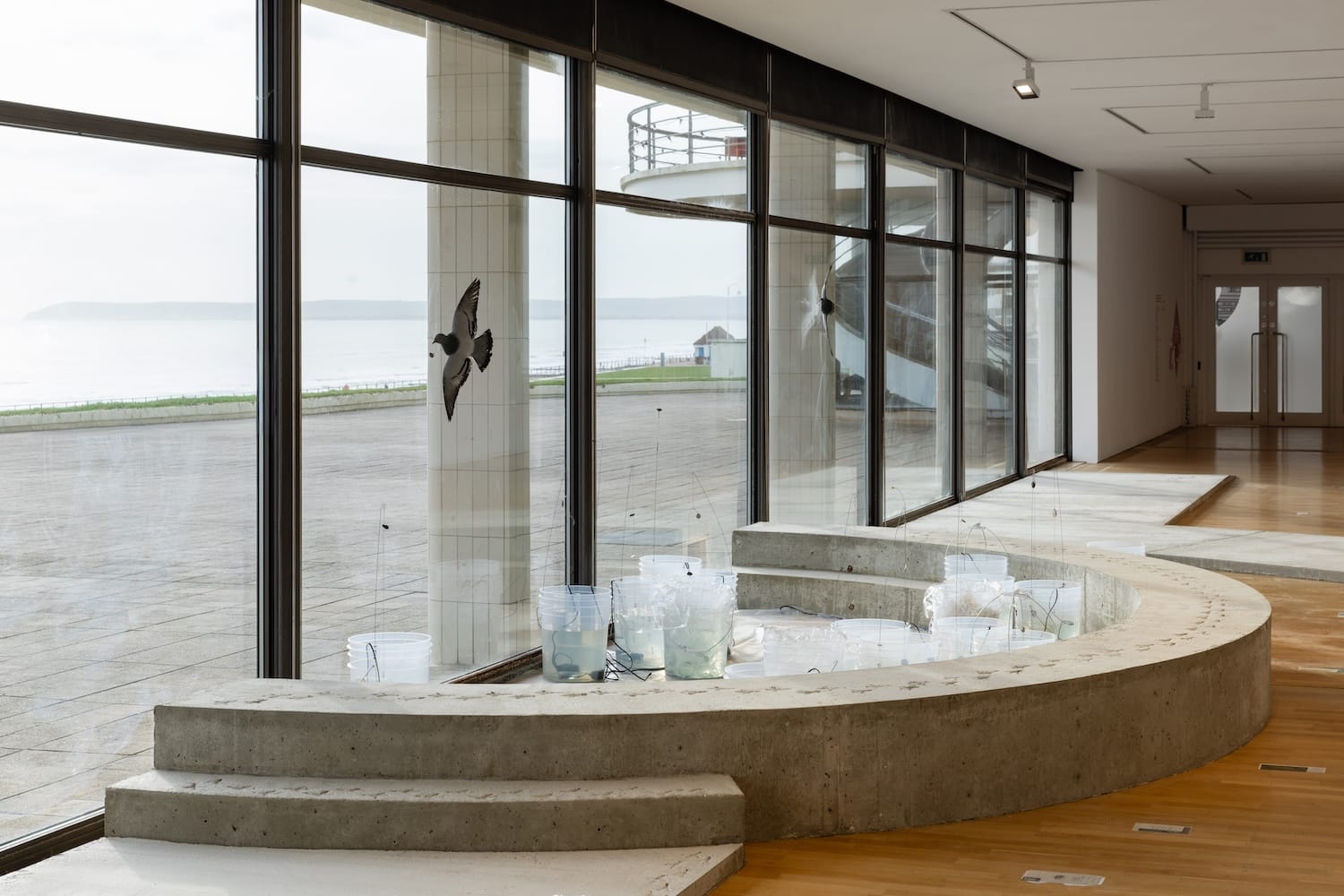
The openness and curves of the fountain succeed in merging with the colonnade on the promenade beyond, and the taxidermied pigeons form an illusion flying alongside both.
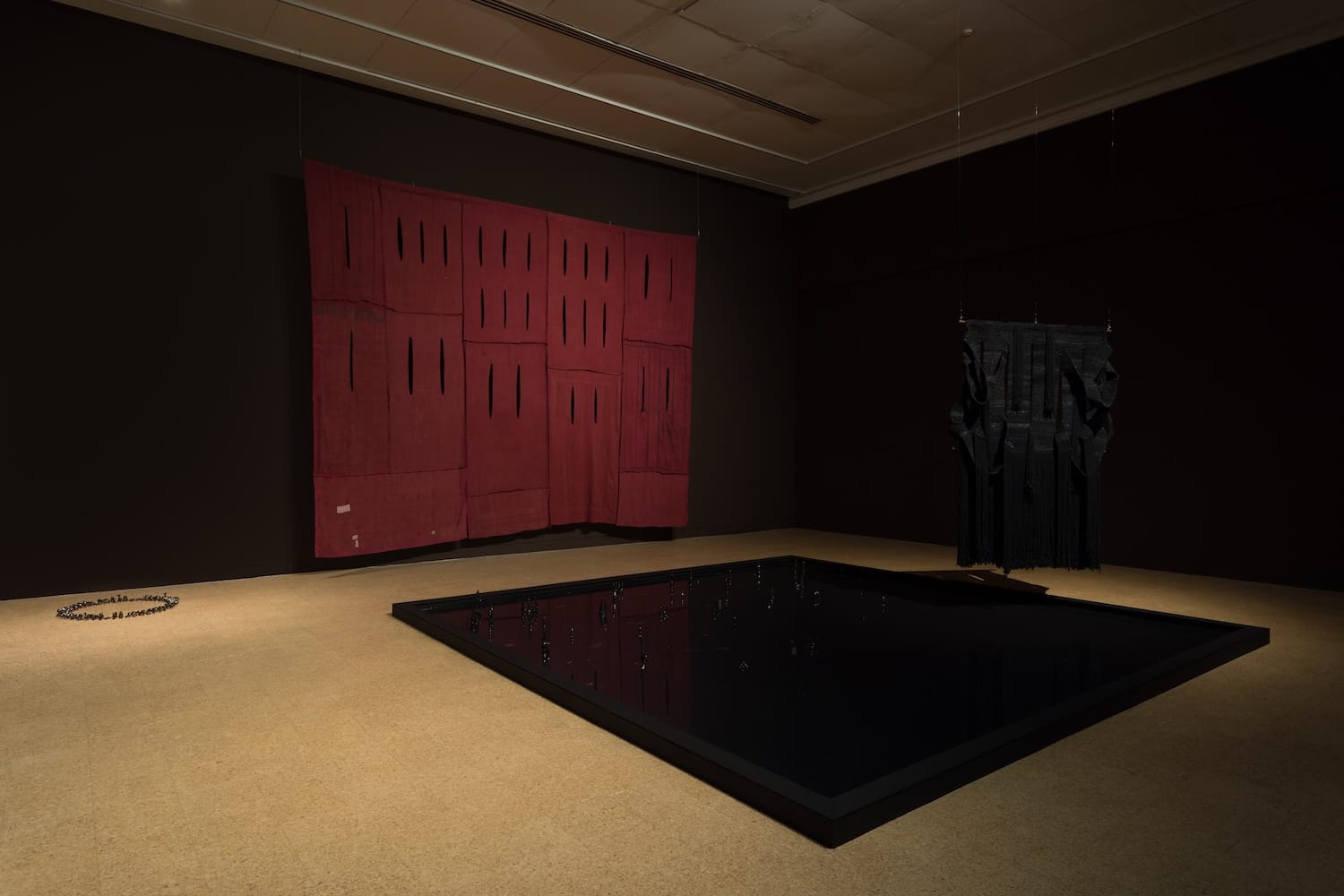
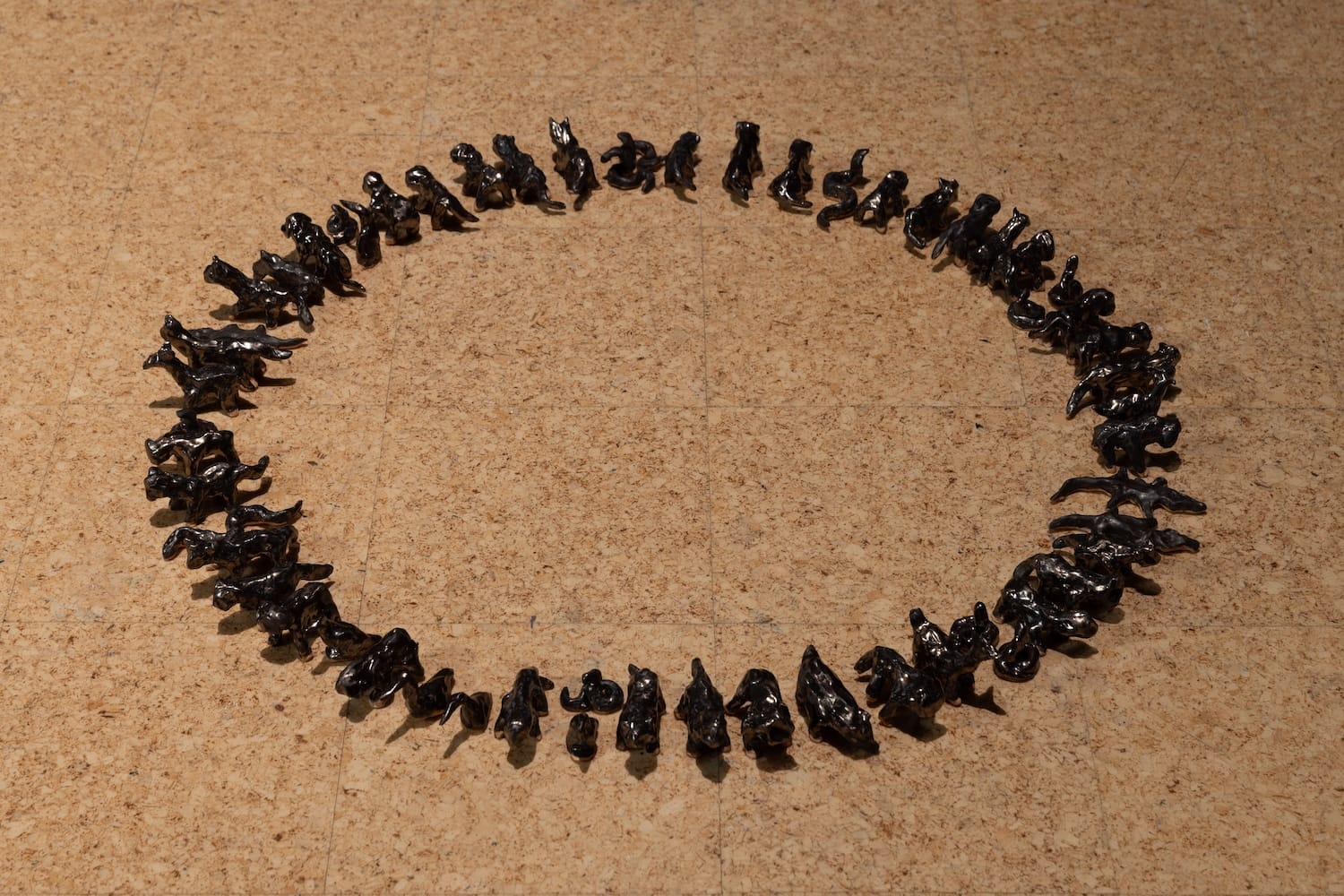
With Chanda (b.1989, Kolkata), the reaction is like entering another world, especially as one’s eyes adjust to the dimmed lighting. The immediate sensation is of entering a mystical place, with the dark ‘mangrove’ and dramatic surrounding wall hangings prompting an exploration of forgotten myths and ancestral figures
Chanda explained to Eastbourne Reporter about the decision to lower the light here, and the tempting option to go instead with the height and brightness of the room.
Choosing to reduce it is a success, fully creating a resonant experience for the visitor, particularly with the seemingly bottomless mangrove piece.
The beautiful hangings are fascinating. Re-worked from vintage Kantha quilts (from Bengal), these origins are still visible if viewed closely enough – especially on the deep red one on the far wall. These quilts, Chanda noted, were familiar to him as a child, and he had to step back from that connection to create these new pieces, with their twisted skeins and tumbling layers.
There is a pleasing sense of visitor interaction in both exhibitions.
For Marsh, one can walk onto and into the fountain and “become part of it”, as one visitor observed. For Chanda, there’s a more reverential slow walk around the solid mangrove, aware of the link to the goddess Bonbibi who is protecting it, and linking it to the real water in the near distance.
These exhibitions are free to visit. DLWP is keen to commission and support these young artists, and I encourage you to immerse yourself in their worlds.
Both exhibitions run from 14 February – 31 May 2026.
:: Alison Norwood, currently setting up an editorial services business, was previously a professional academic publisher. She has also worked in print and design and writes novels in her spare time. Alison has always studied art history and is a volunteer arts reviewer for Eastbourne Reporter.