REVIEW: The Ravilious Collection at Towner
"The realism across many different media forms a capsule of the inter-war years while still being entirely recognisable today. Do visit; it is an excellent way to appreciate this meaningful artistic life"
By Alison Norwood, volunteer arts reviewer
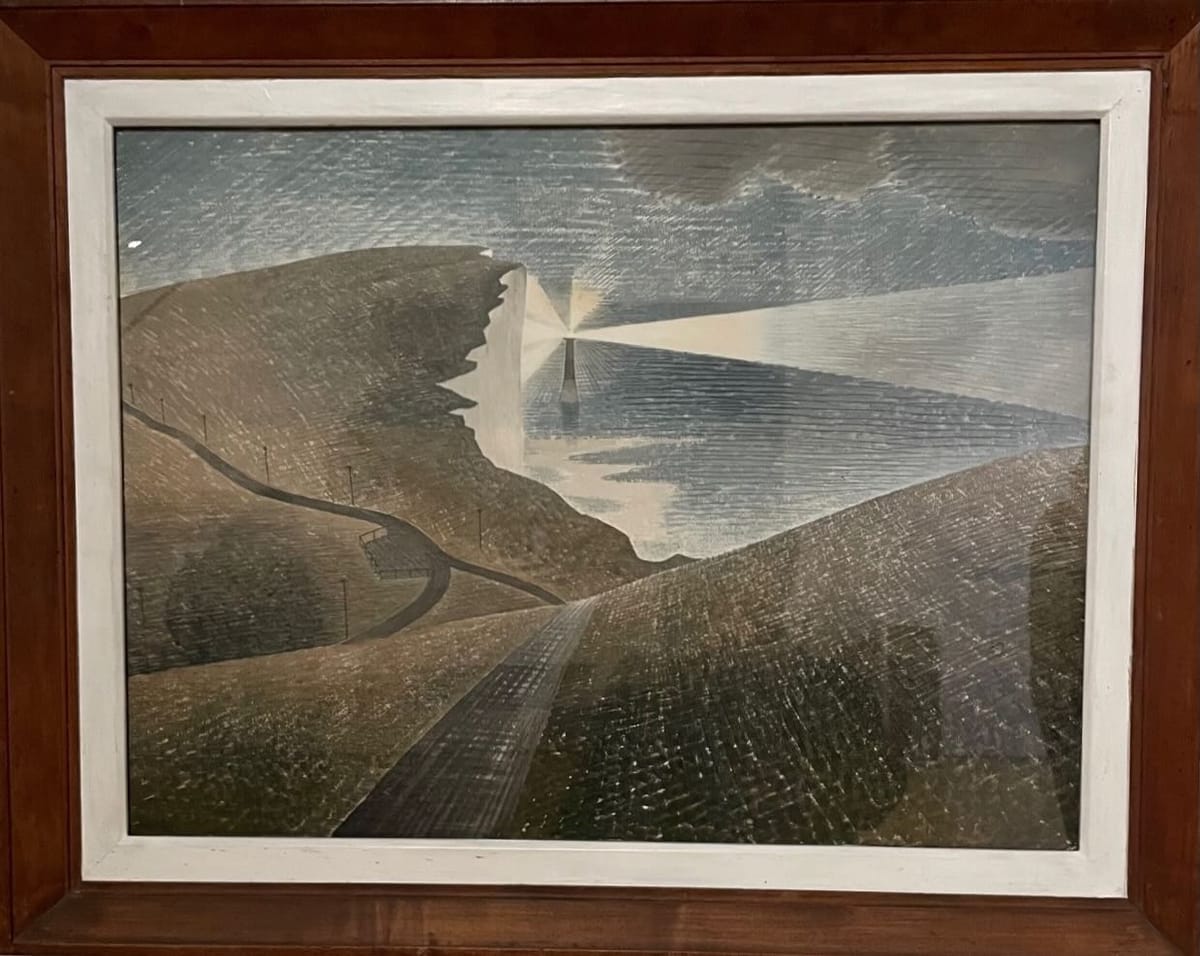
Ravilious watercolours are immediately recognisable in their subtle, consciously-limited colour palette, the spare, modernist technique which is quite ‘flat,’ and the subject matter of rural, coastal and wartime themes.
Towner Eastbourne has now consolidated its long history of collecting these works by opening The Ravilious Collection, a bespoke space designed to create the definitive Ravilious experience.
It contains not just watercolours but woodblocks and prints, preparatory drawings, publications, and ceramics. Together these form the most extensive ongoing display of Ravilious works anywhere. Admission is free but Towner has a suggested £5 donation.
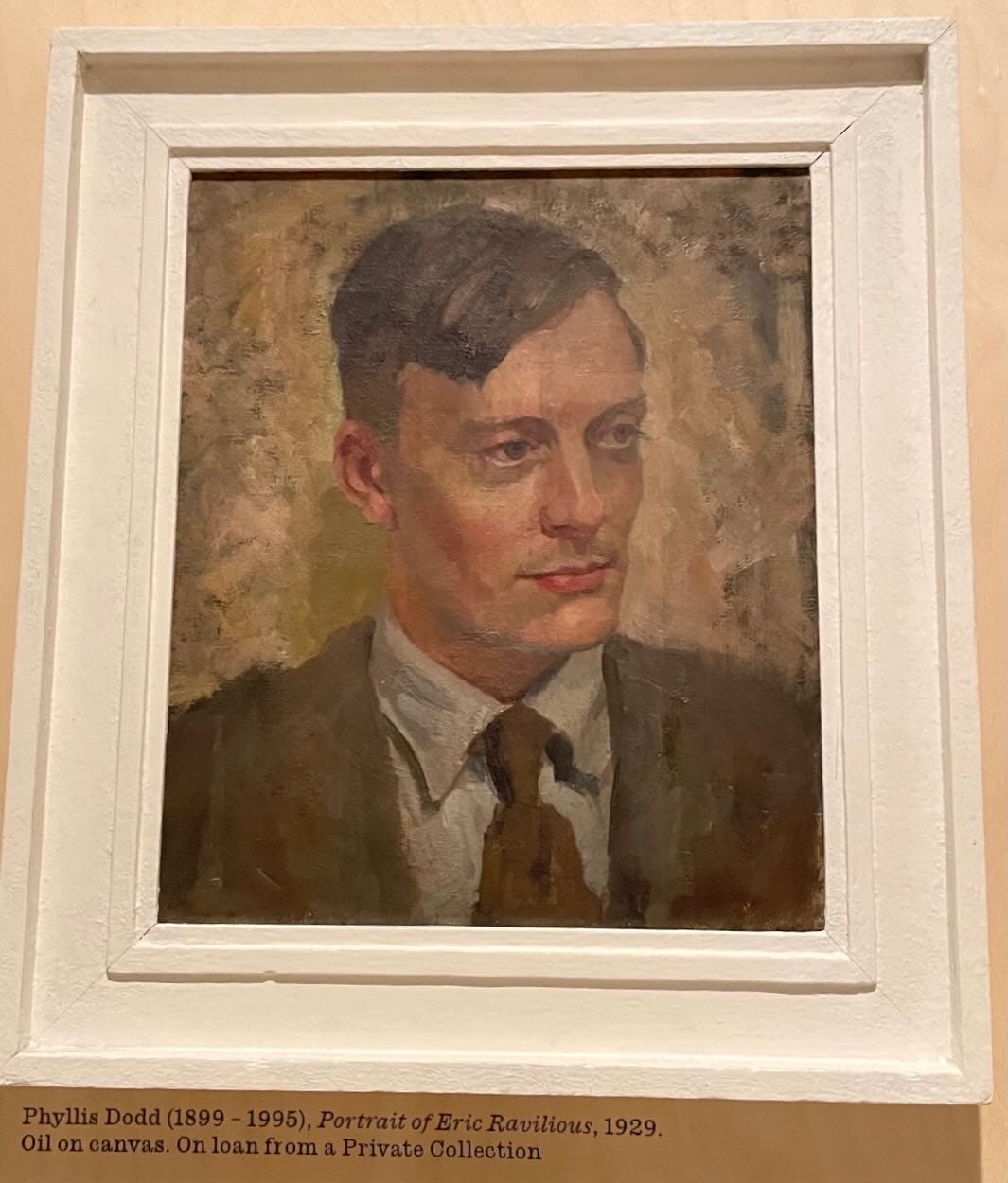
Eric Ravilious (1903-1942) had a strong connection to Eastbourne and this collection traces his short life from being both a student and teacher at Eastbourne School of Art to his work as a war artist during the Second World War.
The enduring popularity of Ravilious’s landscapes could be due to their beauty and calm, yet his last paintings convey the turmoil of the times in which he lived.
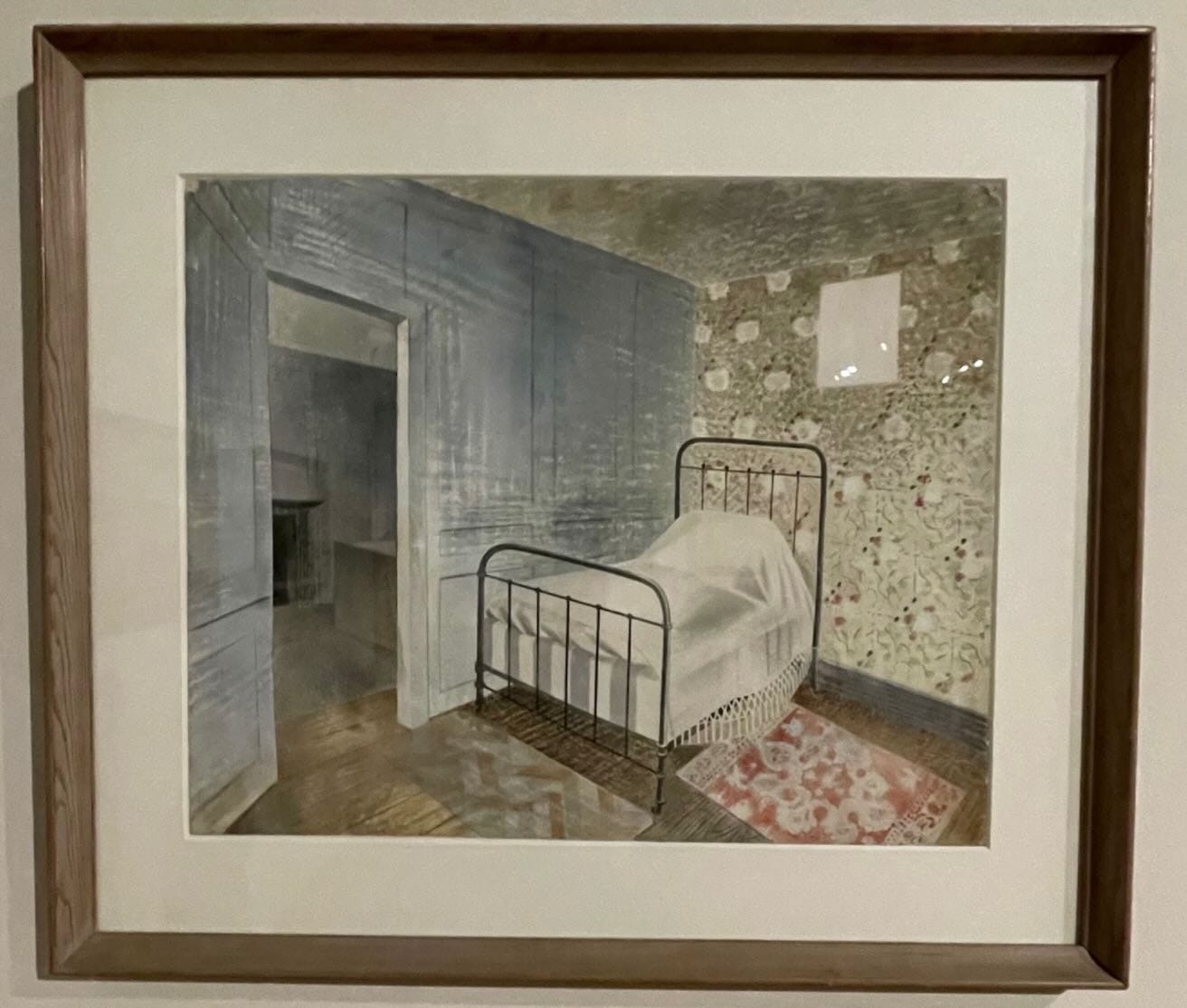
Initial havens of tranquillity, such as The Bedstead (1939), above, capturing a Le Havre guest house room just before the war, become, by turning a corner in the collection, depictions of planes, bomb-detonating equipment, and warships – anything but tranquil.
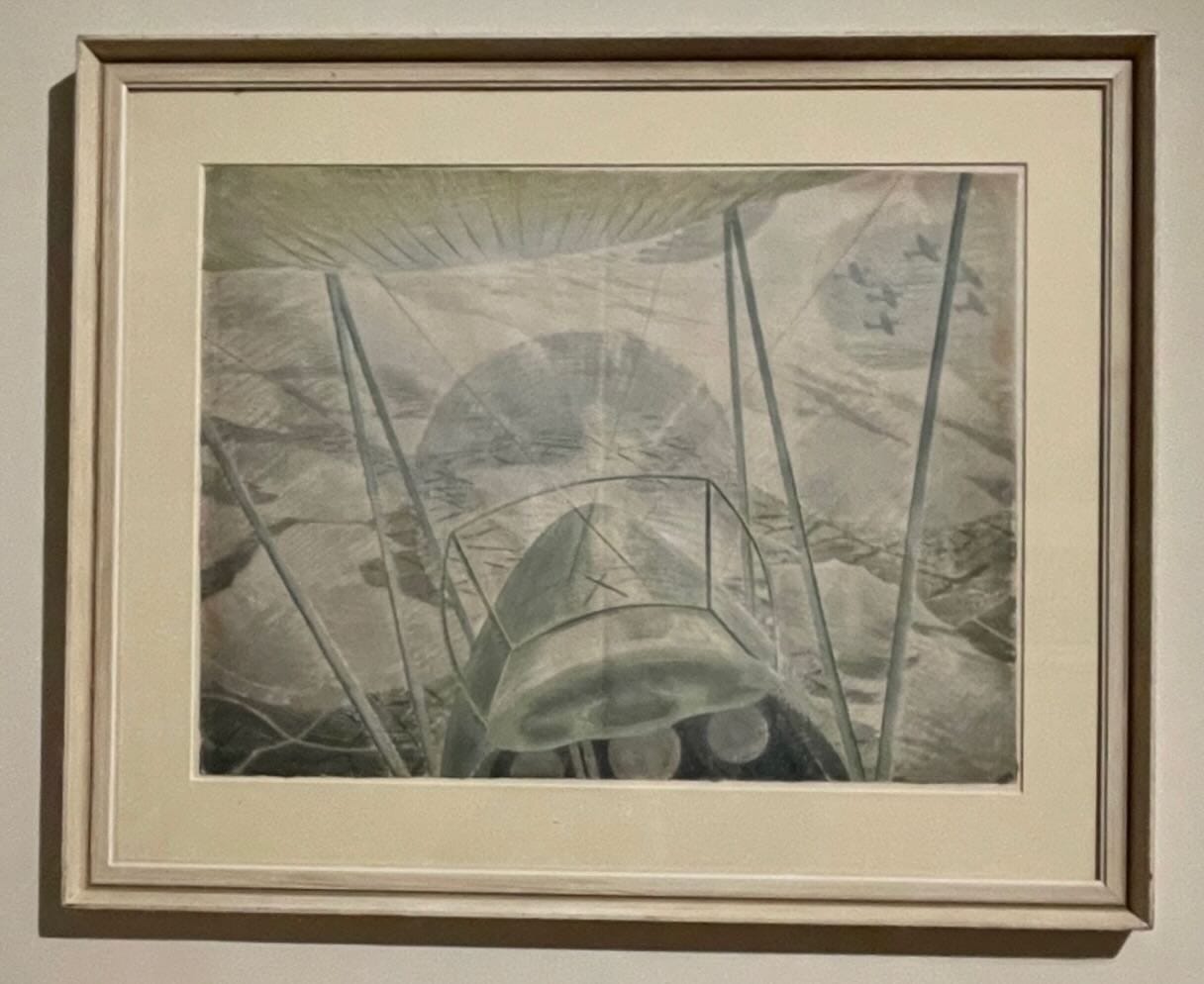
For instance, View Through a Propeller (1942), above, shows a hazy grey sky, a distant group of other aircraft, and patchwork fields below. That this depicts one of the last scenes he faced is particularly moving, since Ravilious, in a failed search and rescue mission, was declared missing, then presumed dead in September of that year.
Yet despite that, the works on display are not sad at all. Rather, they are filled with the khaki and olive greens, rich ochres and bright blues that define his distinctive style.
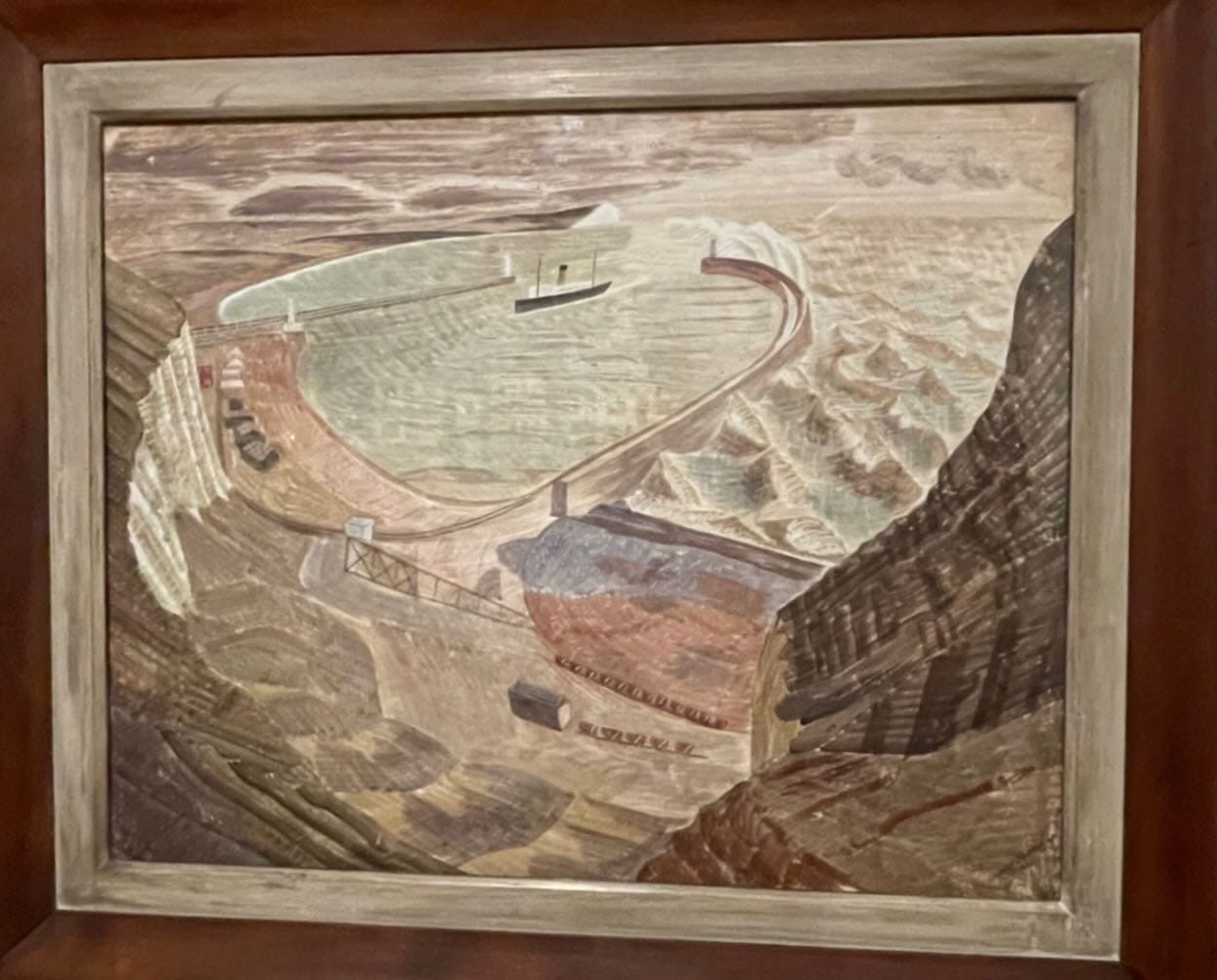
So too Ravilious’s contemporaries are included, to place them all in context. John Piper (1903-1992) features, with his bold graphic images/collages, and Ravilious’s friend Edward Bawden (1903-1989).
In the works shown here, Bawden’s work is similar to that of Ravilious yet their views of Newhaven are approached very differently. Bawden’s Newhaven Harbour (1936), above, looks down with a wider perspective and with more dramatic use of colour.
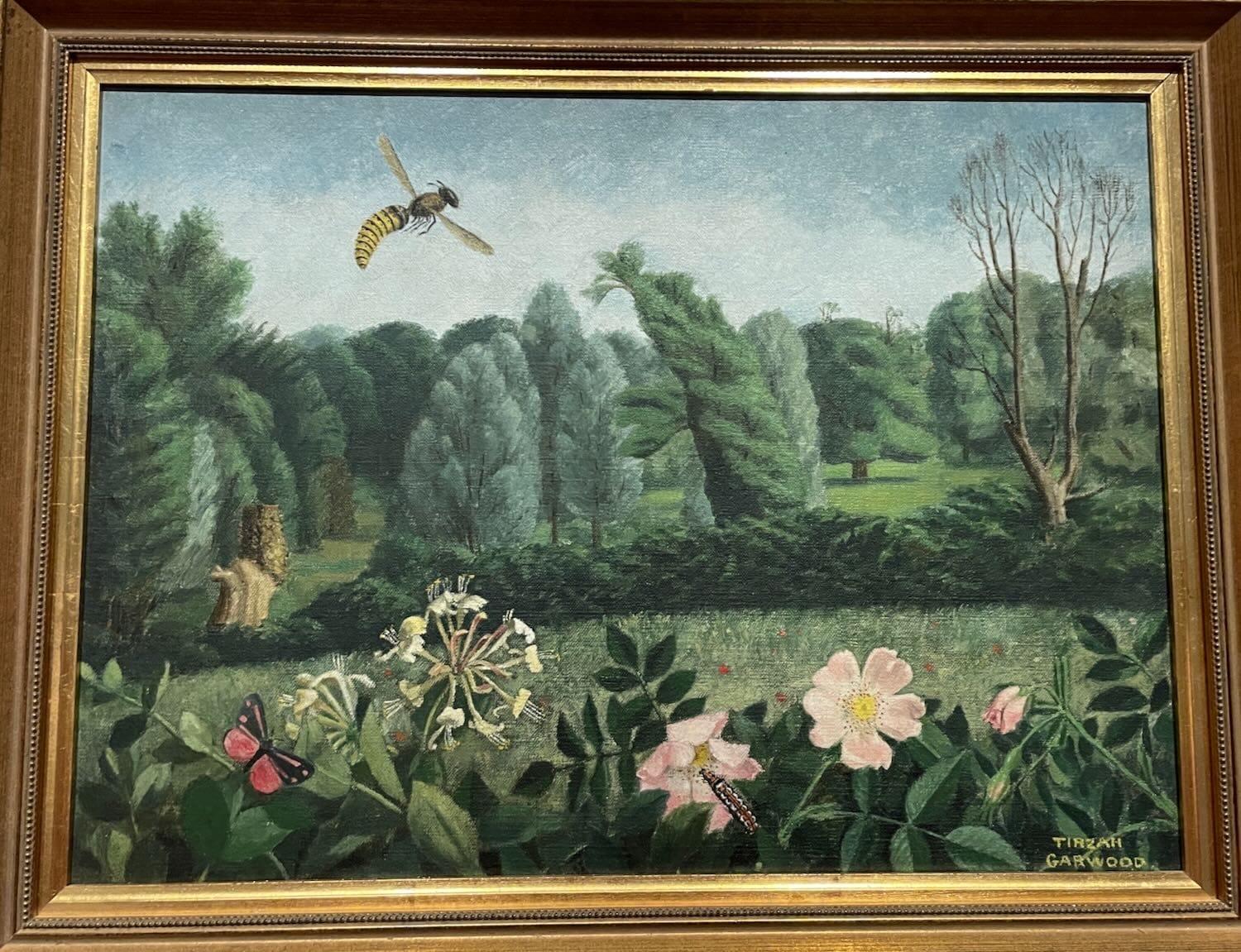
Many works, from engravings to paintings to embroidery, by Tirzah Garwood (1908-1951) are also included. Garwood married Ravilious in 1930.
The juxtaposition of the classy images on display with the political violence happening around the artists is intriguing and serves to remind us of the necessary resilience to get by and ‘carry on’ under many years of great duress.
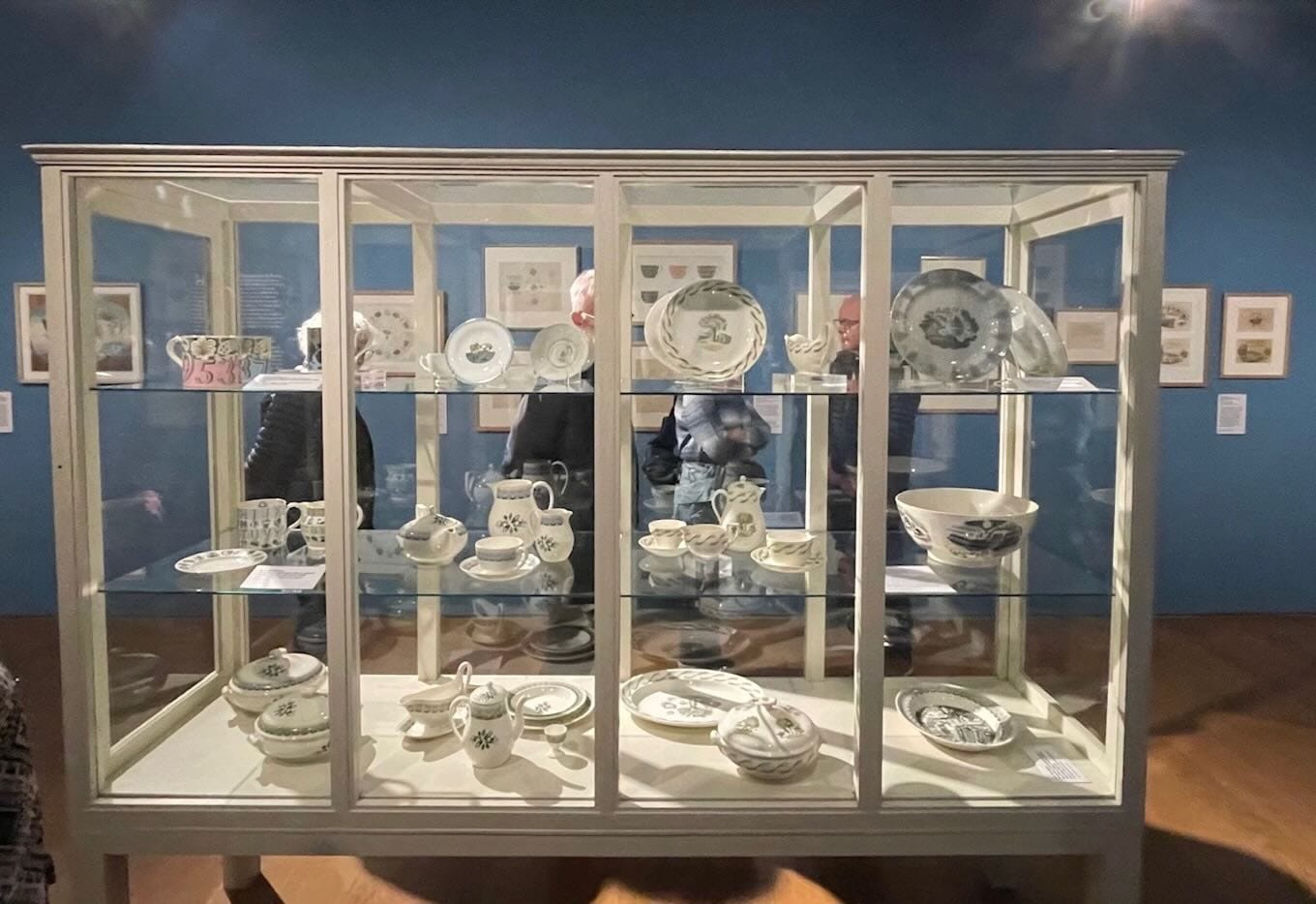
Deeper into the exhibition space, the display of Ravilious’s designs for Wedgwood, above, is particularly satisfying, showing how the graphic nature of his work fits so well on such a difficult surface. The description of the complex process for transferring these designs into the finished pieces impresses upon us the skills of the ceramic painters as well.
In its extent and complexity, this wonderful collection captures a very particular era in British history, and the breadth of Ravilious’s talents, perfectly.
I found myself immersed in the works and dreamily recognising the familiarities in the local landscapes despite the distance of time.
The realism of the pieces, across many different media, forms a capsule of the inter-war years while still being entirely recognisable today. Do visit; it is an excellent way to appreciate this meaningful artistic life.
A note from Towner’s director Joe Hill: “Eastbourne was a huge part of Eric Ravilious’s formative years, somewhere that he kept coming back to throughout his all-too-short-life. The town and its surroundings were clearly a huge source of inspiration to him.
“People travel from all over the world to see the stunning scenery that we’re so lucky to have on our doorstep, and we hope that many of them will complete their trip with a visit to Towner to see these iconic depictions of the Sussex landscape and learn more about one of Eastbourne’s most celebrated residents.”
:: Towner Eastbourne is open Tuesdays to Sundays and Bank Holiday Mondays. New Year opening times: Saturday 27 to Wednesday 31 December. Closed: Thursday 1 January. Normal opening hours resume from Friday 2 January. Details of times here
:: Alison Norwood is a professional academic publisher, having previously worked in print and design. She loves all aspects of art and publishing, and writes novels in her spare time. Alison has always studied art history and is a volunteer arts reviewer for Eastbourne Reporter