Reform’s new councillor: from theatre crew to the political stage
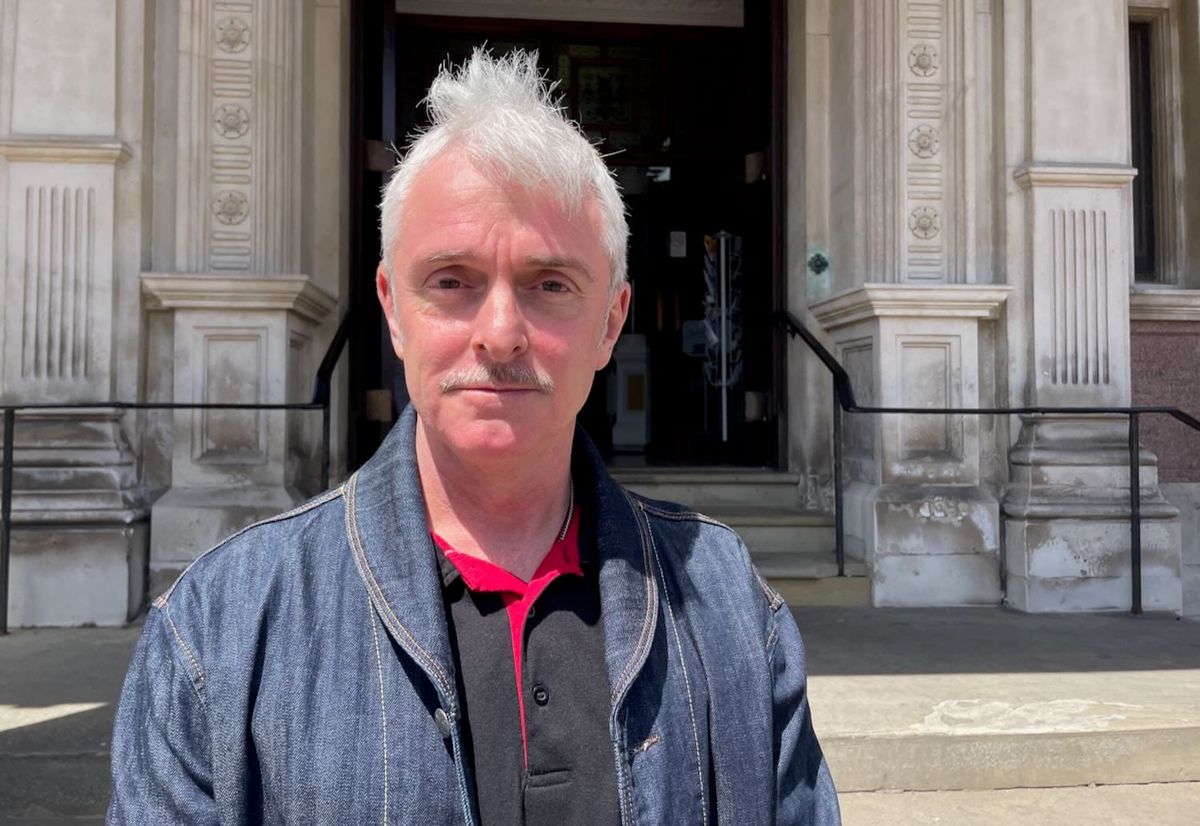
Roy Peché made history in May as the first elected representative for Reform UK in Eastbourne. He became the East Sussex county councillor for Sovereign in the only win for his party in the town. Across the county, Reform won most seats and is now running East Sussex County Council as a minority administration.
Little was known about Roy Peché in the run-up to polling day. Even he admits he was surprised to have won.
Eastbourne Reporter volunteer writer Paul Bromley, a former local government and political correspondent, sat down with the newly-elected councillor over coffee on the terrace of the DQ cafe at the Welcome Building as workmen toiled away dismantling the temporary stands after the Eastbourne tennis tournament.
We find out what motivated Roy Peché to stand and what his party’s policies are about some of the issues facing the town.
Who is Roy Peché?
The first point to clear up is the pronunciation of his family name. It is pronounced “pesh-ay” with an acute accent on the final ‘e’ similar to café. It derives from the Huguenot.
Roy, 52, is South African by birth and upbringing and spent the first 24 years of his life there. He has lived in the UK since 2000 and in Eastbourne for 13 years. Many South Africans with European heritage are descended from the Huguenots, French Protestants who fled from persecution in France in the 17th century.
He is keen to point out that his surname is “nothing to do with fish or fruit”. The French word for ‘fishing’ and ‘peach’ are both spelt the same but with different accents and pronunciations. In fact, as he somewhat bashfully admits for a politician, peché is the French word for ‘sin’.
After high school education, he spent five years in the South African navy then decided to travel. He worked on yachts and trawlers, travelling from Cape Town and Namibia across the Atlantic to Latin America then Florida before flying to the UK.
Why did he decide to come to the UK?
Roy explained: “I have a historical connection here. My grandfather was born here and he then emigrated to South Africa so there was always a sort of legacy connection with the UK growing up. I do have some family here anyway, so it was the natural progression to come back.”
What about his working life?
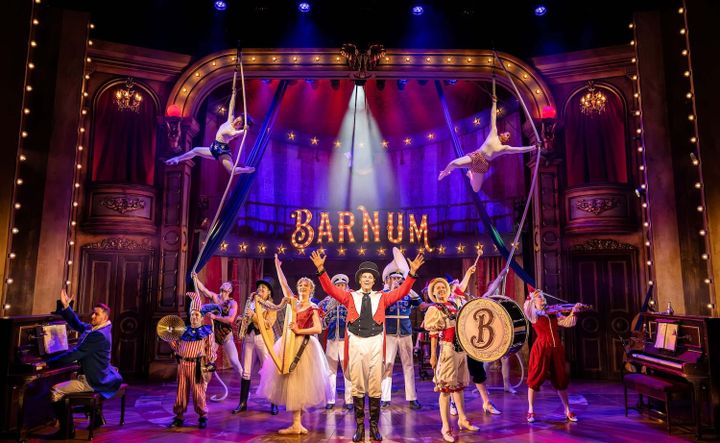
He lived in Lewes for three years when he first moved to the UK and worked as stage crew at Glyndebourne helping to build sets. From there, he moved to London and worked at the Coliseum, the home of the English National Opera, and as a freelance technician at West End theatres.
What brought him to Eastbourne?
Roy then gives some details about his personal life. “After finishing in London, I met a very nice young lady (from Eastbourne) and that’s one of the main reasons for being in Eastbourne.” He moved here to be with her and has lived here ever since – and he is still with the same “nice young lady”.
He saw an advert in a pharmacy for people to train from being counter assistants to dispensers. He now works as a pharmacy dispenser. Roy also worked for Teva Pharmaceuticals which used to have a packaging plant in Hampden Park and Custom Pharma in Brighton and Moulsecoomb ,including during the Covid lockdowns as a key worker.
What led to his political career?
“Ah, the 64 million dollar question,” he says with a rueful smile before pausing to consider his response.
Roy adds: “I've never had any real political leanings before. I would say I was ambivalent or indifferent towards politics. I just, at some point, instead of shouting at the TV and ranting like everyone else, took a very hard and decent look at all of the politics, the sort of values, the manifestoes, of the various parties in the UK.
“By a process of triangulation, elimination, I found that Reform suited the values or the projections that I felt fitted mine. Close enough, not all of them, but enough that that was the most relevant and pertinent party.”
What Reform policies in particular did he find matched his views?
Roy reels off a list headed by the economy, immigration and what he calls an “application of common sense”.
On the economy, he explains his viewpoint as: “My firm belief is if the economy can be fundamentally altered in any way, a lot of other things will fall into place.”
When pressed for more detail, he says a radical shift in policy is needed because maintaining the status quo is not working.
The practical example he gives in East Sussex is making funds available from “realistic savings” to fill potholes. He says potholes are a “legacy mess” and won’t magically disappear but he believes residents will have noticed a difference by the time Reform seeks re-election.
Where might the “savings” come from?
Roy uses the phrase “work in progress” many times during the interview. Although that is, to some extent, to be expected given Reform has only had two months in office, there are many areas where their plans are vague. Even Roy concedes some of his answers in response to specific policy questions are vague.
But he does give one example of where “savings” might be made: reducing the amount spent on transporting children from home to school.
Children are legally entitled to home-to-school transport if they have special educational needs or disabilities (SEND) but the cost of taxis and minibuses is very high.
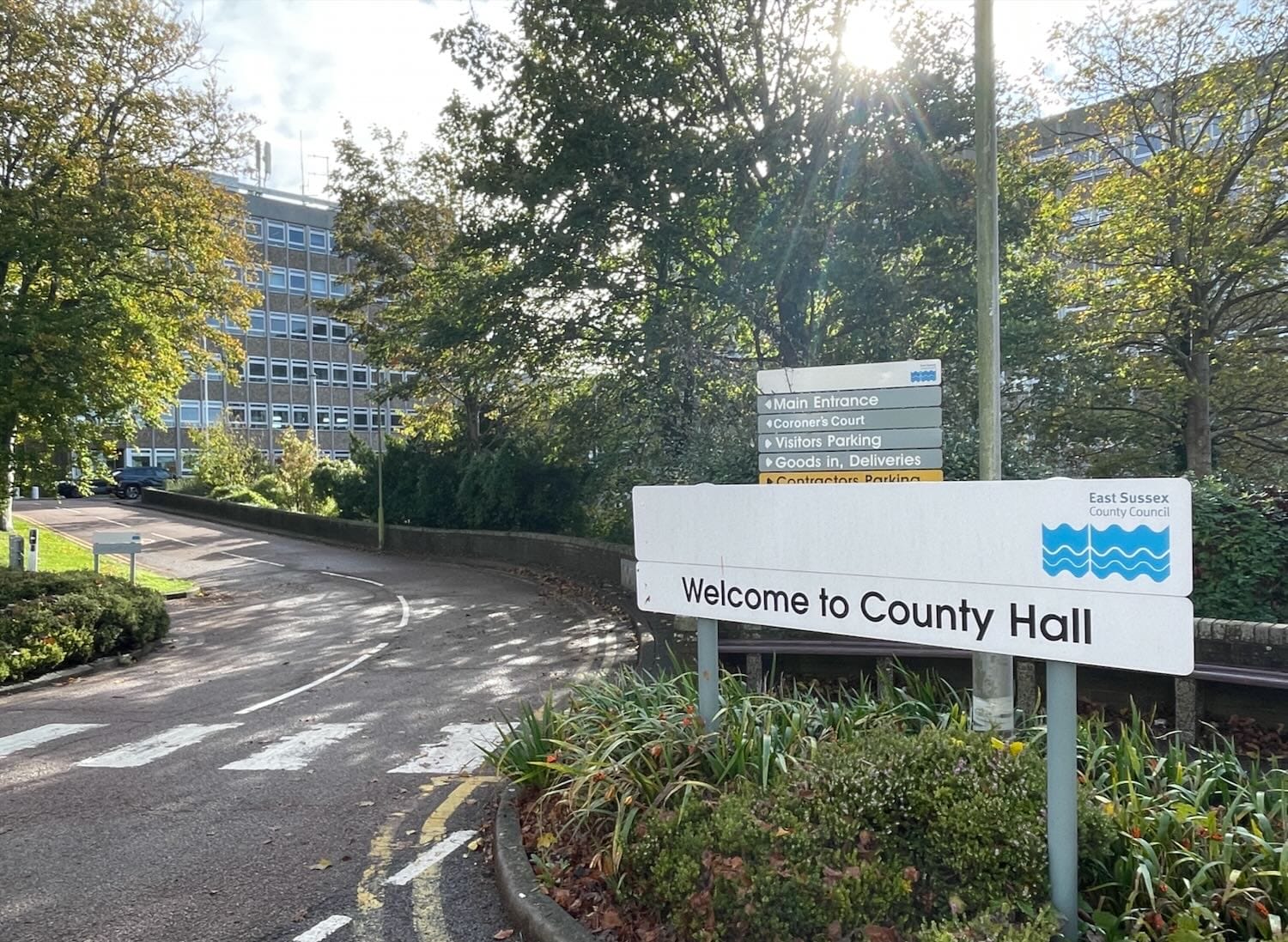
East Sussex County Council’s own figures, according to the BBC-funded Local Democracy Reporting Service in July last year, show the total spending on SEND transport in 2024 as £19.4 million for 1,677 children. This is an average of £11,566 per child per year. The bill for one child with complex needs came to £115,737.
He says: “One subject that is being looked at is the home-to-school transportation where savings could be made through amalgamations and pooling of resource. That is the one area, I think, where there would be some changes and some savings to be made.”
Roy adds: “I think a bit of streamlining would be necessary. In order to stop this piecemeal taxi home to school, some kind of bus service would be provided along a route or specific pick-up points. The initial idea is to have far more pooled transport availability as opposed to individual on-call taxi availability.”
Where does he stand on immigration with Reform’s national policy pledging to deport all illegal migrants and claiming “illegal immigration is out of control”?
Roy says the national policy is the national policy and believes Britian is a “soft touch”. He adds that immigration is “not a huge issue” in Eastbourne, although some residents have raised the subject with him.
He adds: “The talking point is legal versus illegal migration. I came here quite legally through all the processes and hoops. There's a time and a financial outlay which means that you almost have a commitment to invest yourself within the society that you've chosen to represent. I think the valid concerns of constituents are about the circumvention of that process and the lack of mass documentation.”
The Government has announced plans to extend the use of the former military camp at Crowborough to house asylum seekers until 2030.
Roy takes a balanced view on the issue.
“If we listen to what is perceived as the positive aspect, so the people that are claiming refugees are welcome, I think it's as pertinent to listen to as people who have genuine concerns and genuine fears and issues with places like Crowborough and unknown elements being brought into a known element without due consultation. And I think that if people have these concerns, they must be as legitimate as the right of people to protest to say that refugees are welcome. It is the flip side of the same coin so they must be given the same credibility and the same voice.”
What other changes might we see from a Reform administration?
Adult social care accounts for a large slice of ESCC’s budget.
Reform’s national policy programme does not include any reference to adult social care so what is his view?
Again Roy uses the term “work in progress” and says the issue has already been discussed by the Reform administration to look at ways to “use the resources wisely”.
He goes on to say that he thinks the cost of adult social care should be split equally between the state (local authorities) and society (families).
“State involvement will be there but the state then must not involve itself when the residents choose not to involve it. The conditions on involvement must be both ways. So society must be willing to contribute and to engage with the state if the state is also then responsible for providing, ideally a 50-50 meeting halfway, but I think it's unrealistic to have the expectation of the state unconditionally covering everything perpetually.”
What about other issues?
Bus lanes – he travelled by bus from his home in the centre of town to Sovereign during the campaign. He believes the proposed bus priority lanes by the railway station/Enterprise Centre and on the A259 Seaside are a “done deal so it’s just a matter of getting on with it”. He believes it is right to look at measures to reduce congestion and car use.
Climate action – he says it would be short-sighted to describe climate change as a “myth”. Historical evidence shows that the climate does change but he is against what he calls the “fixation” with net zero.
20mph zones – he says they are a possibility if they are “functional and practical”.
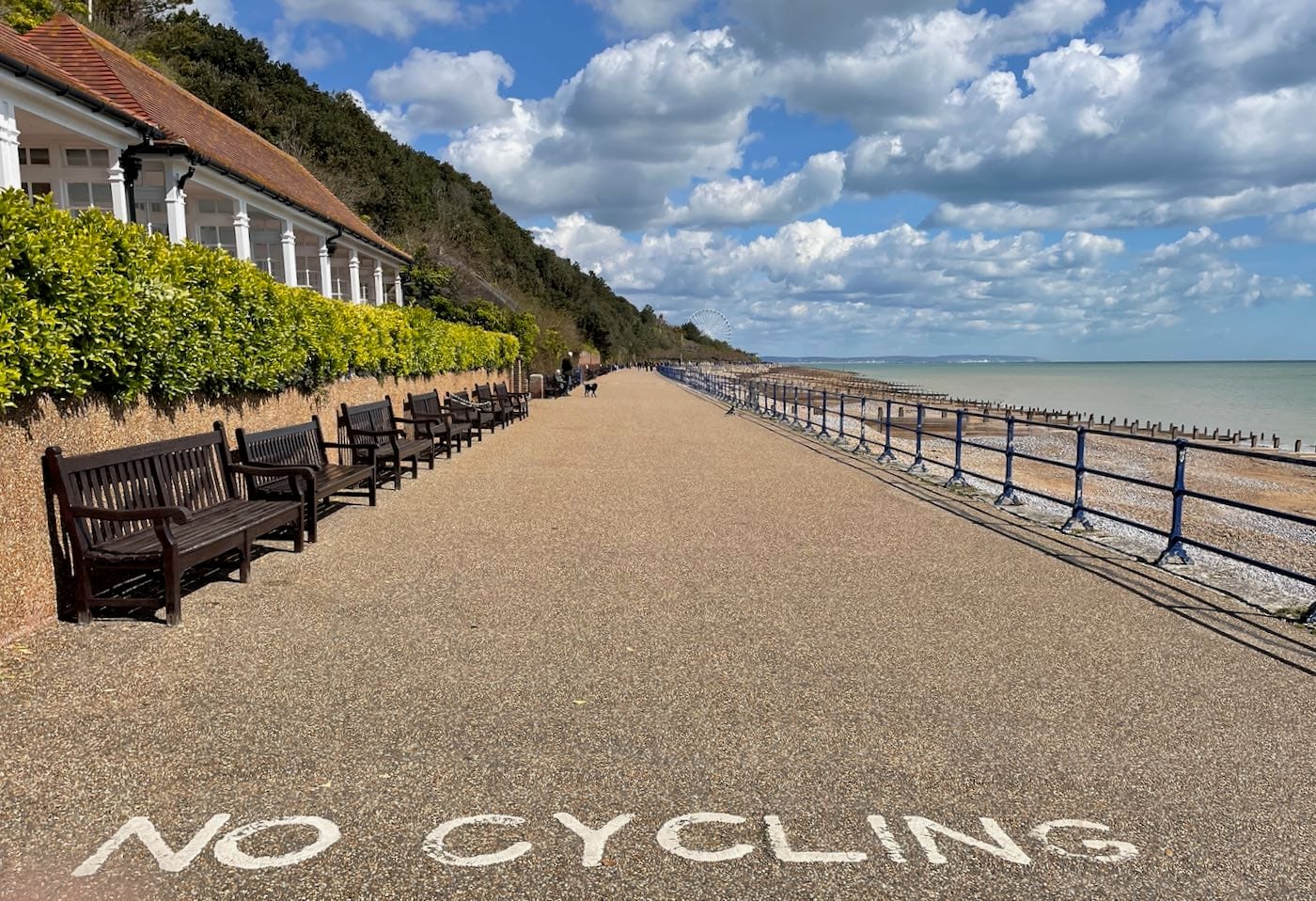
Cycling on the seafront – Roy is a runner and regularly runs from Holywell to the Harbour. He says that traditionally promenades are for walkers so the prime issue for him is finding a safe way for walkers and cyclists to share the same space.
What relations does he have with other Eastbourne councillors?
Roy’s election caused consternation among other parties, particularly the Liberal Democrats who have pledged to campaign to get Reform out at the next election.
He says he has to work with the Lib Dems who hold the majority of county council seats in Eastbourne.
“I've spoken to a number of the ESCC Lib Dem councillors. I had a meeting with Stephen Holt [also Eastbourne Borough Council Lib Dem leader] yesterday – quite a frank and pleasant discussion with him.”
Roy says he has also had a “very courteous” conversation with Eastbourne Lib Dem MP Josh Babarinde.
What has his experience of council life been so far?
Roy is happy with his first two months in the role.
“It's been a bit of a ride but so far very fruitful and it's absolutely met my expectations very well. I'm not someone that lives under any kind of idealistic illusions about changing the world in five seconds but so far I think the council that we've established in Sussex, from my perspective, is efficient, functional and driving forward,” he says.
He plans to stand again next May when elections will take place for the new unitary authority which will replace East Sussex County Council and all the district and borough councils including Eastbourne Borough Council.
Roy concludes by saying: “If it's a win, it would be a performance bonus. If we lose, it would be the voice of the people speaking.”
:: Paul Bromley is a qualified journalist and broadcaster who worked for 40 years for regional newspapers, the Press Association and Sky News. He specialised in reporting politics and elections. Paul now works in community rail. He is a volunteer writer with Eastbourne Reporter
:: If you think this type of journalism is better than reading PR handouts presented as ‘news’, please support us. One-off donations are here or become a member here for the price of a coffee just once a month. Reader support is vital if we are going to survive into next year. Many thanks