What is Eastbourne’s tourism strategy?
By Paul Bromley, Eastbourne Reporter volunteer writer
We take a look at the importance of tourism to the town, where one in five jobs are in the sector, and ask how public money is being spent to promote it.
Members of the town board, which is allocating up to £20 million of Government investment in the town over the next decade, are reviewing a draft tourism strategy they commissioned to “address structural challenges”.
Consultants are being paid more than £23,650 (excluding VAT) for the report, which is due to be published in a few weeks’ time.
How much does tourism bring to the town?
The economic impact of tourism in Eastbourne was estimated to be £529.7m a year in 2019, the year before the pandemic.
Stakeholder consultation by the neighbourhood board last year suggested the visitor economy had not fully recovered post-Covid.
Indeed, the board’s ten-year economic strategy for 2025-2035 puts the current figure as an estimated £377m annually with tourism supporting around 8,900 jobs (one in five jobs).
What is the tourism strategy?
That depends who you ask because there are already a number of published documents.
Eastbourne Borough Council’s (EBC) corporate plan covering the four years from 2024 to 2028 includes a section on economic development and tourism.
It states: “Eastbourne has traditionally been seen as a tourist destination and our aspiration is for this to continue to be the case ... our key areas of focus will be delivery of a new overarching strategy for tourism, income, and economic diversification.”
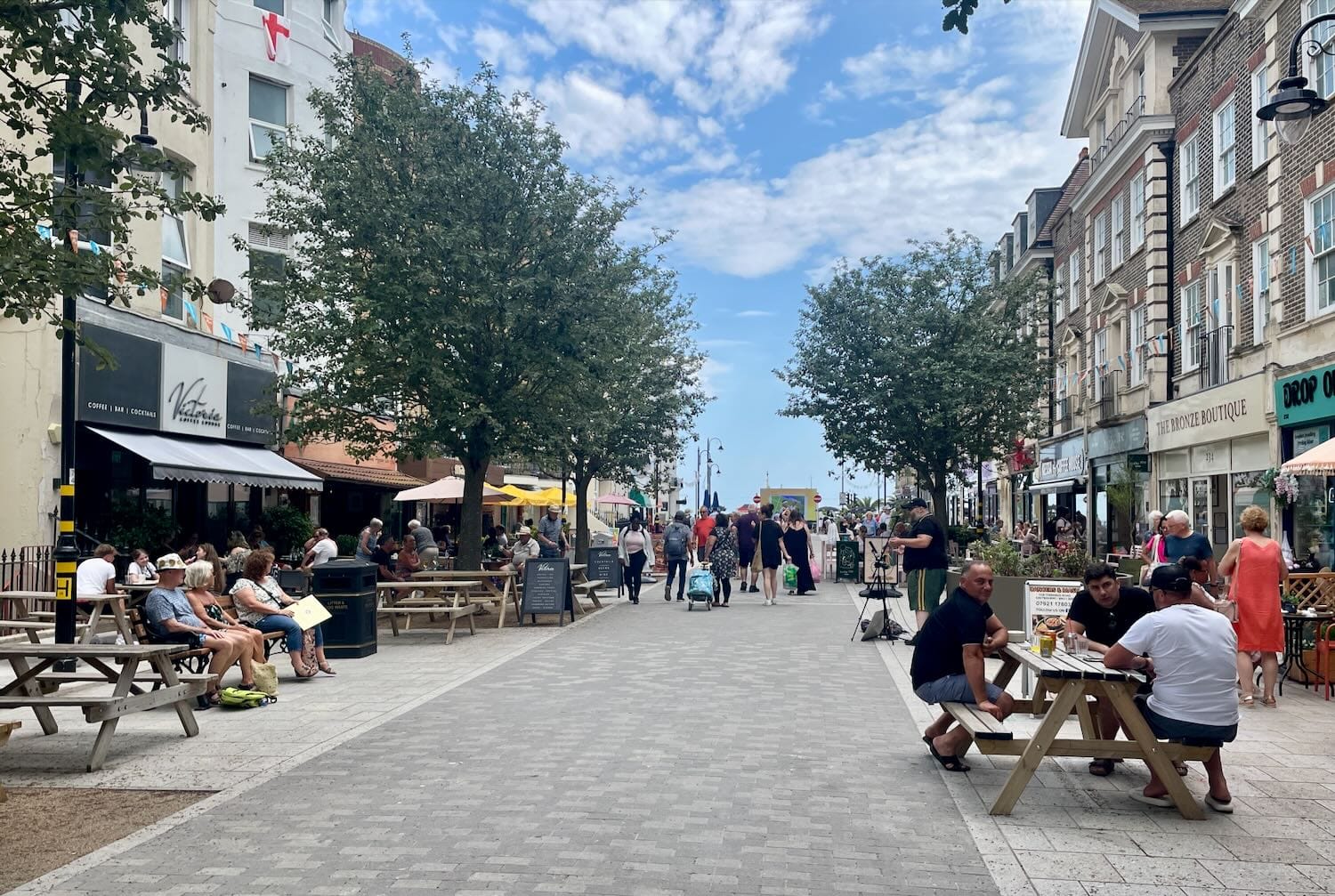
The council lists various Government-funded projects such as the planned cultural and education centre at Black Robin Farm, improvements to Victoria Place and the public art engagement project in conjunction with the Towner gallery. These have been funded by around £19.8 million from the previous Conservative Government’s ‘Levelling Up’ fund.
Are there any other tourism strategies?
The three local authorities of East Sussex County Council, Brighton & Hove City Council and West Sussex County Council have formed a combined grouping known as a Local Visitor Economy Partnership (LVEP).
Its aims, as set out on its website, are to work “collaboratively with local visitor destinations, District & Boroughs, and businesses and embracing a pan-Sussex approach ... to shape and deliver national strategy and activities to promote sustainable growth and raise the profile of our region as a national and international visitor destination”.
It has already launched a ten-year Visitor Economy Strategy for Growth covering 2024-2034, based on research and developing a framework for promoting Sussex to different audiences.
The LVEP promotes attractions, tours, accommodation and itineraries under the banner Experience Sussex.
Before the LVEP was created, various tourism bodies and attractions had formed the Sussex Visitor Economy Initiative Industry Group which commissioned its own research into the visitor economy by Blue Sail tourism consulting based in Brighton.
Why is Eastbourne Neighbourhood Board now involved?
Board members agreed in January to ask outside consultants to provide a tourism strategy for the town.
A board spokesman told Eastbourne Reporter: “The proposal came from a Board member with deep professional experience in destination marketing, including locations here and abroad from south-west England to Sydney!
"The thinking was simple: visitor trends are changing fast, demographics are shifting and a town that relies on tourism for one in five jobs needs a clear, evidence-led plan to stay competitive. That means getting the basics right and building a stronger year-round offer for the future.”
The board published its brief for consultants to bid for the contract and set out a budget of £20,000 to £25,000 excluding VAT.
The brief was to “understand what Eastbourne’s distinctive offer is within the Sussex visitor economy” and asked for four to six ‘Experience Pillars’. It said the pillars should “clearly articulate what Eastbourne offers visitors and how the destination can be promoted”.
Why did the board think a separate strategy for Eastbourne was needed?
The board spokesman told Eastbourne Reporter: “Eastbourne needs to understand its own position within the wider region — not instead of it, but alongside it.
"The pending local government reorganisation makes that even more important: none of us yet knows how it will affect regional tourism promotion, so it is only sensible for our town to be clear about its own strengths, priorities and opportunities.
“This work has given us an up-to-date evidence base and, crucially, it is built on listening directly to local people involved in Eastbourne’s own tourism, hospitality and event businesses and organisations. It tells us who our visitors are, what they are seeking, how we compare to other locations and how we can ensure local people benefit from a thriving tourism sector in the years ahead.”
The board says its tourism strategy complements the LVEP and Experience Sussex rather than duplicates them.
What tourism problems does Eastbourne face?
Board members said the town has “a long-established identity as a leisure and entertainment destination supported by a high-quality seafront, strong cultural venues and major events”.
But they felt there were “structural challenges” including:
:: High seasonality and limited reasons to stay overnight
:: Few family attractions and ageing leisure infrastructure (eg. Sovereign Centre)
:: Over-reliance on low-value coach tourism
:: Over-supply of often poor-quality hotel, guesthouse and B&B accommodation
:: The town is often bypassed by those visiting Beachy Head (as individuals and in groups)
:: A relatively underdeveloped evening/night-time economy
:: Unclear positioning within the Sussex and south-east tourism market
:: Fragmented destination management arrangements
The board said: “To strengthen economic sustainability, Eastbourne needs a new strategy to develop year-round tourism employment opportunities, improve hospitality skills and career opportunities for local people, support small tourism businesses in modernising their offer/marketing; and encourage/support the adoption of digital and AI technologies across the sector.”
The final strategy document follows consultation with tourism, hospitality and event businesses/organisations across Eastbourne and the LVEP.
Who is paying for the consultants?
An accompanying news release on the neighbourhood board’s website in January said: “Using ‘capacity funding’ provided by Government, we’re developing a fresh ten-year tourism strategy that puts residents at the heart of how our town welcomes visitors, creates jobs, and builds a thriving year-round economy.”
The Government has given the various town boards some upfront money, known as capacity funding, to help them set up. Eastbourne was given £450,000 which has been used for feasibility studies, its website and communications as well as paying for solicitors and surveyors to create master plans.
Should the neighbourhood board be using outside consultants?
There are clear guidelines for all the towns which have received Government money for the neighbourhood boards.
Ministers have been specific about the use of the capacity funding money. They say it is available for “securing advice and expertise for Neighbourhood Boards for the technical elements of plan development and delivery, noting that support is available from MHCLG (Ministry of Housing, Communities and Local Government) to assist with curbing public sector use of consultants”.
The Government says it is providing “a comprehensive package of support available at every stage of the Pride in Place journey”.
It adds: “This package of support will also reduce the need for places to source help from third parties, supporting the government’s commitment to curb public sector use of consultants.”
The board spokesman explained why they had used outside consultants and paid for them from the capacity funding.
He told Eastbourne Reporter: “The strategy was funded specifically from a separate pot of ‘capacity funding’ the Government allocated to the Board for exactly this kind of work — commissioning the independent research and evidence that ensures the main Pride in Place funding is then spent wisely. In other words, this is the Government’s own model working as intended: a modest, one-off piece of expert groundwork so that millions of pounds of public money is targeted where it will make the biggest difference for local people.”
Who won the contract?
The contract for the consultancy work was awarded to Acorn Tourism Consulting Ltd, based in Flimwell, near Ticehurst.
The company announced it had been awarded the contract on its website in April. There was no parallel announcement from the Eastbourne Neighbourhood Board and the last published minutes are from its January meeting.
How much are the consultants being paid?
The board spokesman told Eastbourne Reporter the contract value is £23,650 (excluding VAT) which is within the budget. He added: “The consultants were appointed following a competitive tender, ensuring fair value and an open process. We will continue to report on programme spend transparently as part of our wider commitment to working in the open.”
What is the timescale for producing the strategy?
The tender set out a 12-week timetable for the project from start to finish. The project was due to be completed by 22 May according to the original documents.
The board was due to review the second draft of the strategy last week and says it hopes to publish it “in a few weeks’ time”.
Who will implement the strategy?
The project currently sits within the neighbourhood board’s ‘Experience Eastbourne’ regeneration theme as set out in its recently launched Pride in Place Regeneration and Investment Plan.
“We will work with the partners identified in the tourism strategy and action plan, to prioritise and deliver projects together — and to draw in additional investment wherever we can. This is a collaborative effort across the town, not something the Board does alone,” the spokesman told Eastbourne Reporter.
Who else promotes tourism in Eastbourne?
Eastbourne used to have its own full-time dedicated tourism manager until July 2025.
That officer, who was the information centre manager when it was in Cornfield Road, now promotes tourism across the two council areas of Eastbourne and Lewes plus also works part-time for Hastings Borough Council.
They are head of tourism for Eastbourne and Lewes districts and strategic tourism lead for Hastings.
The previous director of tourism, culture and organisational development for Eastbourne and Lewes left the councils on 31 March 2025. Council documents show they were given a £118,450 compensation payment for “loss of office” when they left.
EBC’s organisational chart online is still showing the 2025 set-up with the staff member who has since left.
We asked EBC who the current tourism director is and what their salary range is. A spokesman replied: “The organisational chart will be updated.”
What happened to the tourist information centre?
The tourist information centre opened in 1990 and was based in Cornfield Road.
EBC moved it six years ago to the Welcome Building at the Devonshire Quarter, saying there had been “a steady decrease in footfall” and the relocation would “allow us to combine EBC's tourism visitor services into one multifunctional team”.
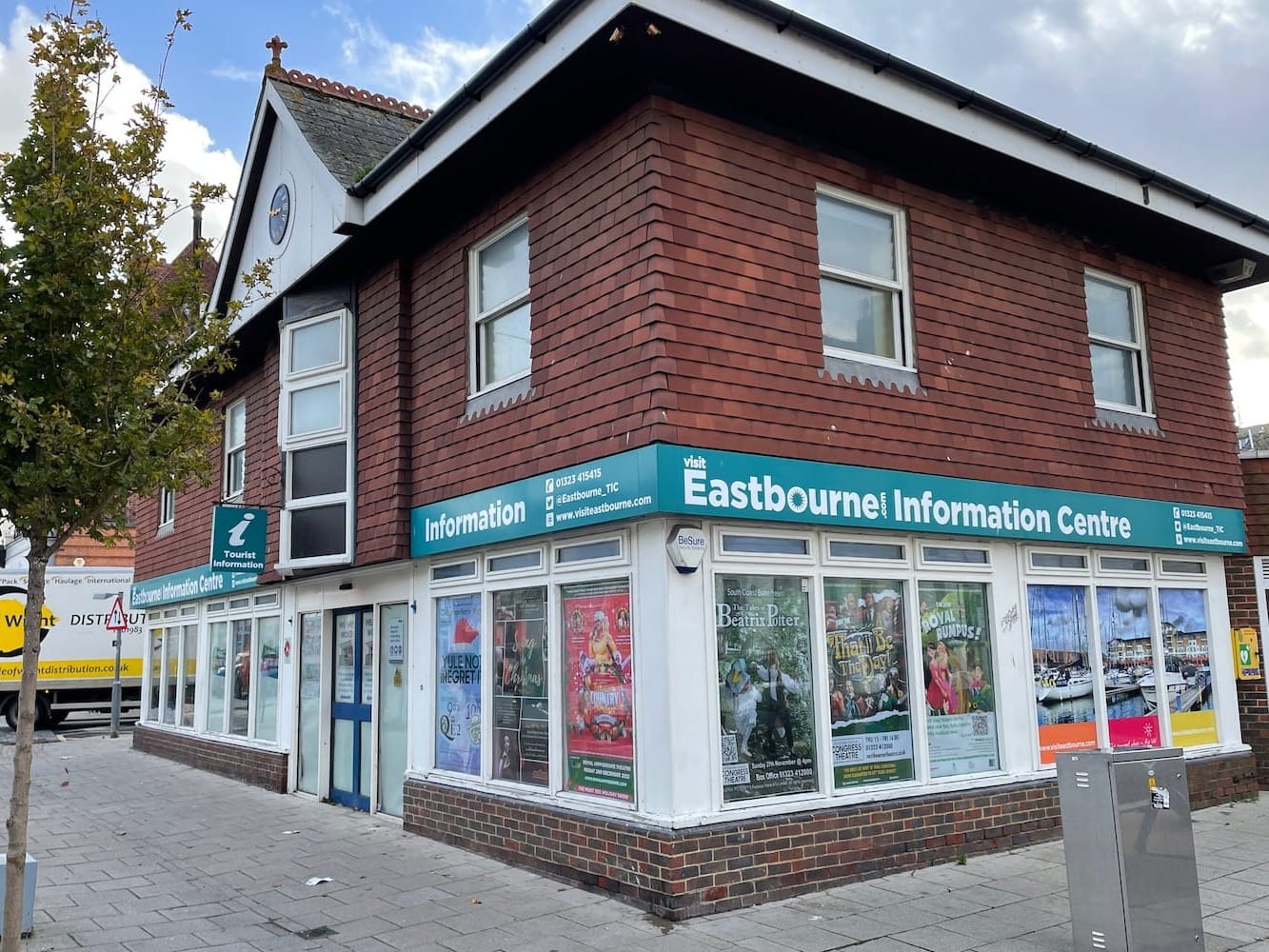
It opened at the Welcome Centre in September 2020. Then in December 2024 the council announced a partnership deal with Trafalgar Theatres to run the town’s theatres, conferencing and exhibition facilities.
The council announced in March this year that it would move tourism information from the Welcome Centre – now run by Trafalgar as a box office and cafe – to the nearby Towner gallery from 1 April. EBC described the move as "a great step forward".
Since April, there has been an A-frame board outside and racks of leaflets inside the foyer of the gallery. Towner staff have been given tourism training.
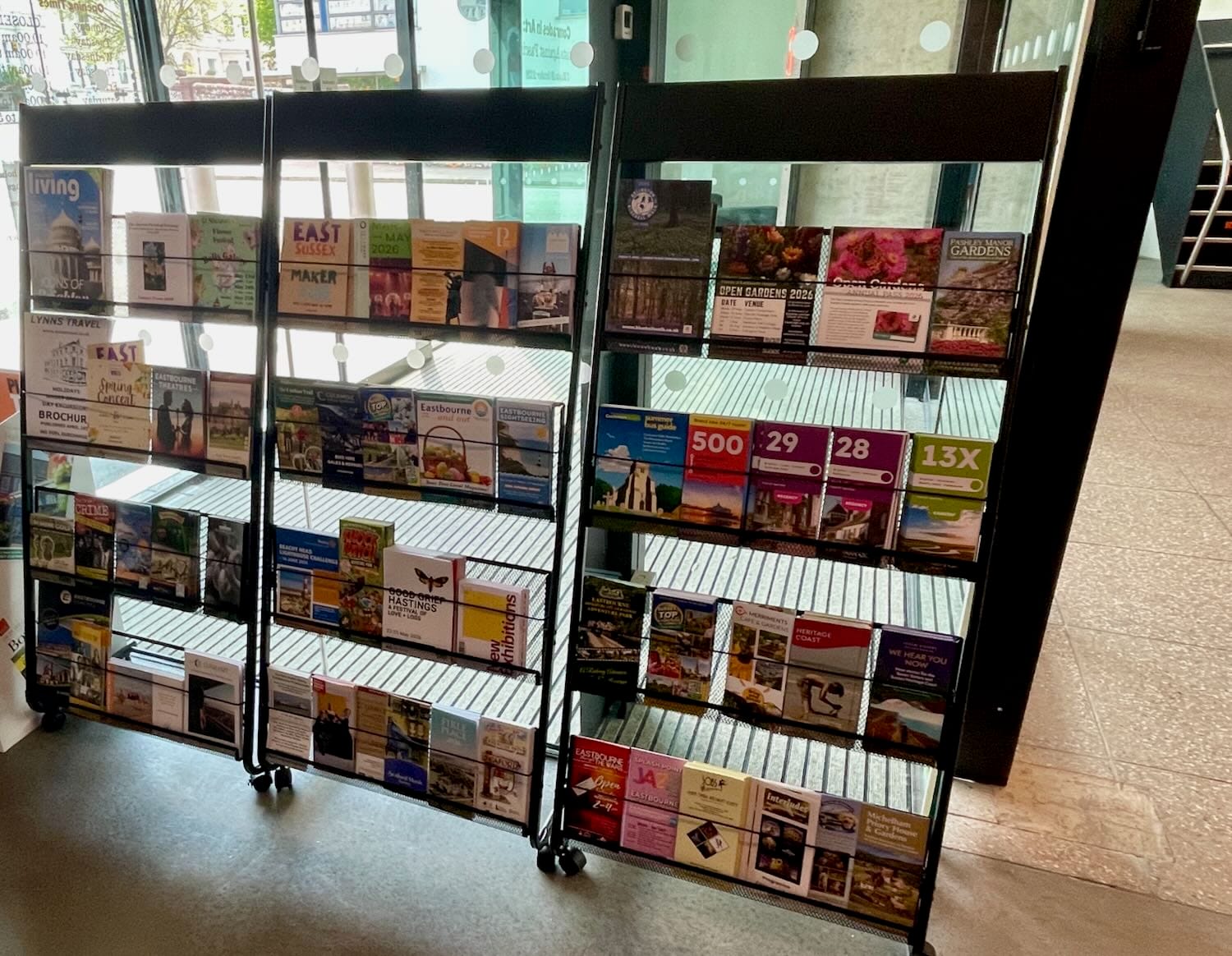
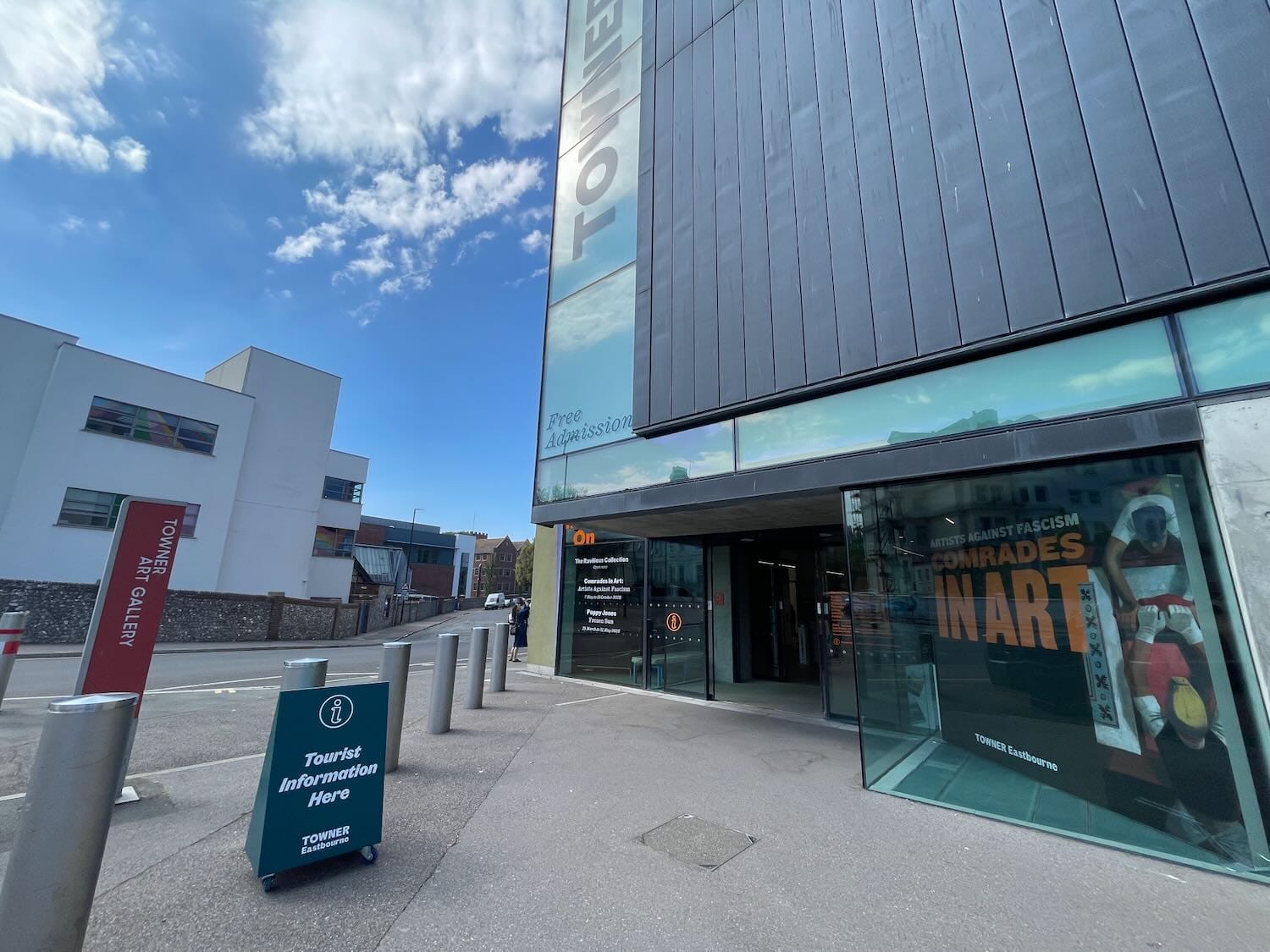
Leaflets at the Towner and sign outside © Rebecca Maer
We asked EBC if there were any longer-term plans to reinstate a dedicated tourism information office and staff in the town.
The spokesman said the current centre at the Towner is “an excellent location for the millions of tourists who visit our outstanding theatres, the best seafront in the UK or visitors who are staying at one of the fantastic hotels in the area”.
What are the neighbourhood board’s ambitions?
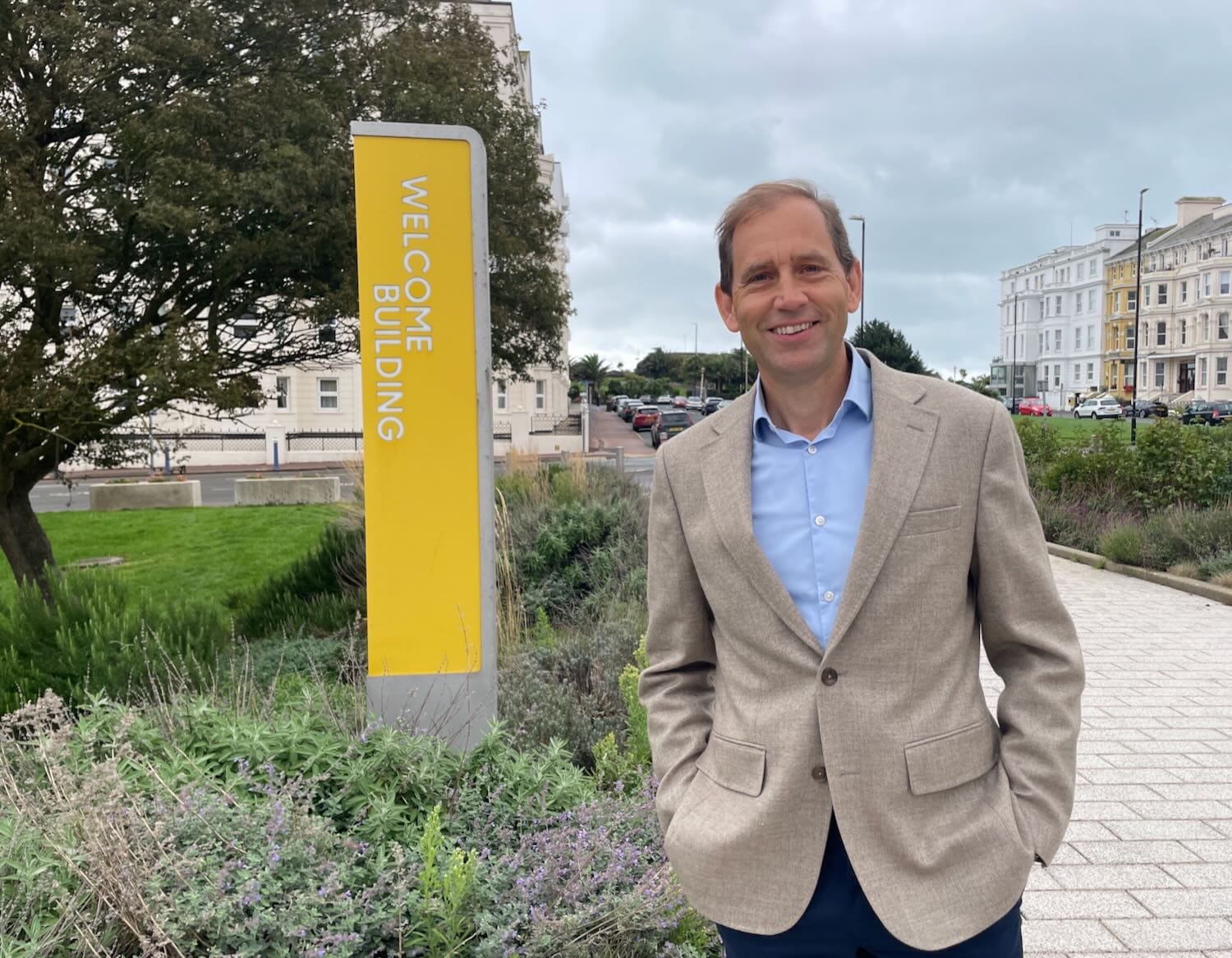
Richard Garland, Eastbourne Neighbourhood Board chair, told Eastbourne Reporter: “One in five jobs in this town depends on tourism — so this isn’t a report for a shelf, it’s a plan to protect livelihoods and futures.
"We’ve listened to our tourism, hospitality, and event businesses, done the homework, and we’re building a confident, year-round Eastbourne that local people are proud of.
"When we share the full plan in the coming weeks, I hope residents, businesses and visitors will all see what's possible for Eastbourne.”
:: Paul Bromley is a qualified journalist and broadcaster who worked for 40 years for regional newspapers, the Press Association and Sky News, specialising in reporting politics and elections. He now works in community rail
:: If you think this journalism, based on research and interviews, is more interesting than PR handouts presented as ‘news’, support us. We are run largely by volunteers but cannot continue for much longer without more reader support. One-off donations are here or become a member here for £4 or £8 once a month. Thank you.