REVIEW: The Picture of Dorian Gray
By Paul Bromley, volunteer theatre reviewer
The most striking aspect of this production of Oscar Wilde’s only novel hits you right from the start.
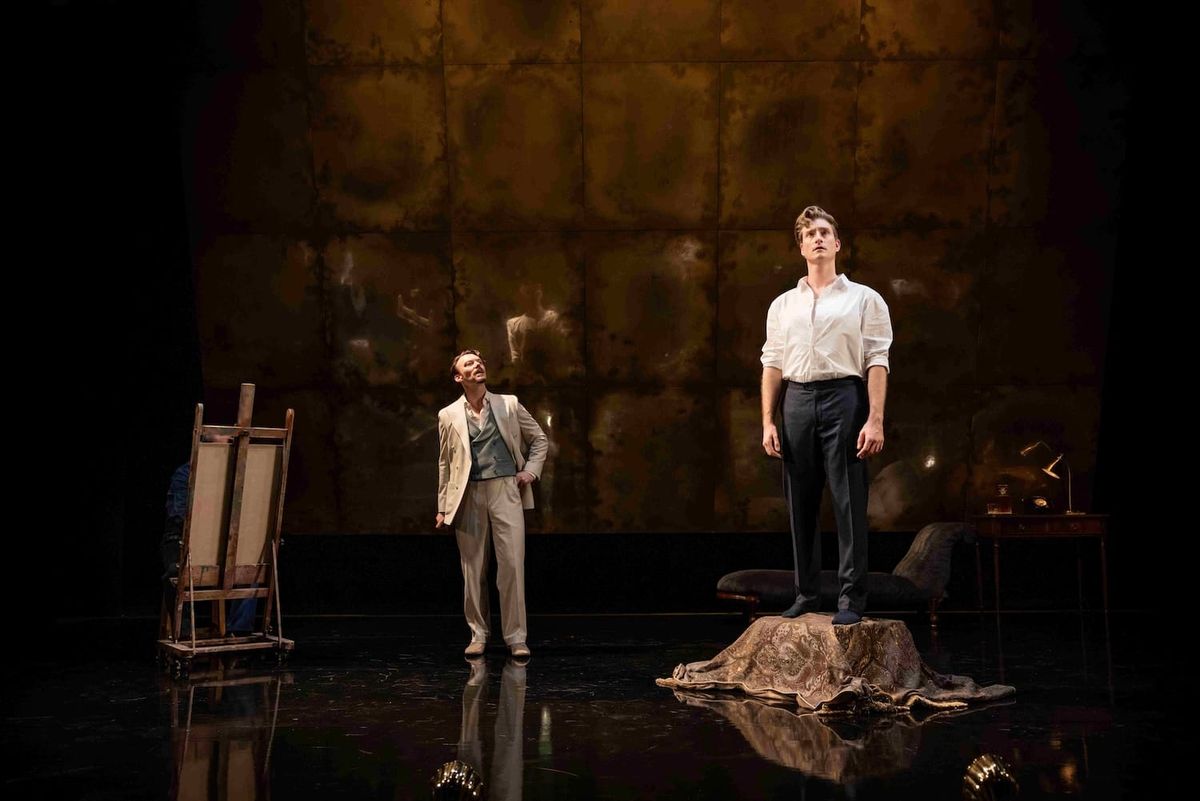
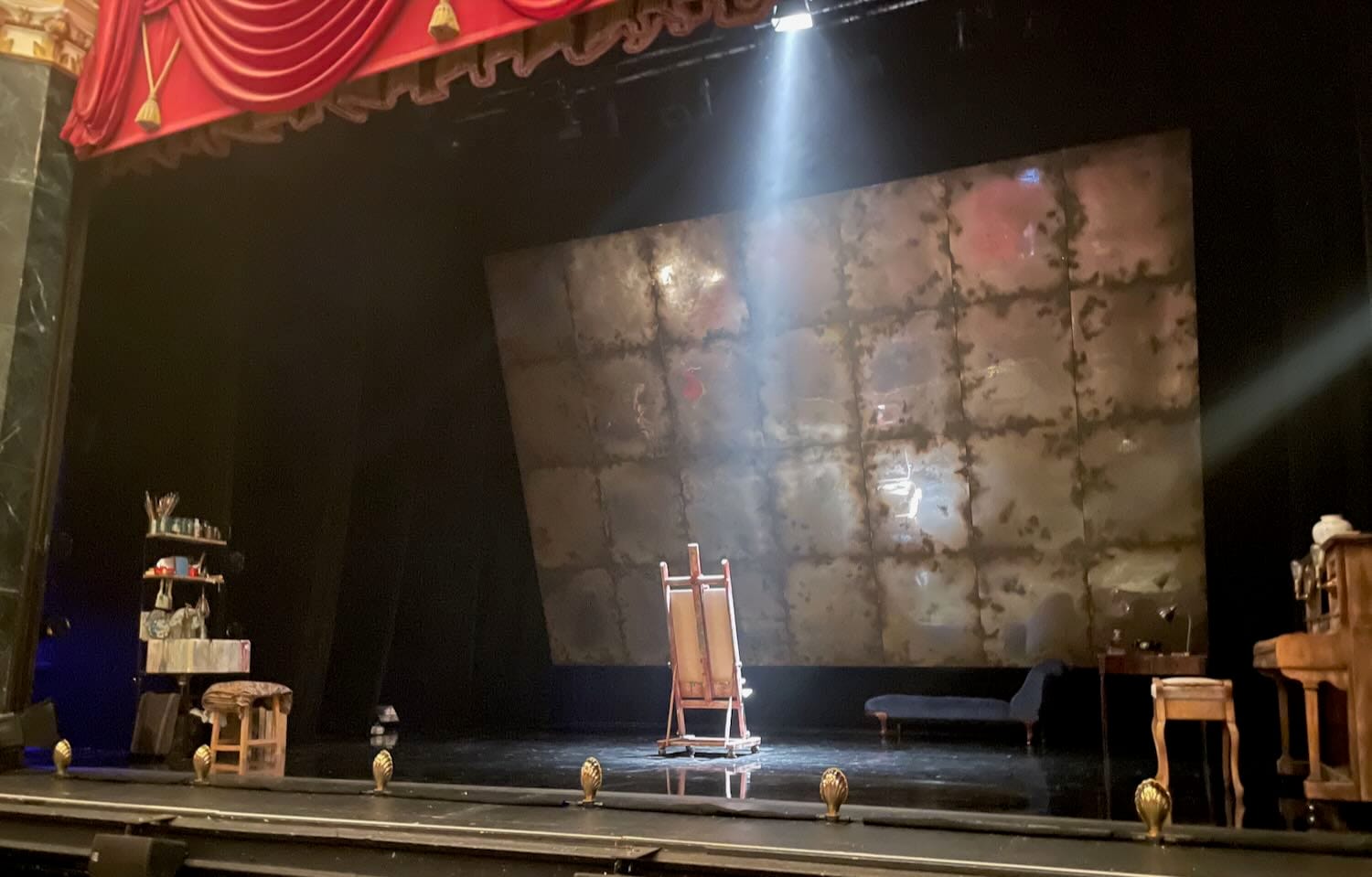
The set is sparsely lit and haunting music plays. There’s an easel in the centre of the stage with its back to the audience, an artist’s sink to the left, piano to the right and chaise longue at the back.
The set designer Sarah Beaton has added a giant tarnished mirror at 45 degrees to the shiny-surfaced stage which provides both a sense of entrapment for the characters but also self-reflection for the audience on the central themes of youth and vanity.
Details about the painting at the heart of the story emerge as painter Basil Hallward (Mark Oxtoby) and aristocrat Lord Henry Wotton (Mark Hawkins) discuss the picture of Dorian Gray. Lord Henry describes it as the best painting Basil has ever done while Basil remarks that good looks are “a terrible curse”.
It is into this conversation that Dorian enters. Jack Crumlin plays him with a sense of confidence deriving from his looks. Standing centre stage on a box emphasises that feeling of being above others – almost God-like among mortals.
Lord Henry is older than Dorian and liberally dispenses life advice. This is where Wilde’s witticisms and social commentary on the English aristocracy come to the fore. There are plenty of one-liners to make you smile and some of the references still feel relevant 136 years after the novel was first published.
“Youth is the only thing worth having,” Lord Henry declares as he struts about delivering his views left, right and centre.
This leads Dorian to the fateful decision at the heart of the drama – the Faustian pact he makes to keep his youthful good looks while the painting ages. Dorian writhes on the floor worrying that if he loses his looks, he will lose everything and the painting will mock him.
There are some quick and simple set changes with the same few props turning instantly and seamlessly into the backstage area of a theatre where young, innocent, doe-eyed actress Sybil Vane (Lydia Whitehead) has just come off stage playing Shakespearean heroines. Dorian falls madly in love with her and proposes marriage.
Then comes the first in a long line of Dorian’s cruel and selfish acts which expose the foolhardy nature of his decision about the picture. He rejects Sybil after a poor acting performance and her subsequent actions lead him to realise he has changed.
The first half has a lot of dialogue and the cast do well to keep the audience’s attention up to this point. At the interval, there is a feeling that there is a lot of action to come in the second part.
And indeed there is. Dorian descends into a series of hedonistic encounters, instant gratifications and libertine lifestyle.
So much so that Basil later confronts him about his behaviour.
We never see the portrait full-on so the audience has to use its own imagination
The extended key scene between the artist and his subject in front of the portrait takes place in dim lighting with a low hum as soundtrack.
We never see the portrait full-on so the audience uses its own imagination to interpret how the picture has changed, to the horror of both Basil and Dorian.
It is a moment of heightened drama with Dorian, now at his lowest moral point, showing no scruples as he drags others into his criminality.
The show is worth it for this scene alone.
The action then moves to 18 years later as Dorian’s youthful looks spare him from an encounter with the family of the actress he spurned.
But he realises that he needs to change and find a new purpose, deciding to destroy the picture which has caused him so much pain.
Dorian has the same outfit throughout – a white, open neck shirt with sleeves rolled up and dark trousers – which reinforces the idea that he has not changed at all. The passage of time is harder to convey with the other characters but a more chastened Lord Henry reappears to summarise events to portray the idea of this being many years later.
Some of the props caused a level of confusion and consternation. Dorian wears a wristwatch in the second half which he didn’t have in the first and a telephone looked like one from the 1960s rather than 1890s.
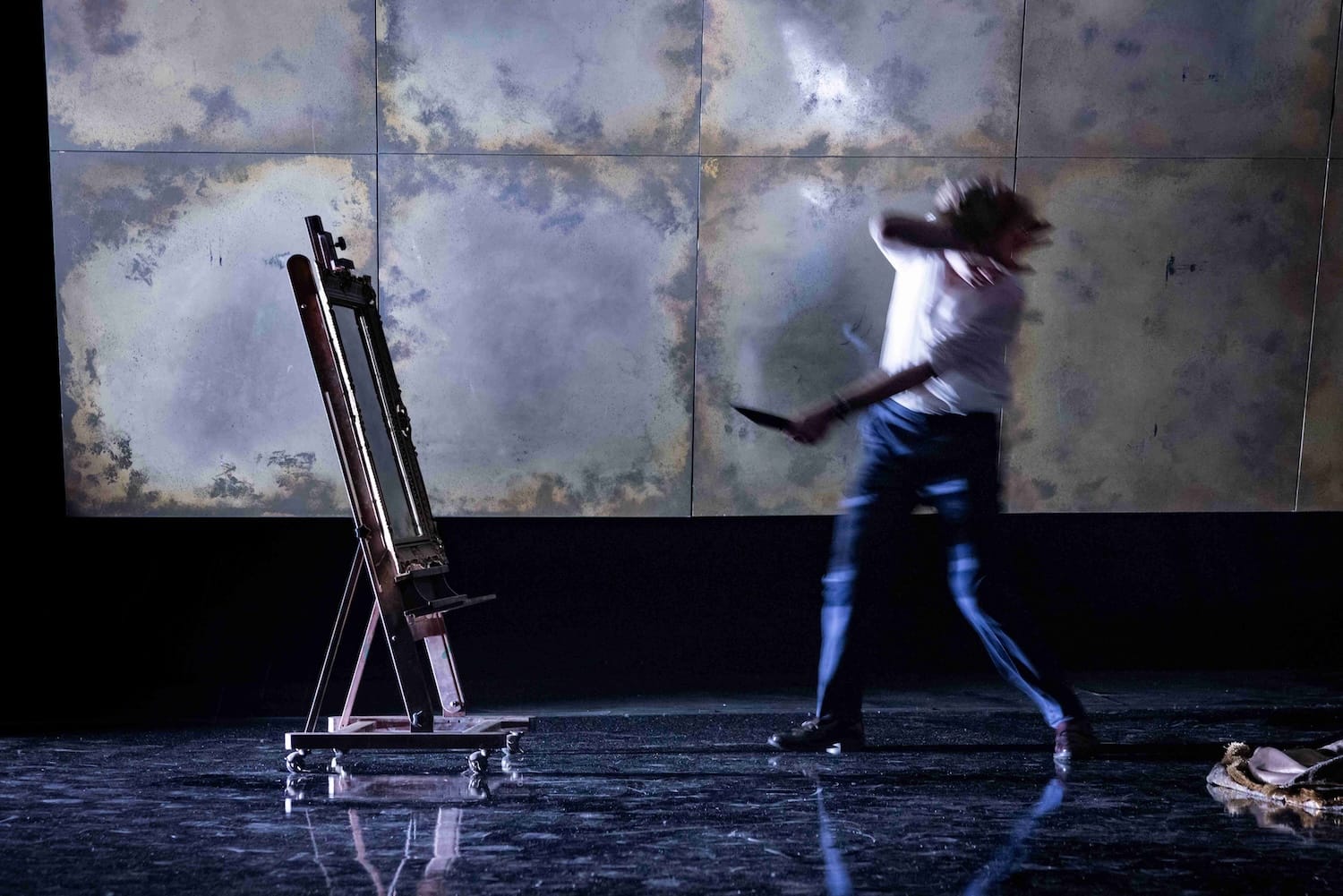
The final scene has one last twist to the story. The lighting blinds the audience momentarily and there was a slight hesitation before the applause came as people weren’t quite sure the play had ended.
The production, by Tilted Wig, explores the darker side of this morality – at times, immorality – tale. As mentioned, the lighting is dim most of the time in keeping with the overarching theme of the story. It adds to the sense of degradation and decay.
I was in row C and could make out the cast when they moved into the shadows but others further back may have had more difficulty seeing. In a way, it doesn’t matter as the overall impression is more important but some may see it as a theatrical sacrifice too far.
Wilde’s story of vanity and image seems as relevant today in the social media age as it did at the time of its fin de siècle publication.
This is a fine production which both entertains and challenges.
:: The Picture of Dorian Gray runs at the Devonshire Park Theatre until Saturday 17 October. Tickets here
:: Paul Bromley is a member of the performers’ union Equity. He is a volunteer writer with Eastbourne Reporter. Paul is qualified journalist and broadcaster who worked for 40 years for regional newspapers, the Press Association and Sky News. He now works in community rail.